
Kornkaew (Dusit Campus)
- Trilingual: taught in Thai, English daily, Mandarin weekly
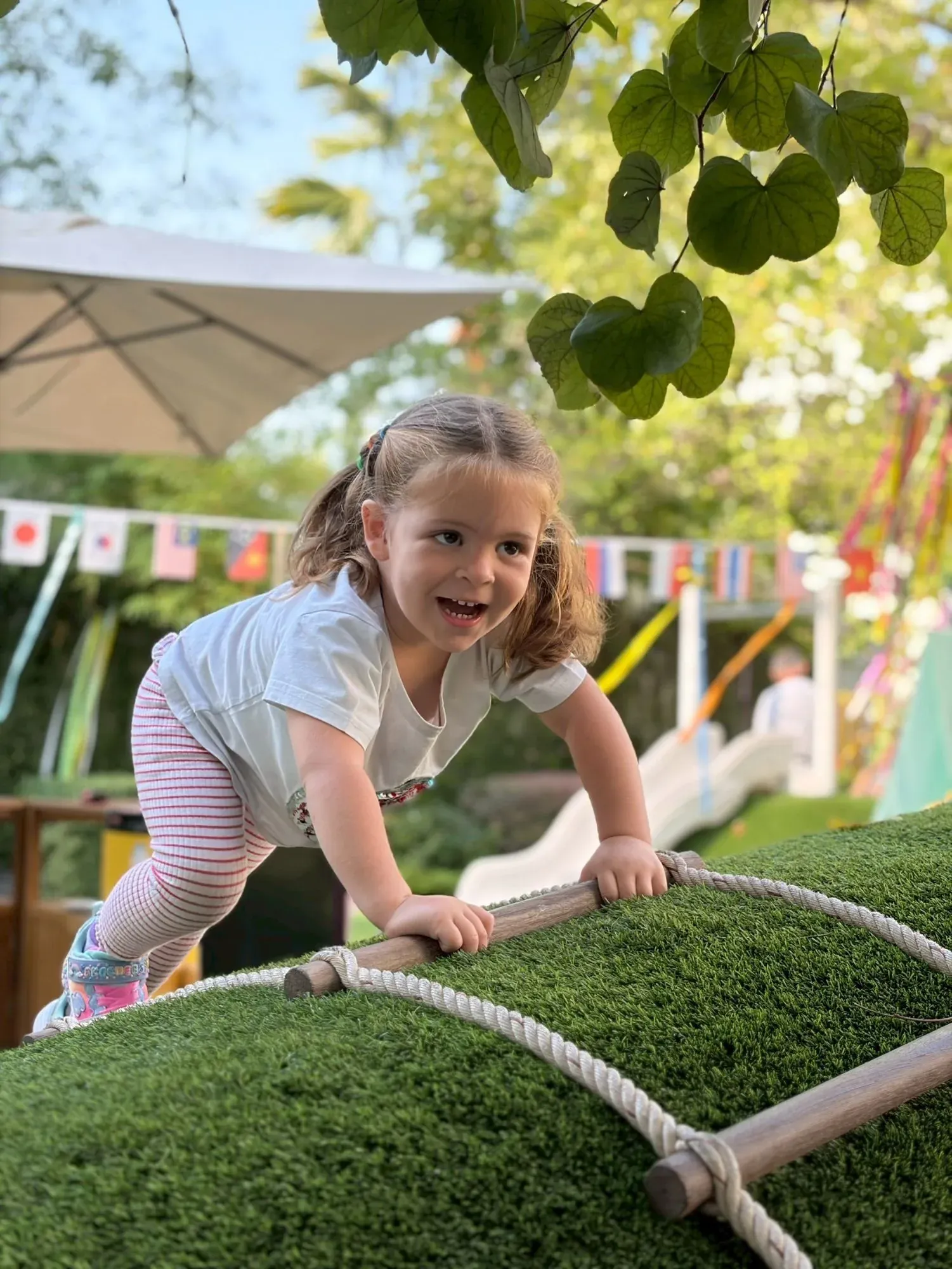
- Montessori in a Thai context, mostly outdoors in the garden
- The original campus, established 1984
- 2 terms (May | Nov)
Kornkaew International Montessori School - Ari, Bangkok
International Montessori education for ages 1 to 6, where children learn by doing real things: growing food, making what they imagine, and selling it at their own market. Built on 40+ years of Kornkaew heritage.
 Ages 1-6years
 Montessori X + EYFScurriculum
 English-mediuminternational
 Small groups1:3 average ratio
 3 termsSep | Jan | May
 Ari, BangkokPhaya Thai
Montessori X alongside the EYFS framework, all taught in English.

Small groups at 1:3, a health check every morning and strict safeguarding.

The first Kornkaew school opened in 1984, and KIMS teaches the same method today.

Accredited by Thailand's Ministry of Education and assessed by ONESQA.

Educators trained specifically to nurture children aged 1 to 6.

Families from around the world, and two generations: many of today's parents were once Kornkaew pupils.
Real skills for a changing world, learnt through work and play.
Montessori X builds on the Montessori method and the EYFS framework, drawing on child development research and on Kornkaew’s classrooms since 1984. Its three pillars feed each other: children grow food on the school farm, trade at the markets with their own currency, and make, test and build their way through the afternoon core activities. Out of all of it grows the mindset and the human skills they will need.
Underneath Montessori X is the Montessori method the group has practised since Kornkaew Montessori School opened in 1984. KIMS carries those four decades into an international setting: authentic Montessori materials, carefully prepared environments, and teachers trained to the group’s own standard. Read the group’s story.
Learning here is personalised. Children work in mixed-age groups, each at their own pace and on their own next step, in open learning spaces indoors and out, with the English Early Years Foundation Stage (EYFS) behind it.
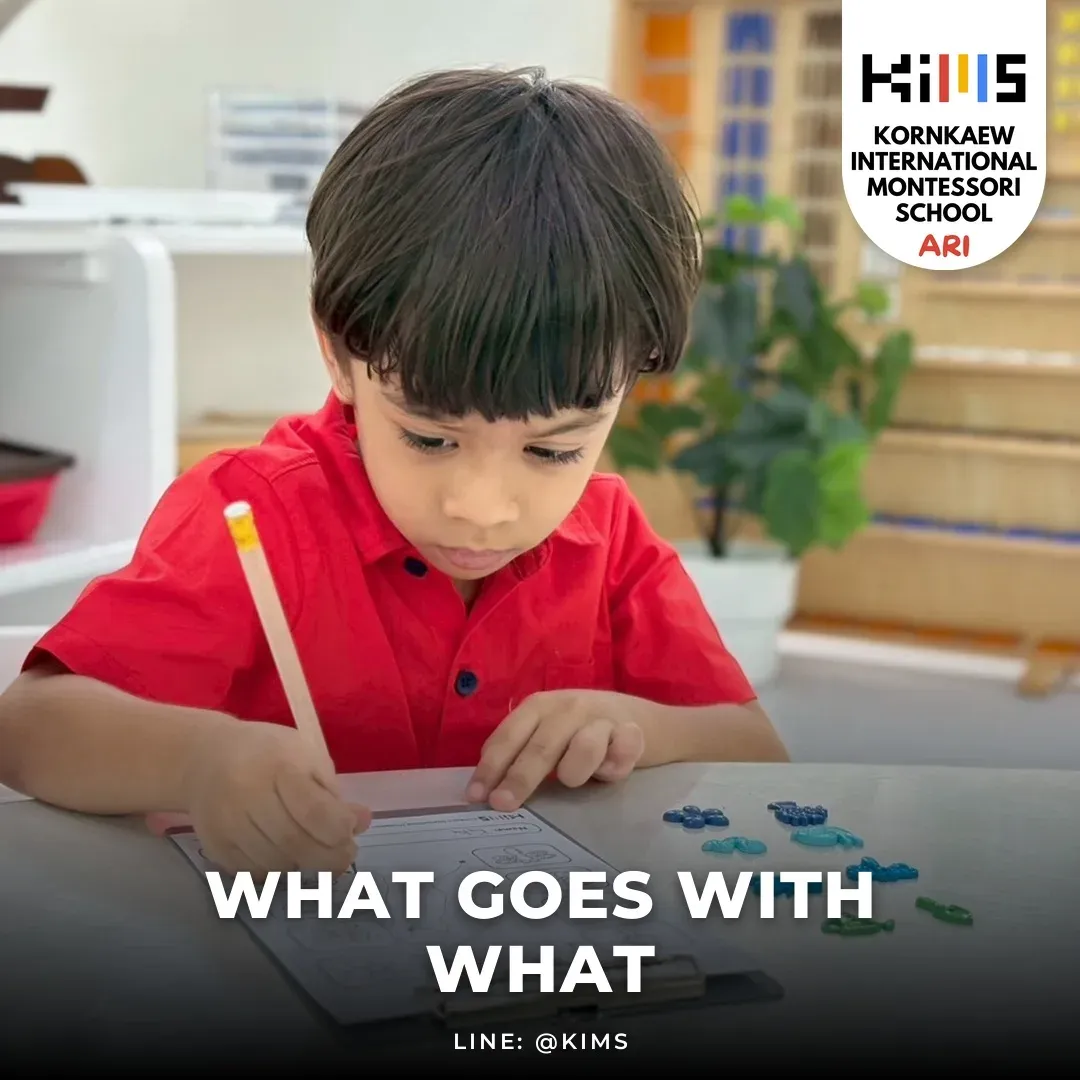
Children meet every idea with their hands before they meet it on paper. Worksheets follow, written by our teachers for each activity and personalised to each child’s age and level. There are no tests: instead, the teaching team assesses every child regularly, so we know how each one is developing and which milestone comes next, and we tell you what we see.
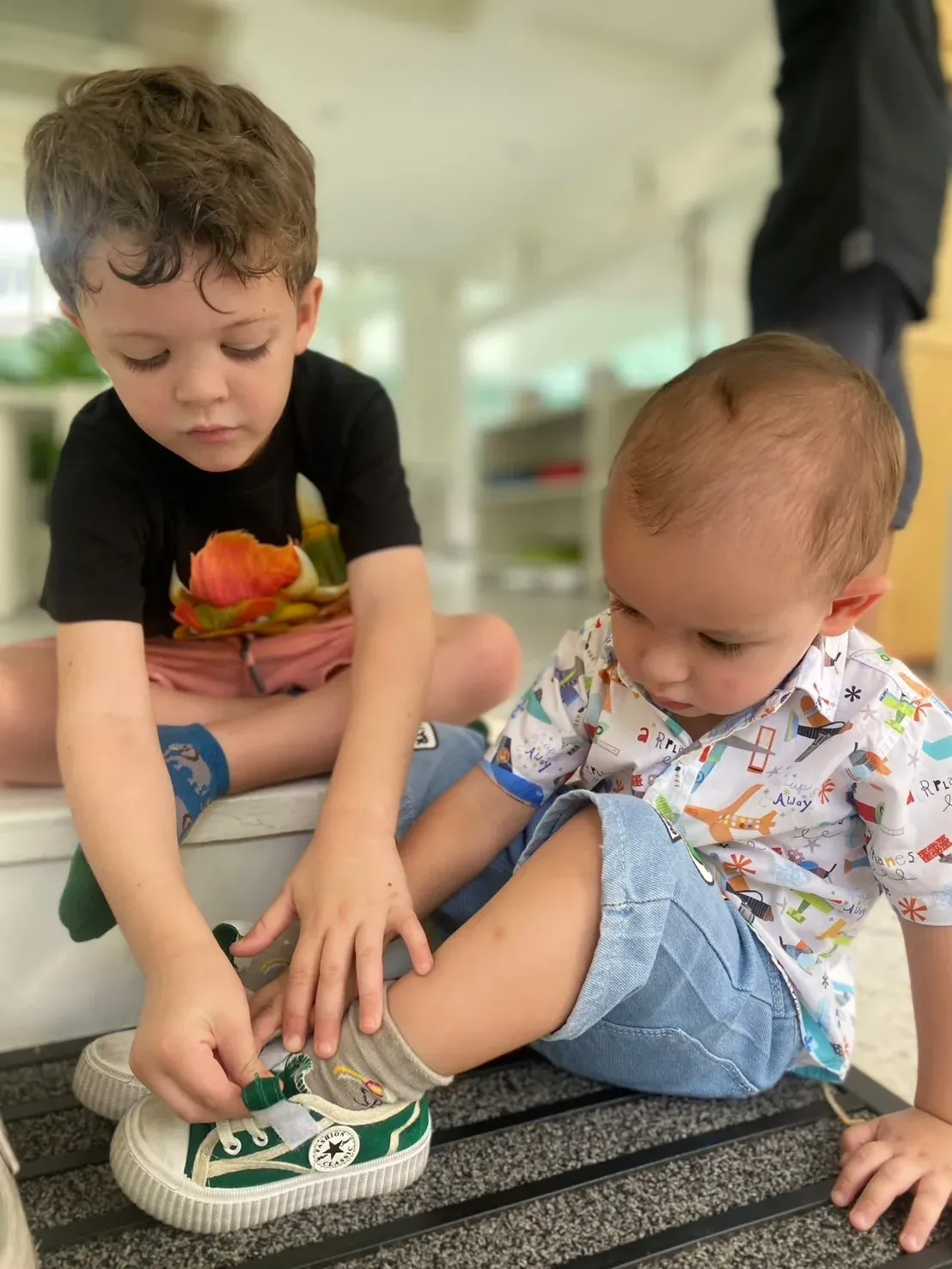
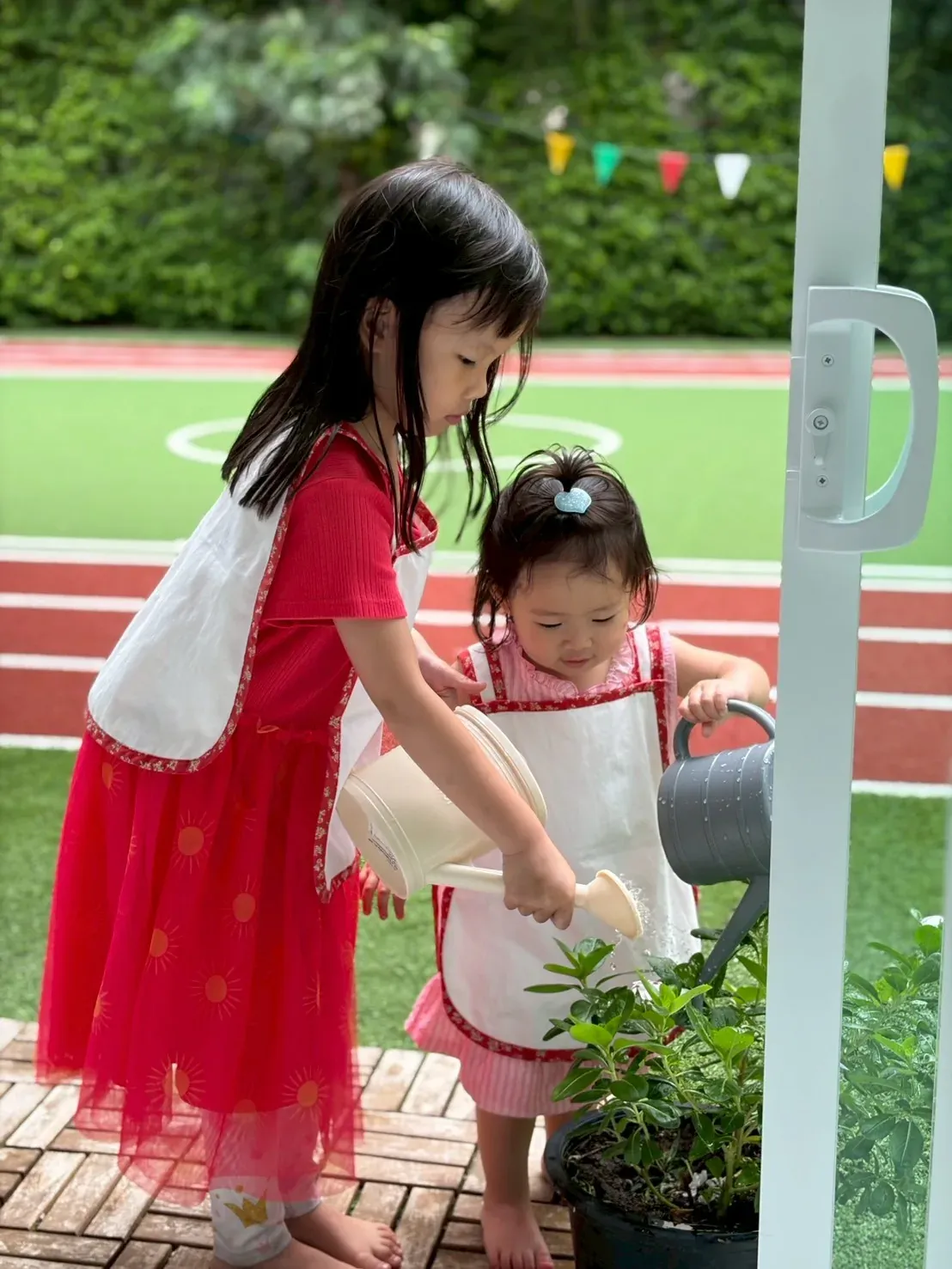
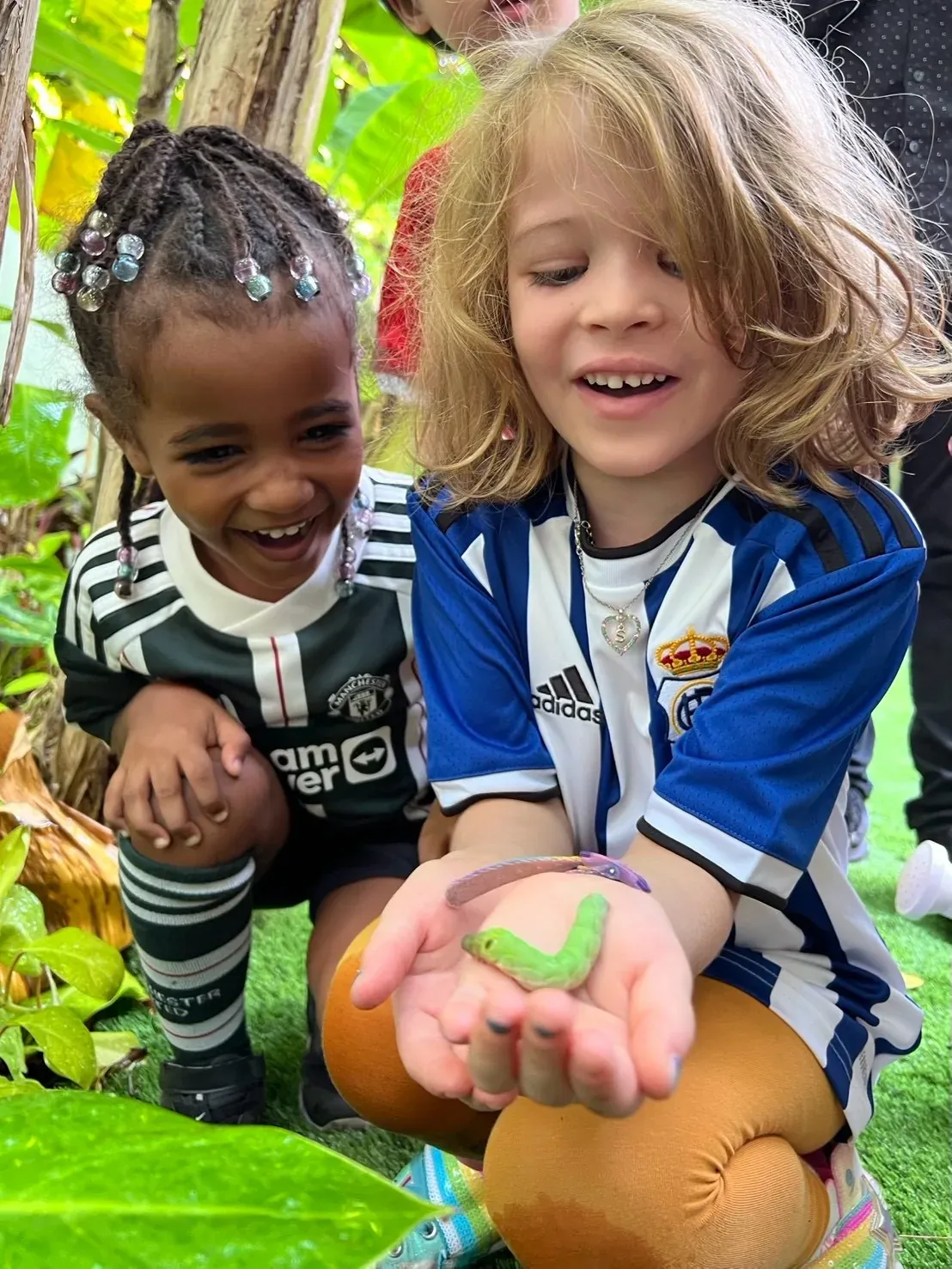
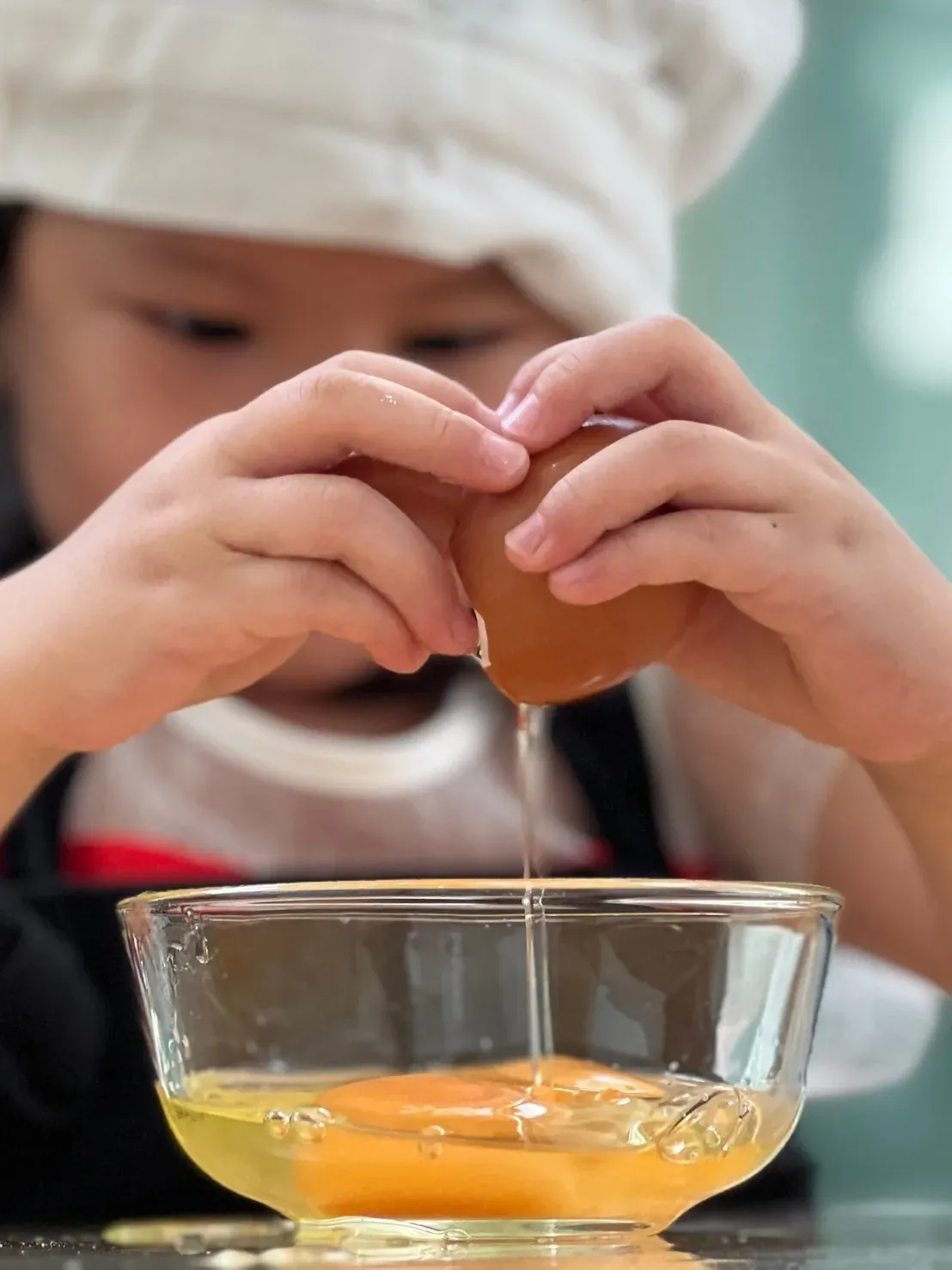
The morning follows the same gentle rhythm every day, and the afternoon brings a different core activity, so every child meets every subject across the term. Two things run through all of it: children earn KIMS coins for the jobs they do, and every activity builds the future-ready skills.
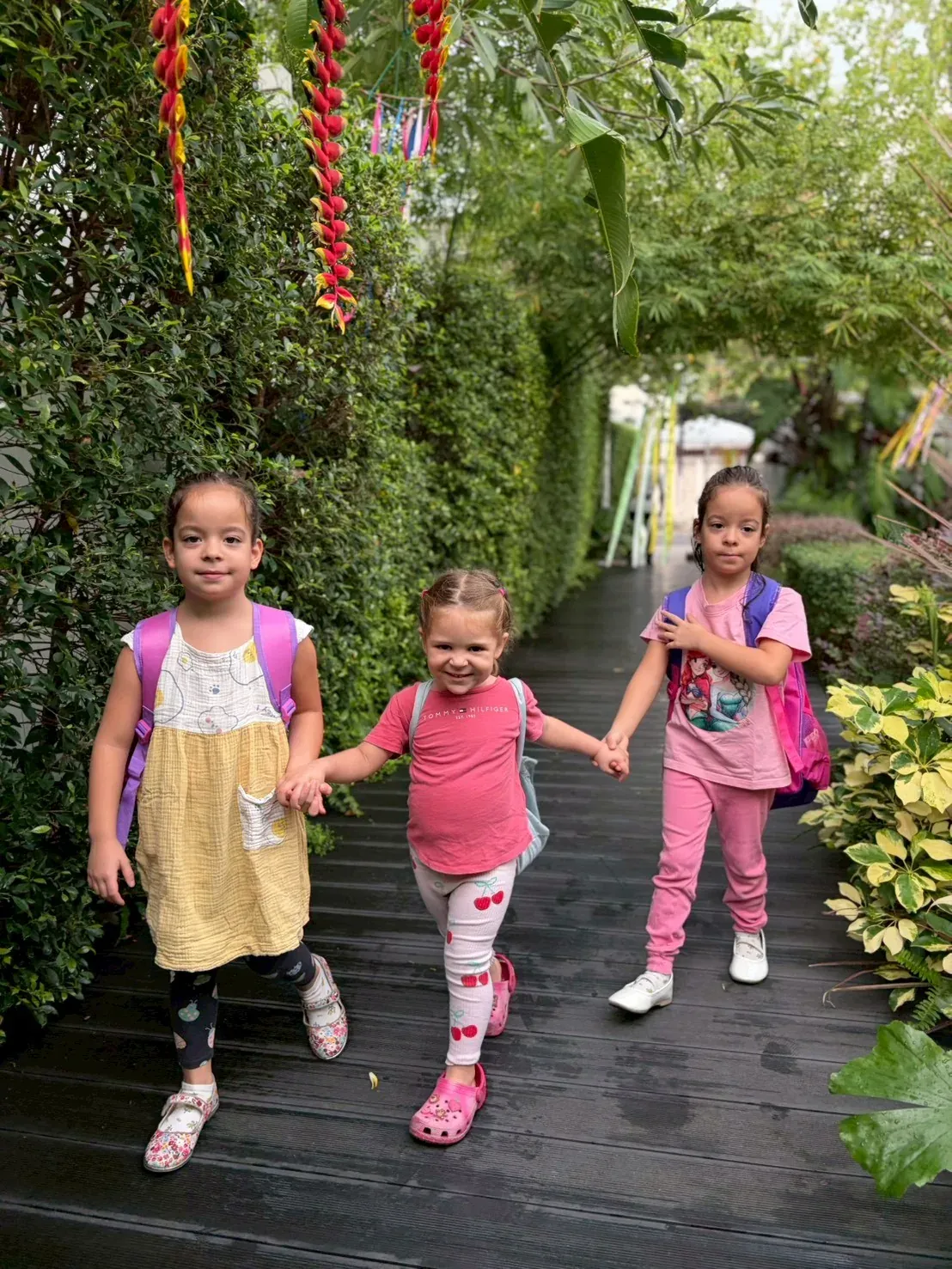
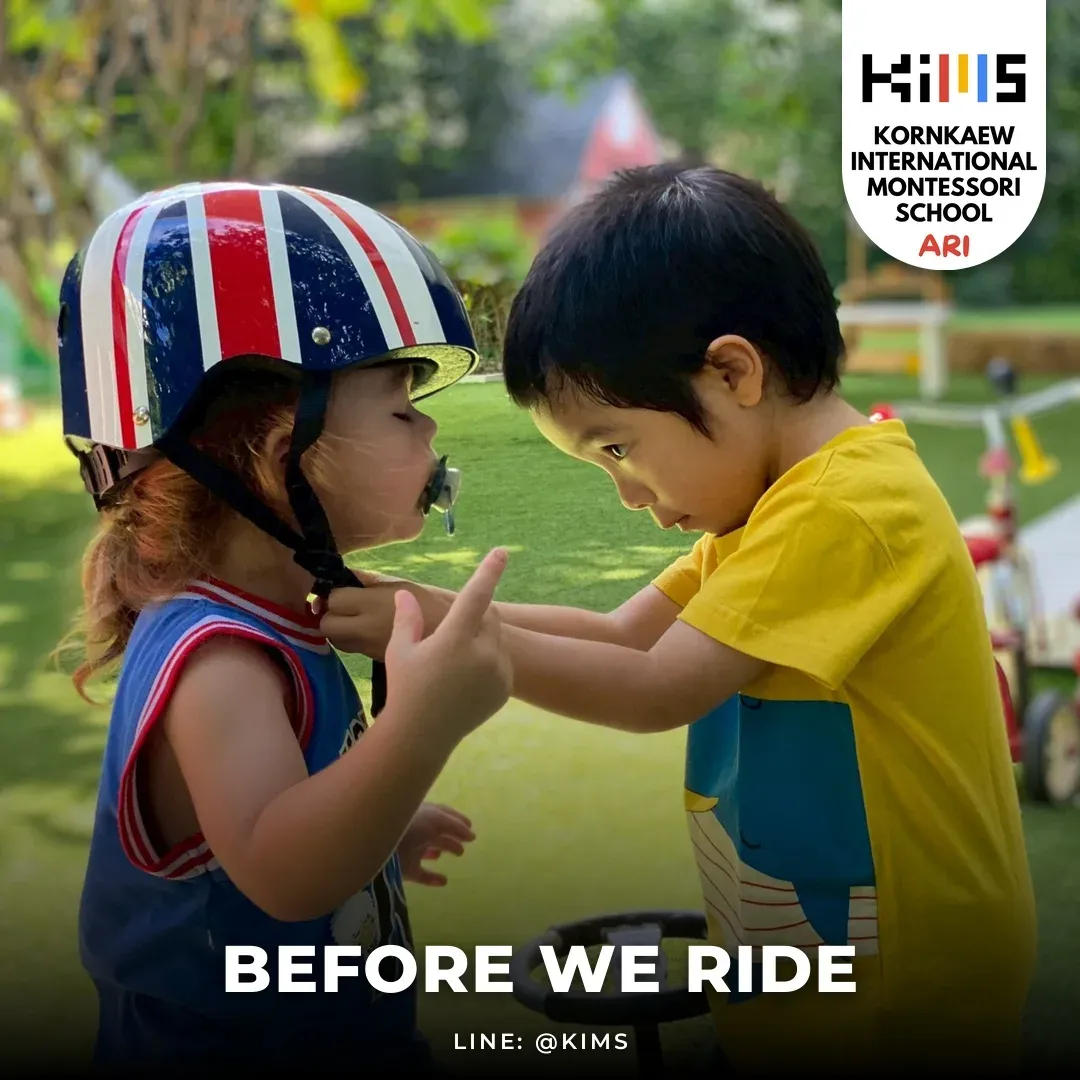
Children arrive between 7:30 and 8:30, to a warm welcome and a health check at the gate, then walk in together through the garden, often hand in hand with a friend. Lessons begin at 8:30.
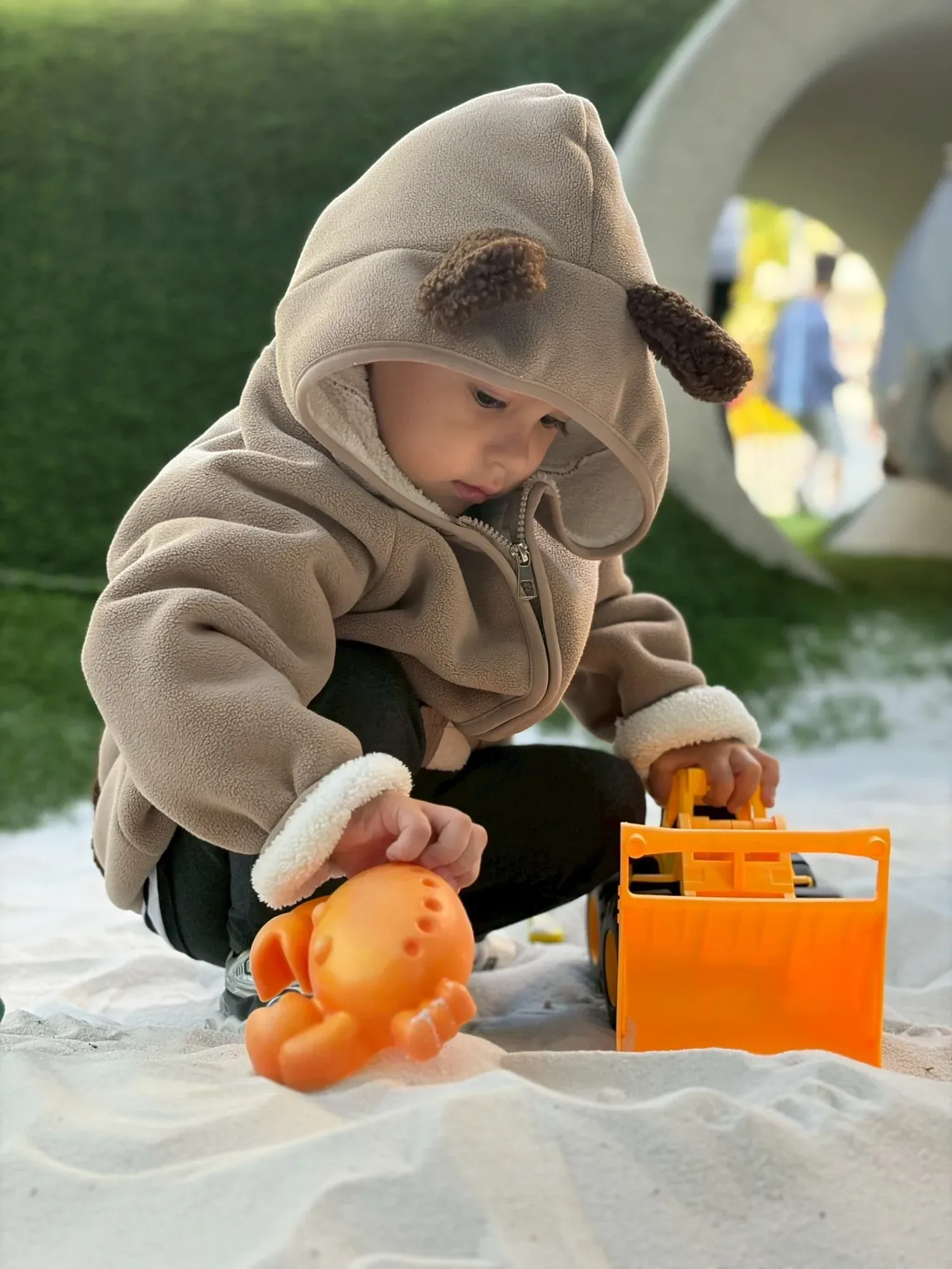
Play the children design themselves. They set up their own activity stations and invent the roles to go with them, and the science, maths, language and human skills arrive along the way.
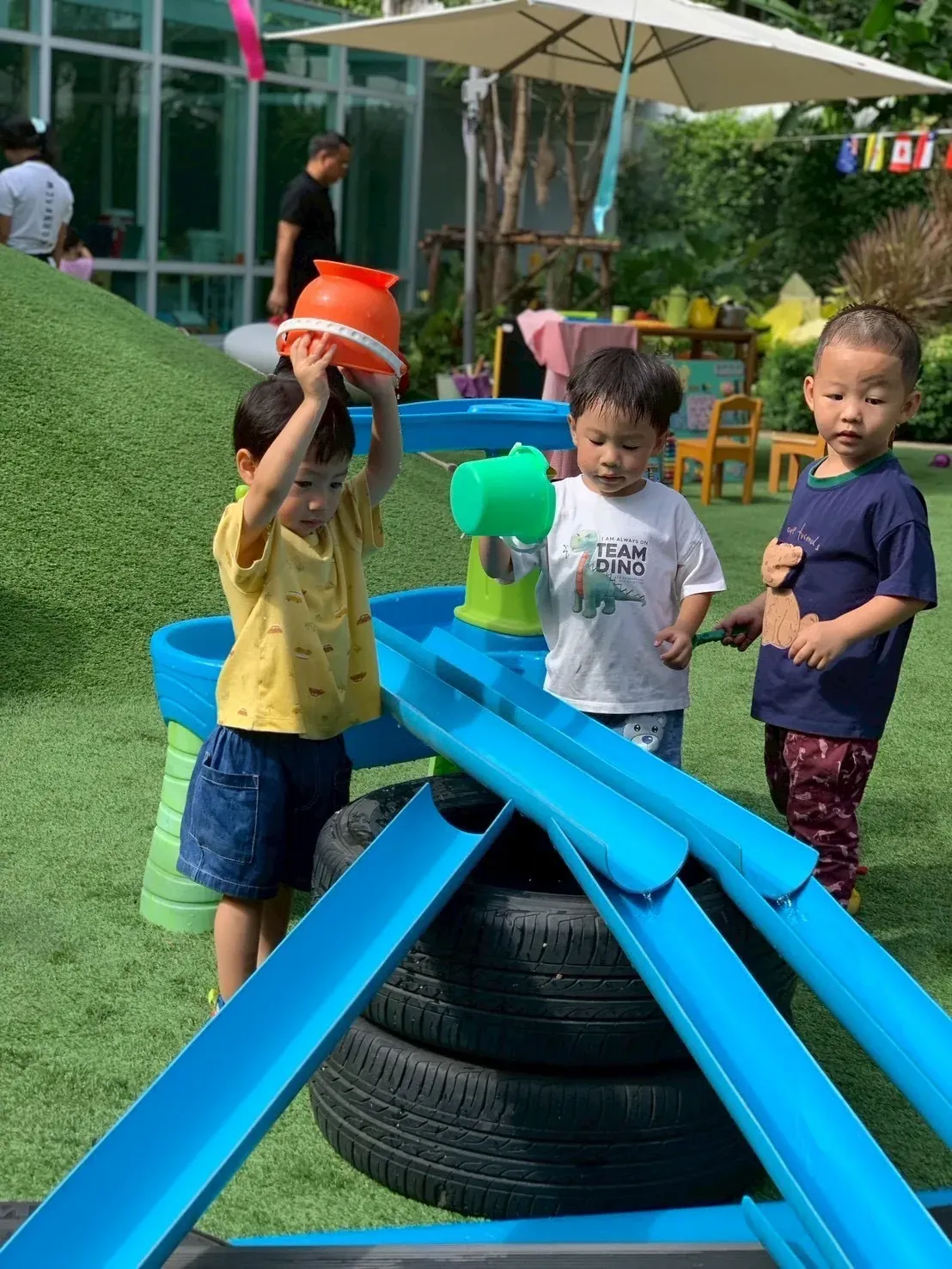
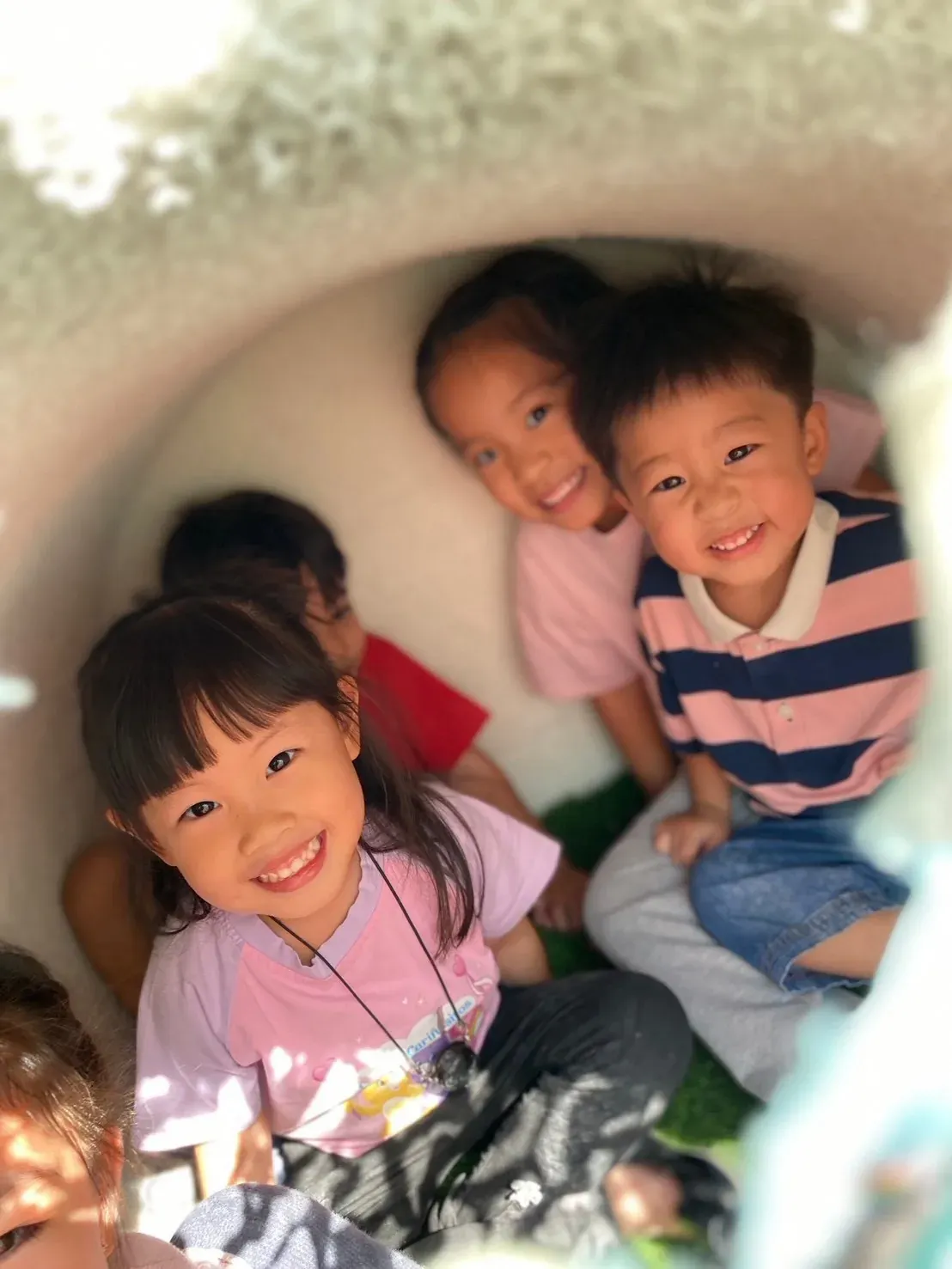
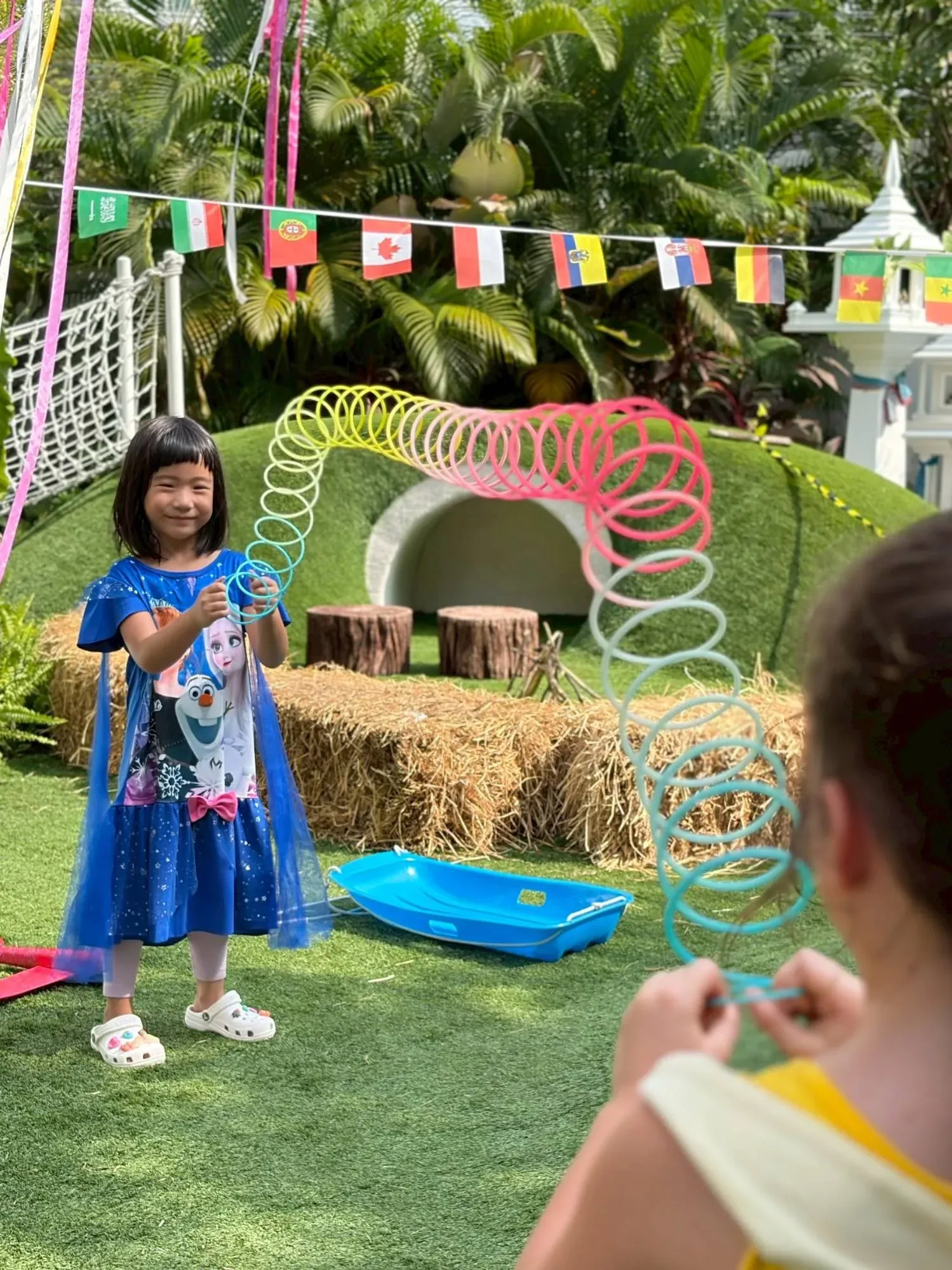
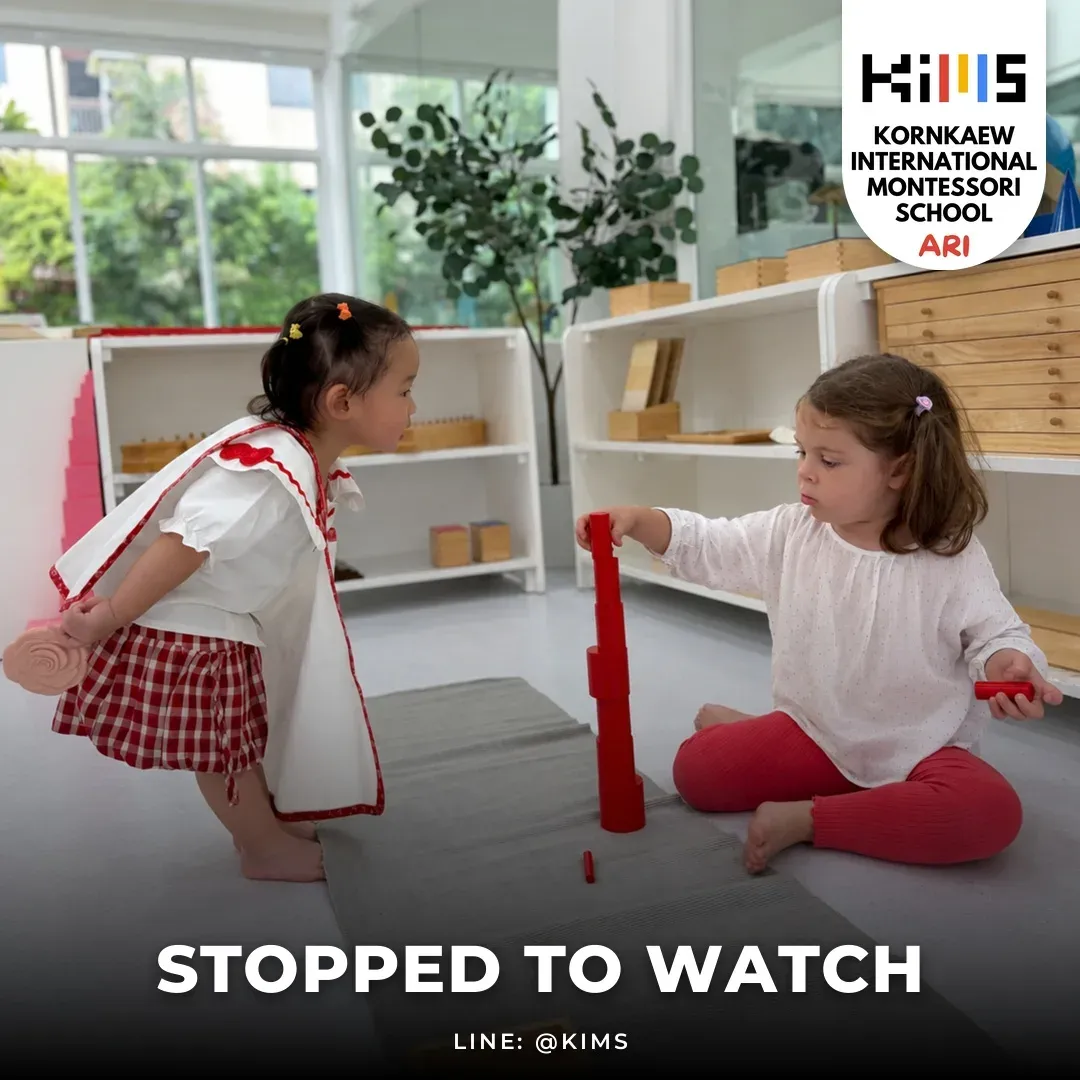
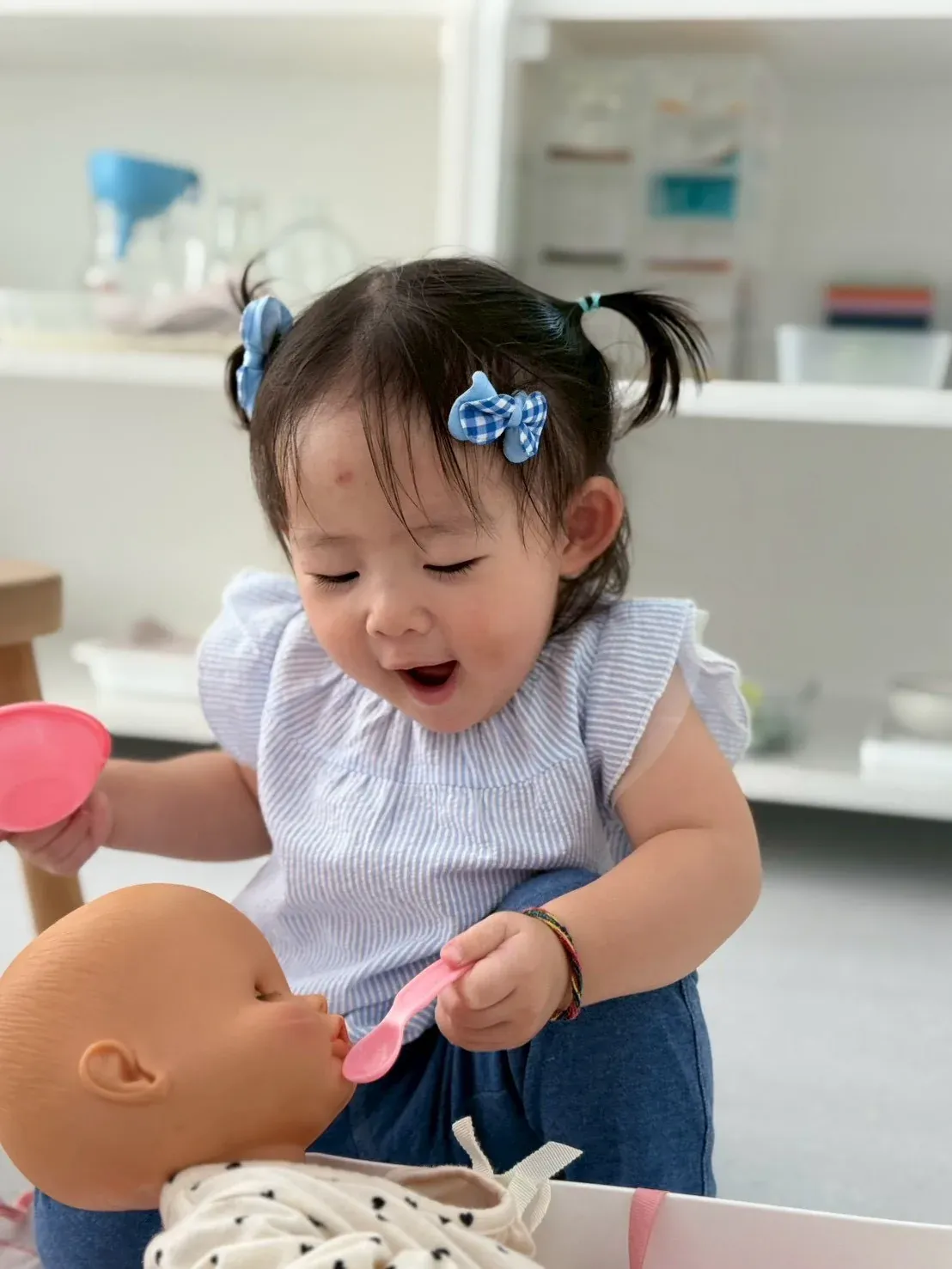
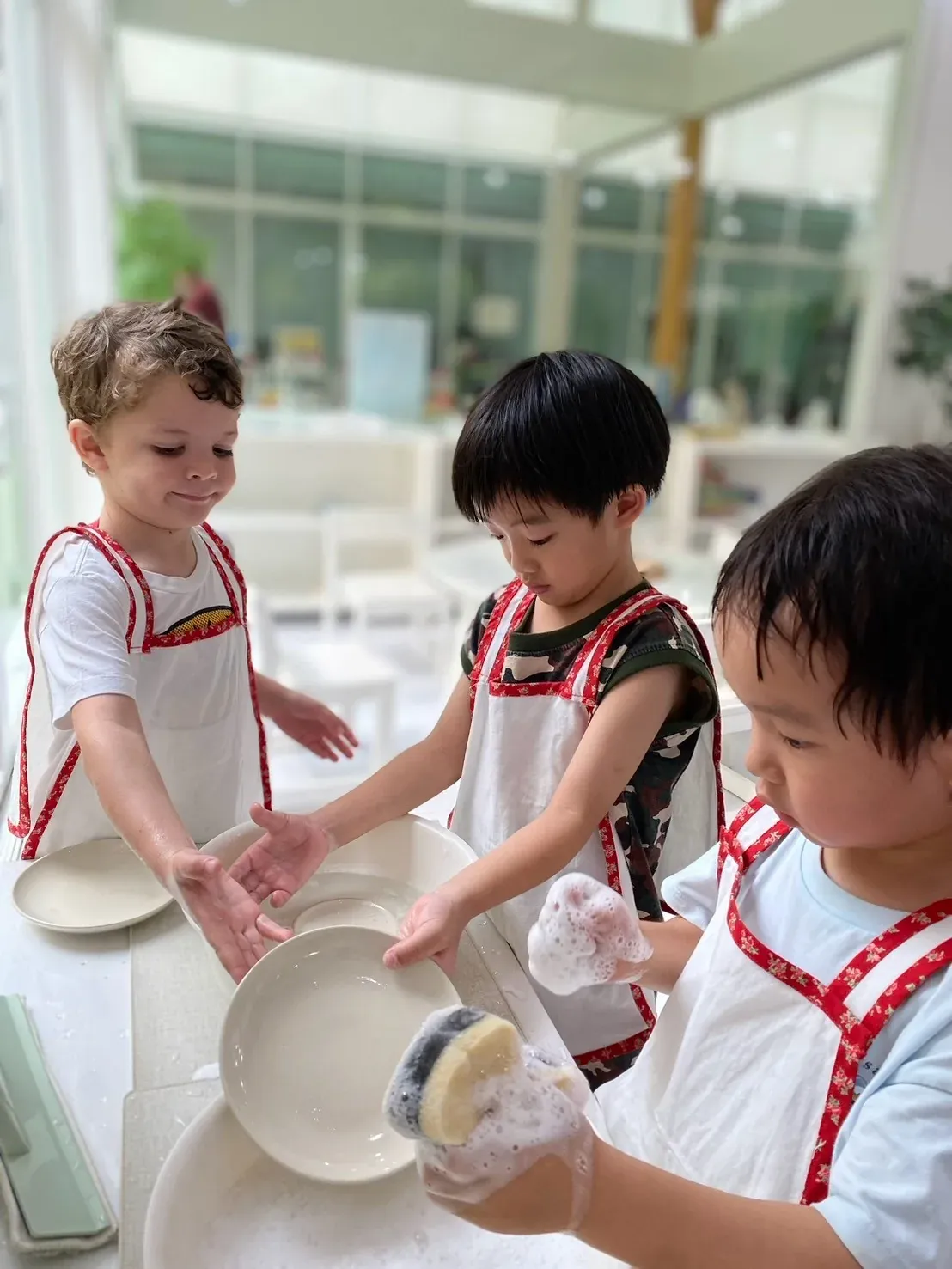
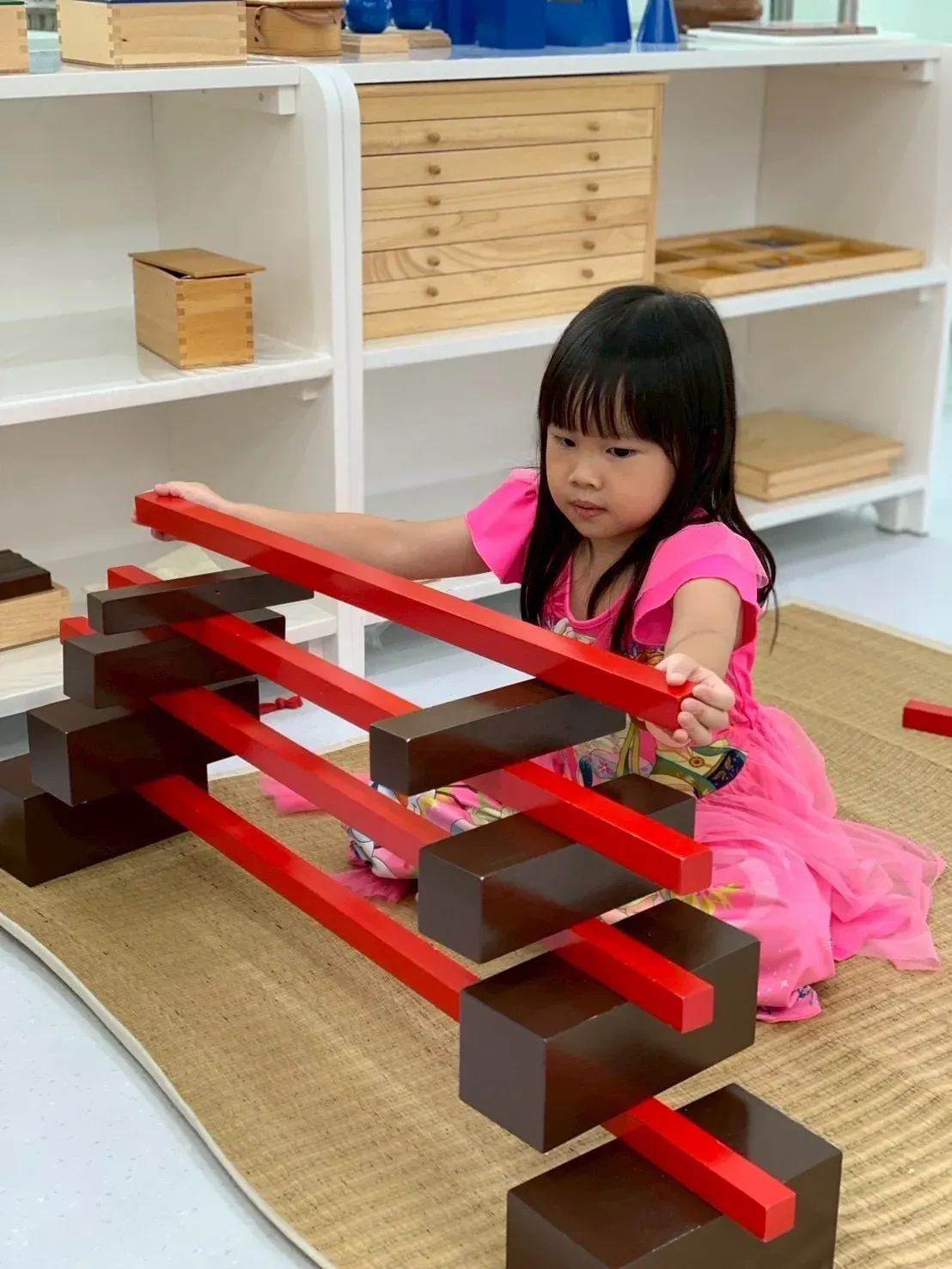
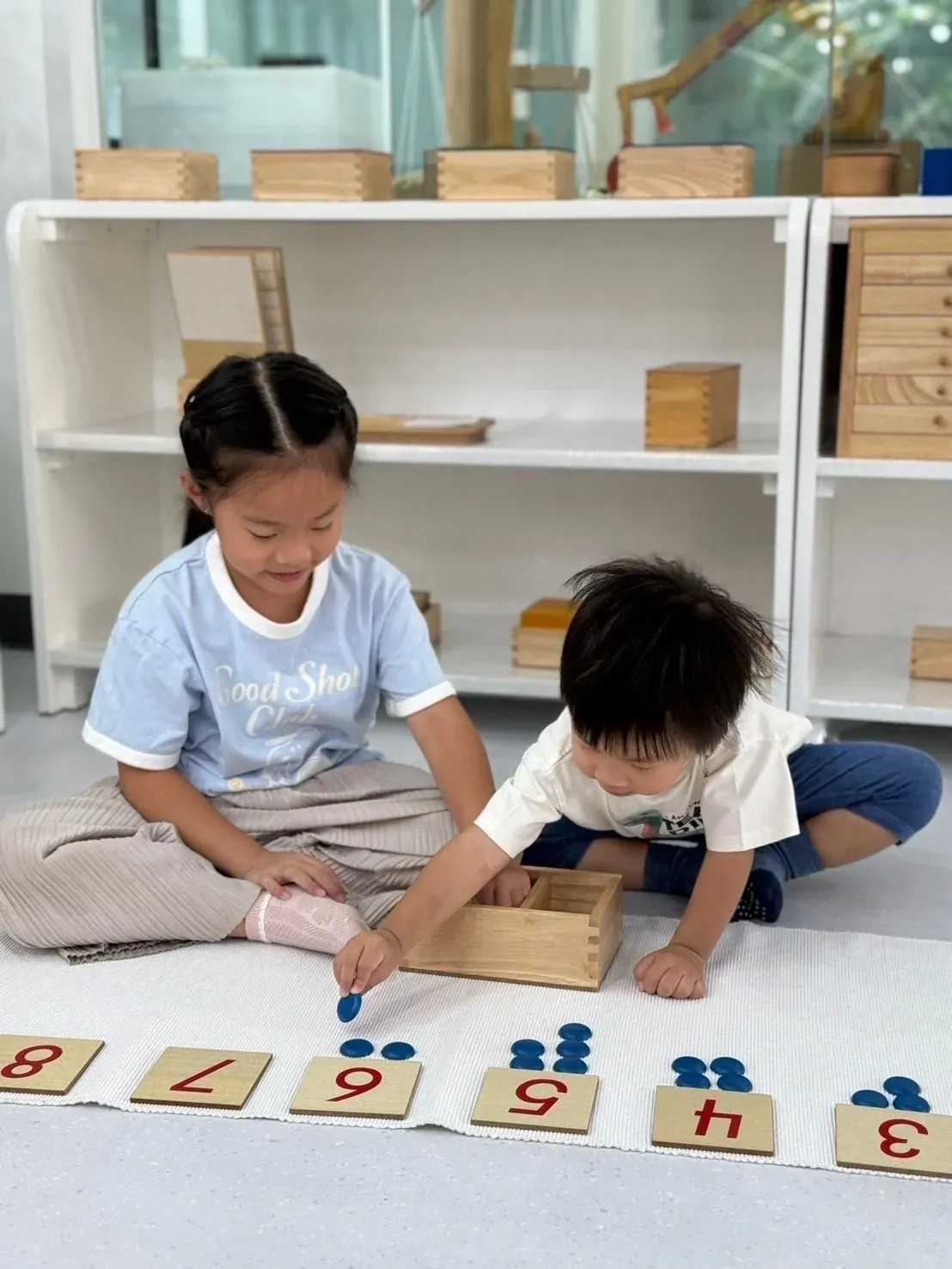
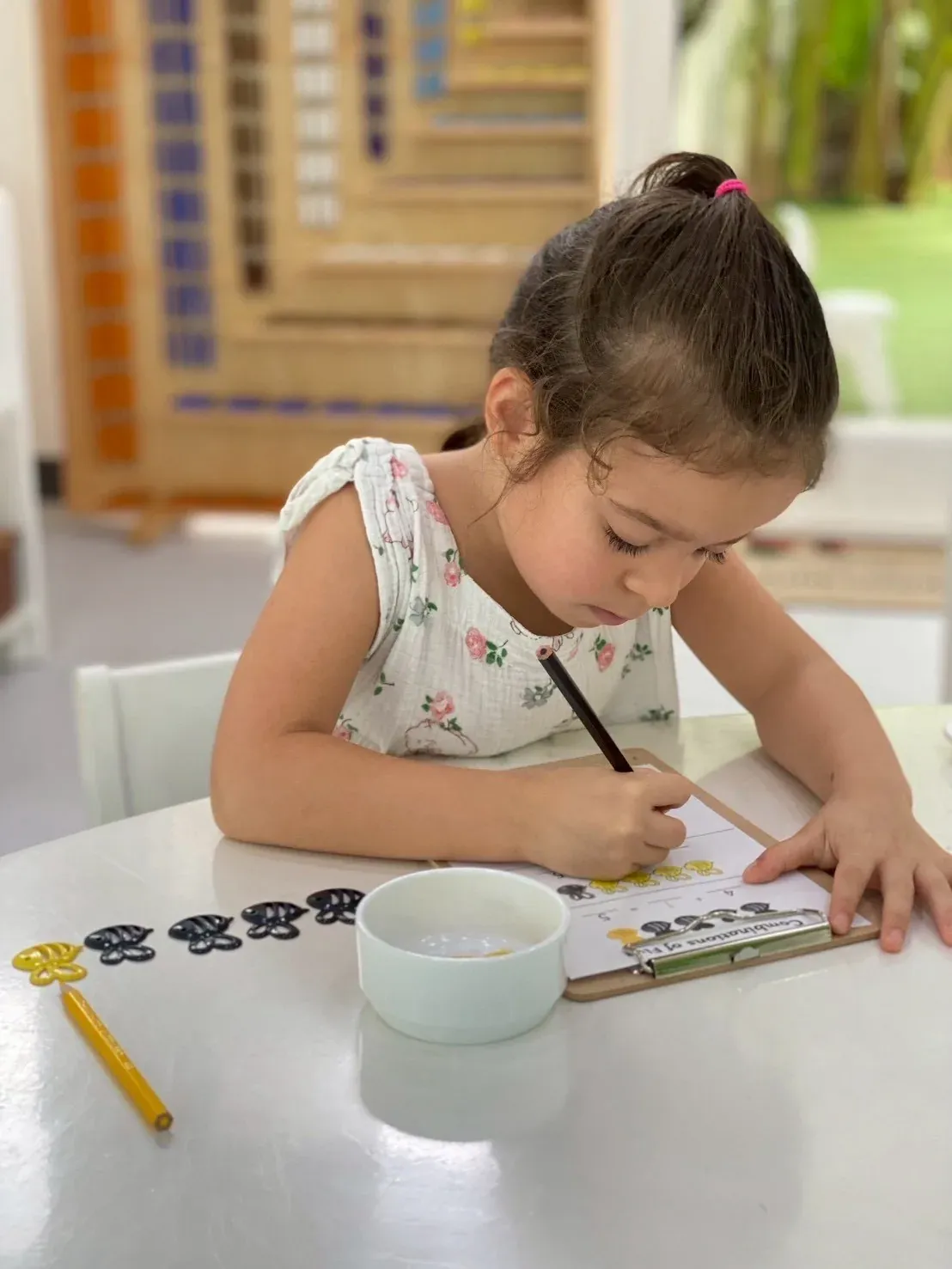
An unhurried stretch of the morning in which each child chooses their own work and stays with it as long as it holds them. The materials cover the Montessori areas of learning: Practical Life, Sensorial, and Academics, which takes in mathematics, language and culture.
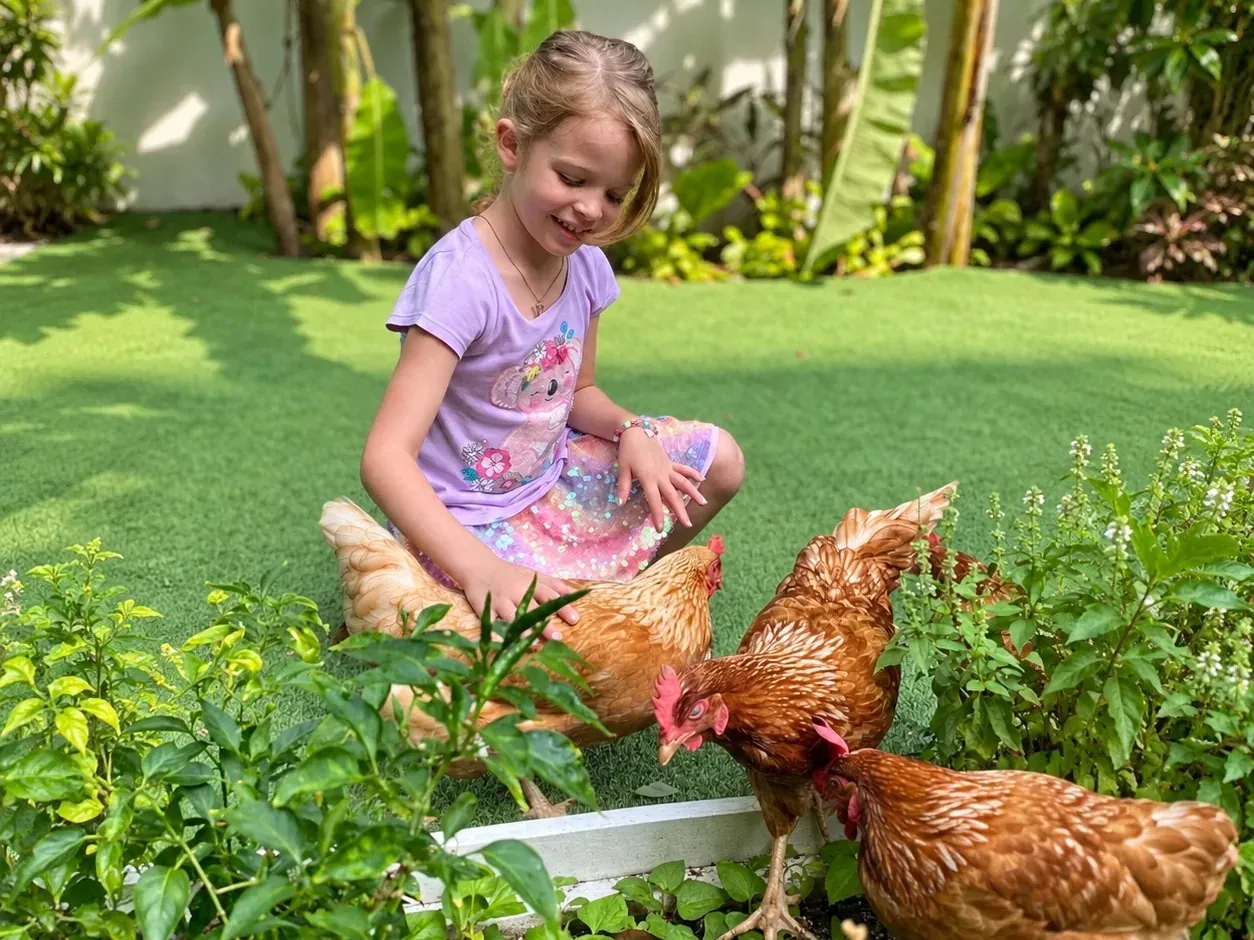
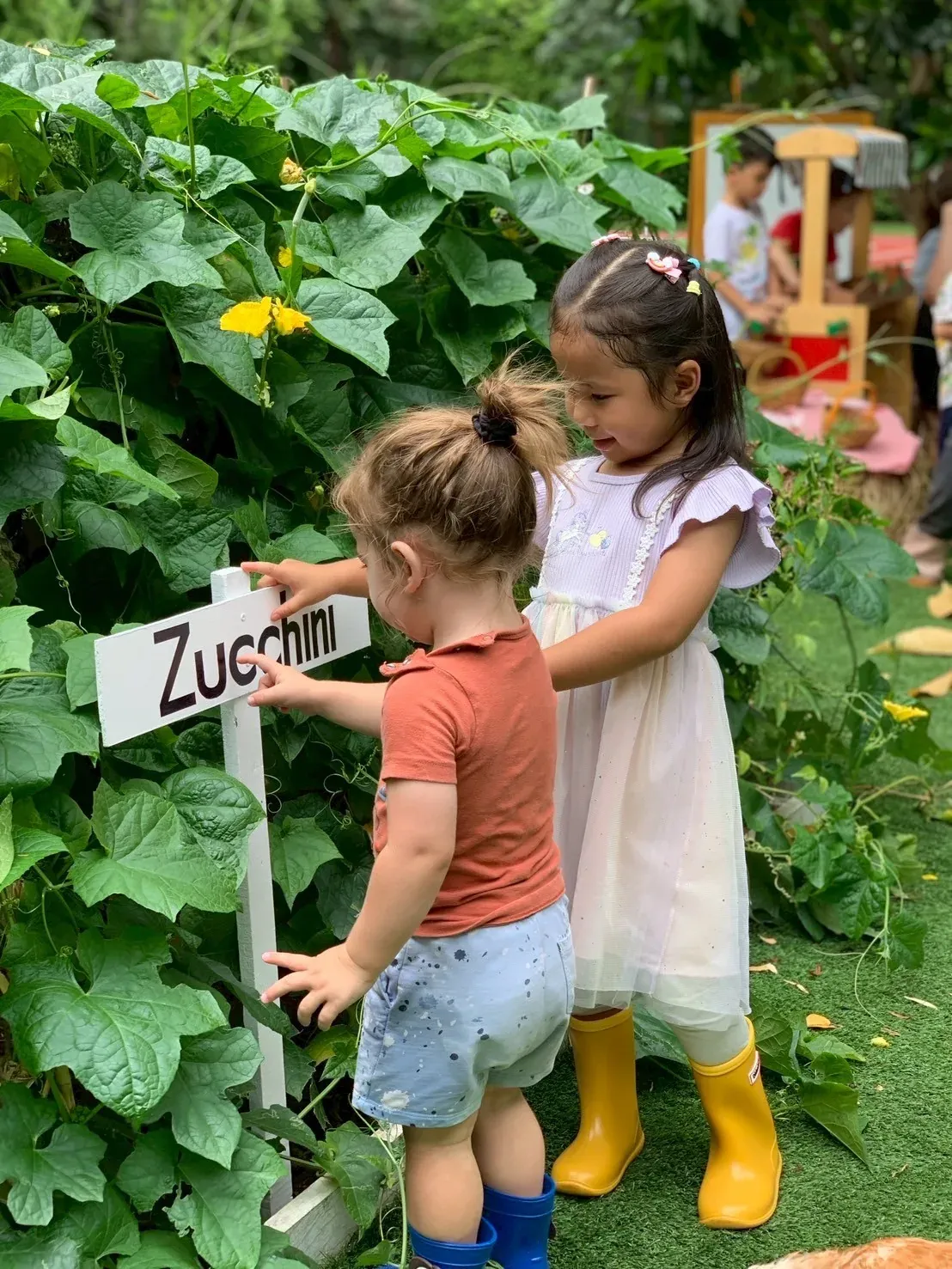
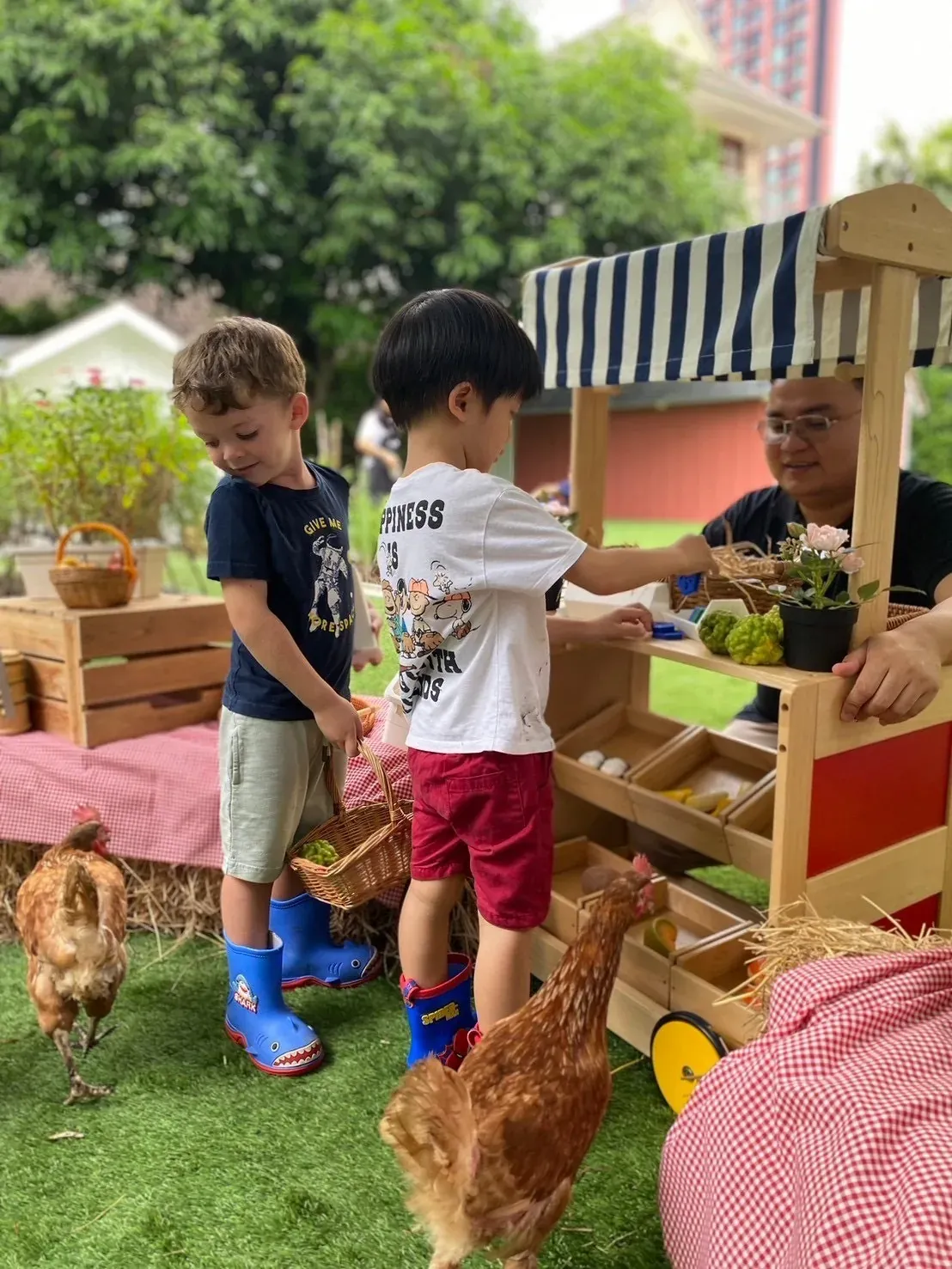
This is the farm ecosystem in action. Boots on, and out to the farm: children collect and count the eggs, tend their vegetable plots, look after the chickens, and record what they observe.
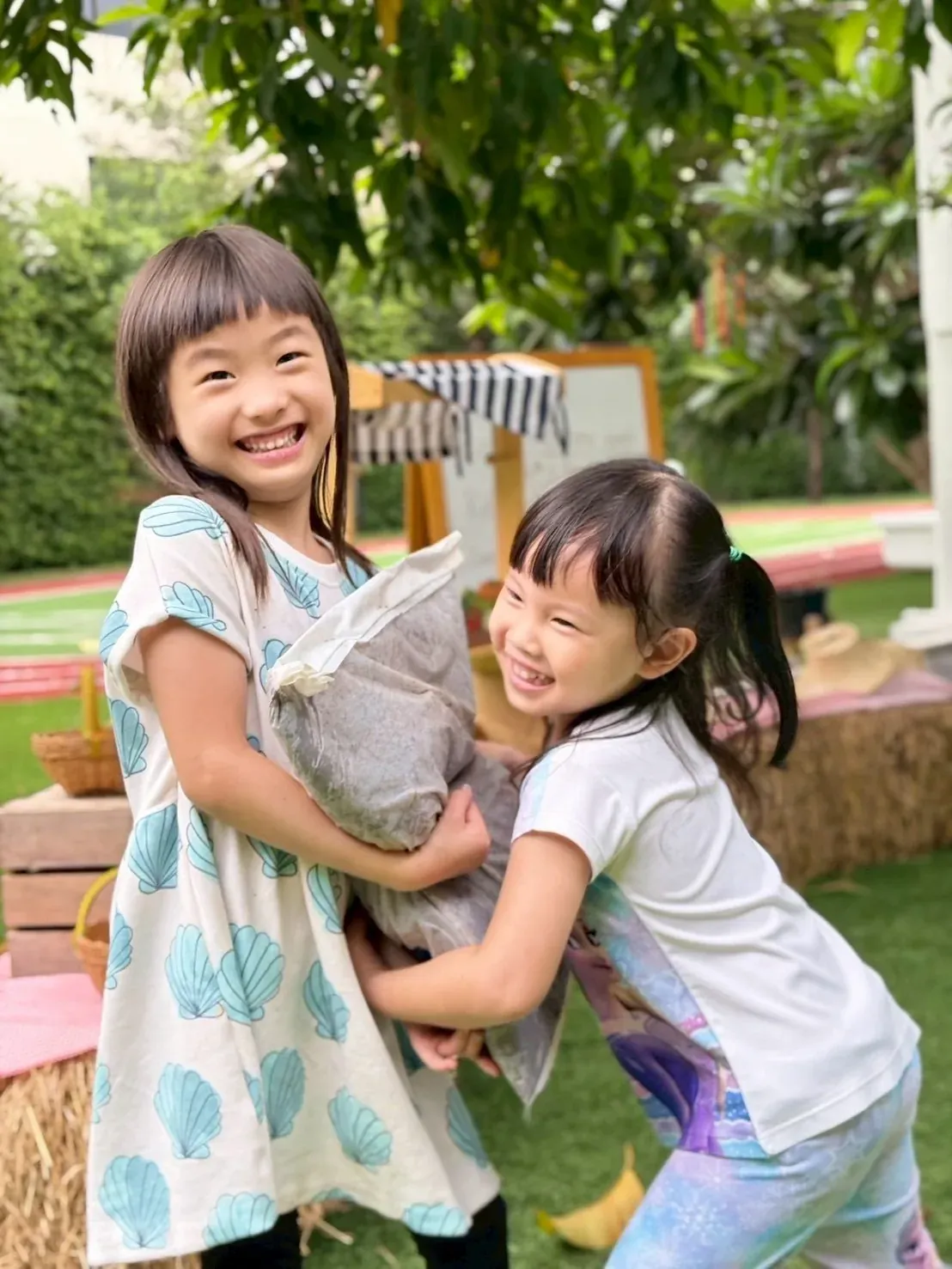
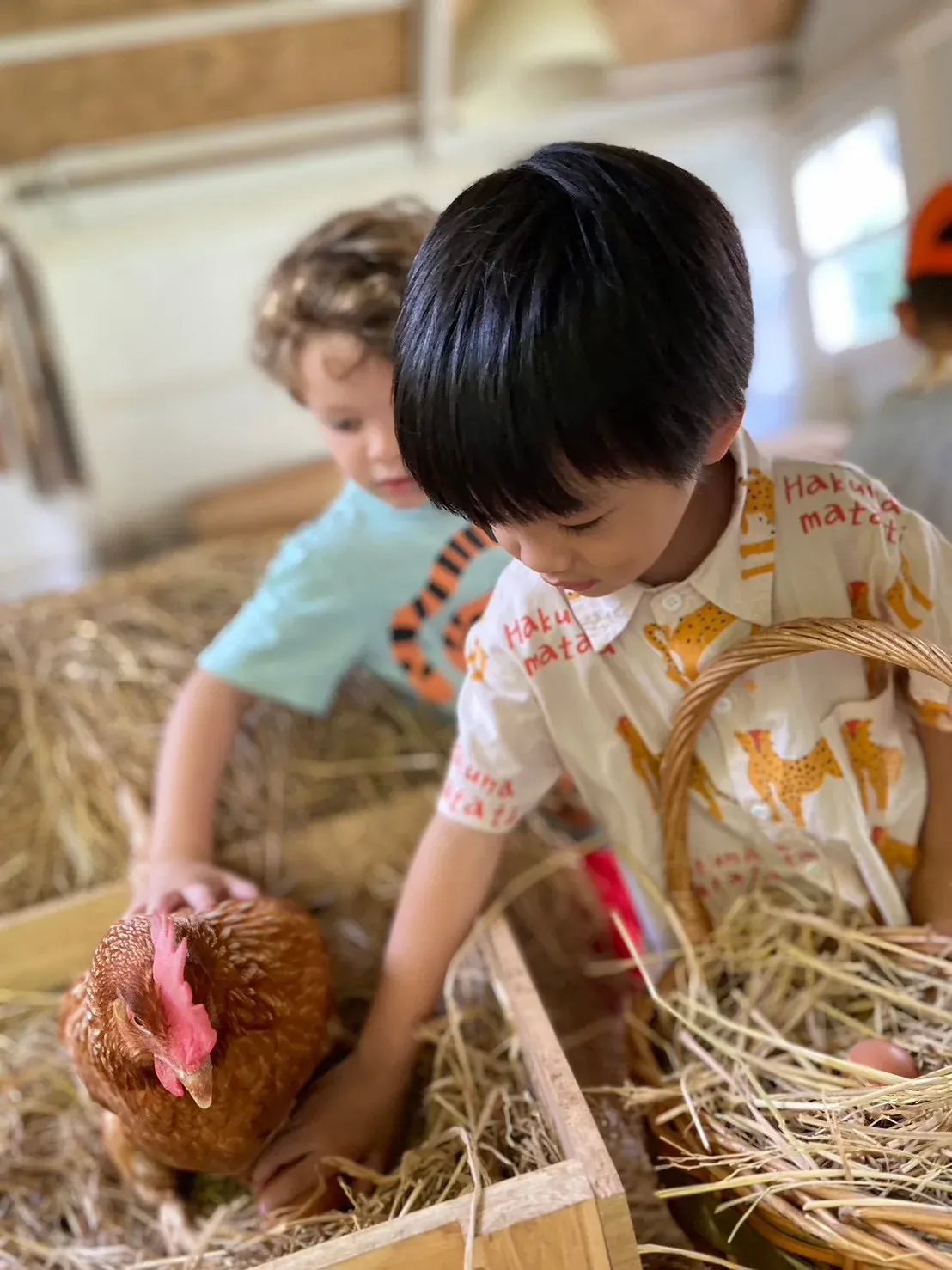
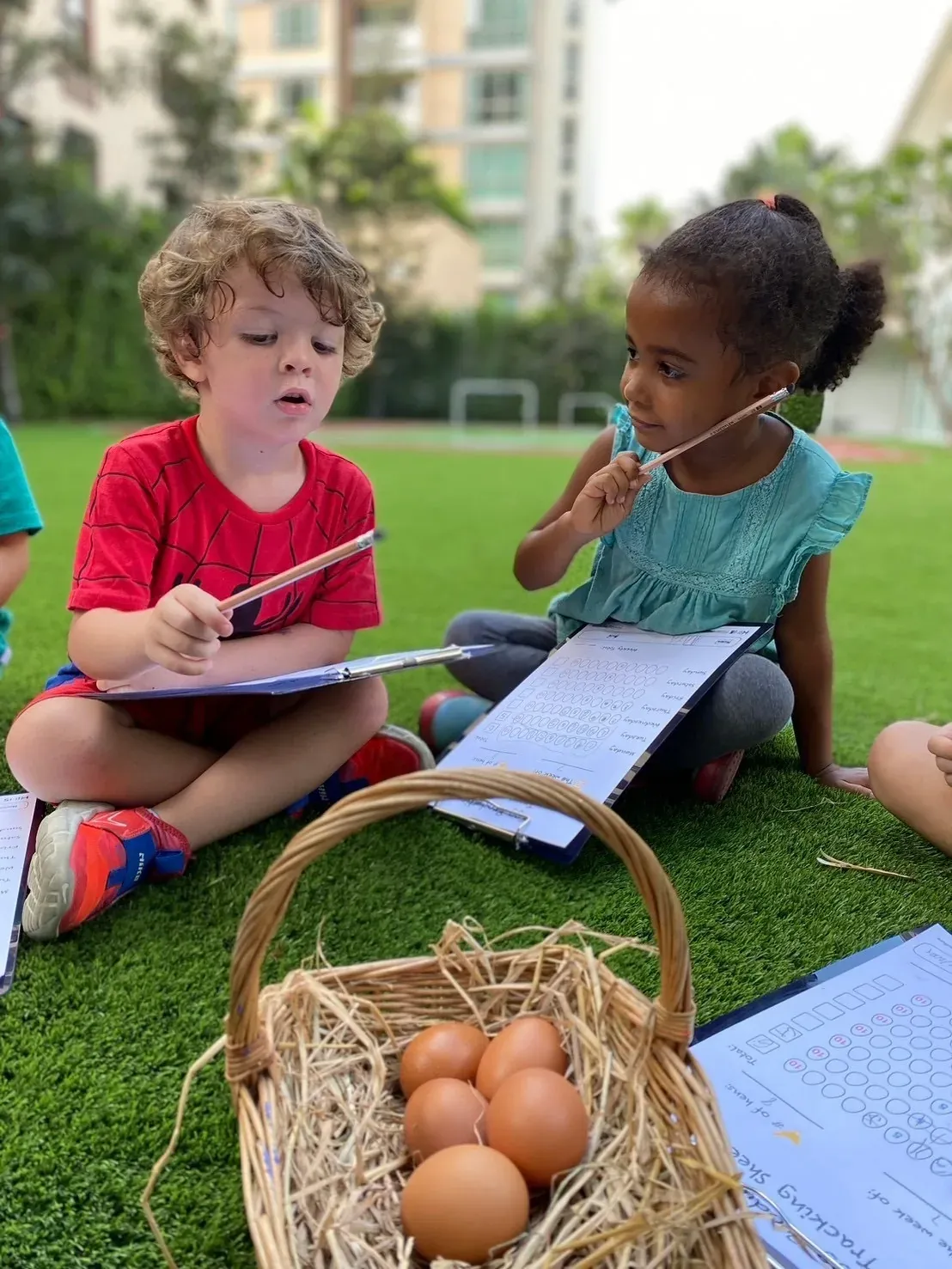
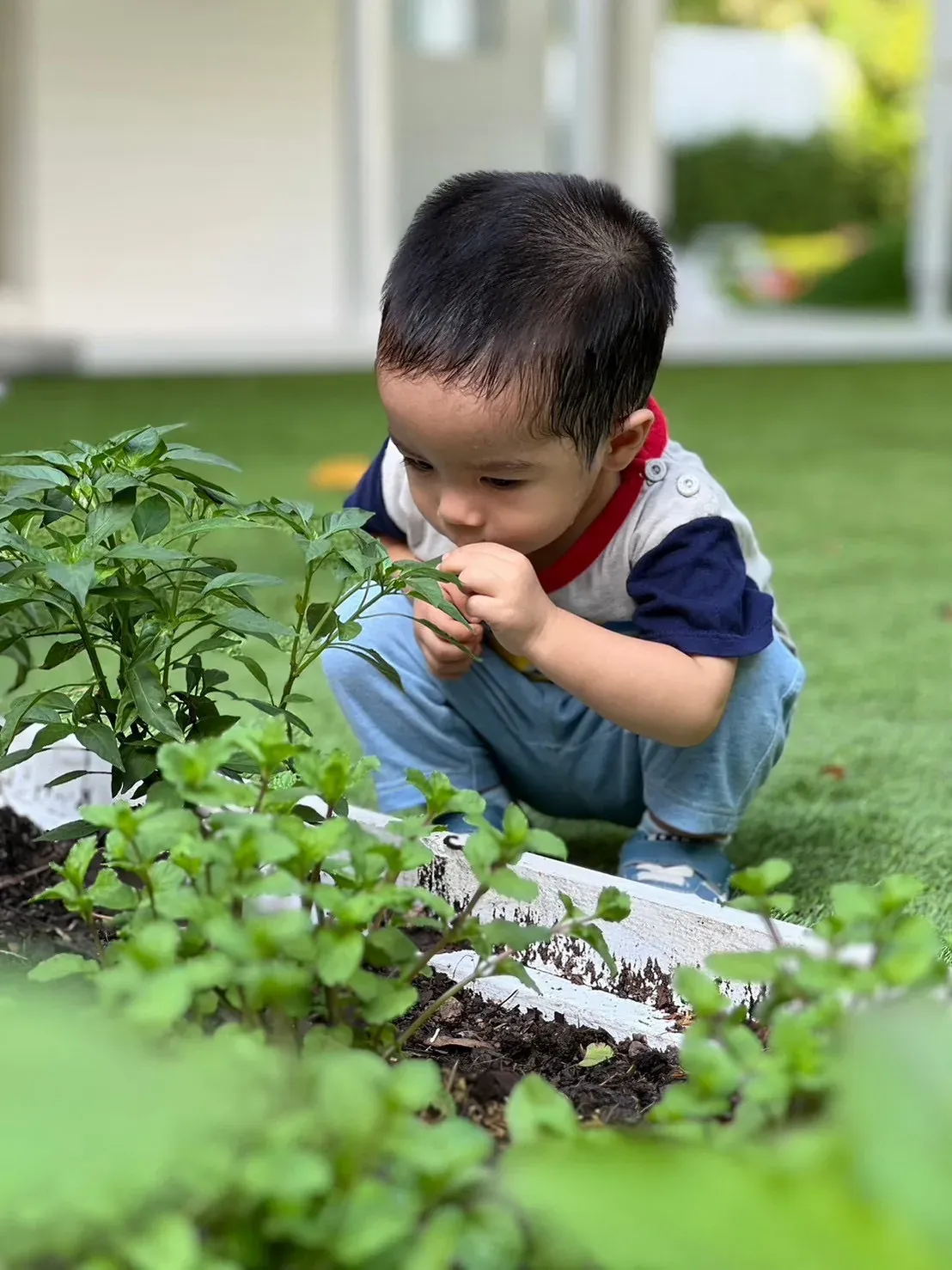
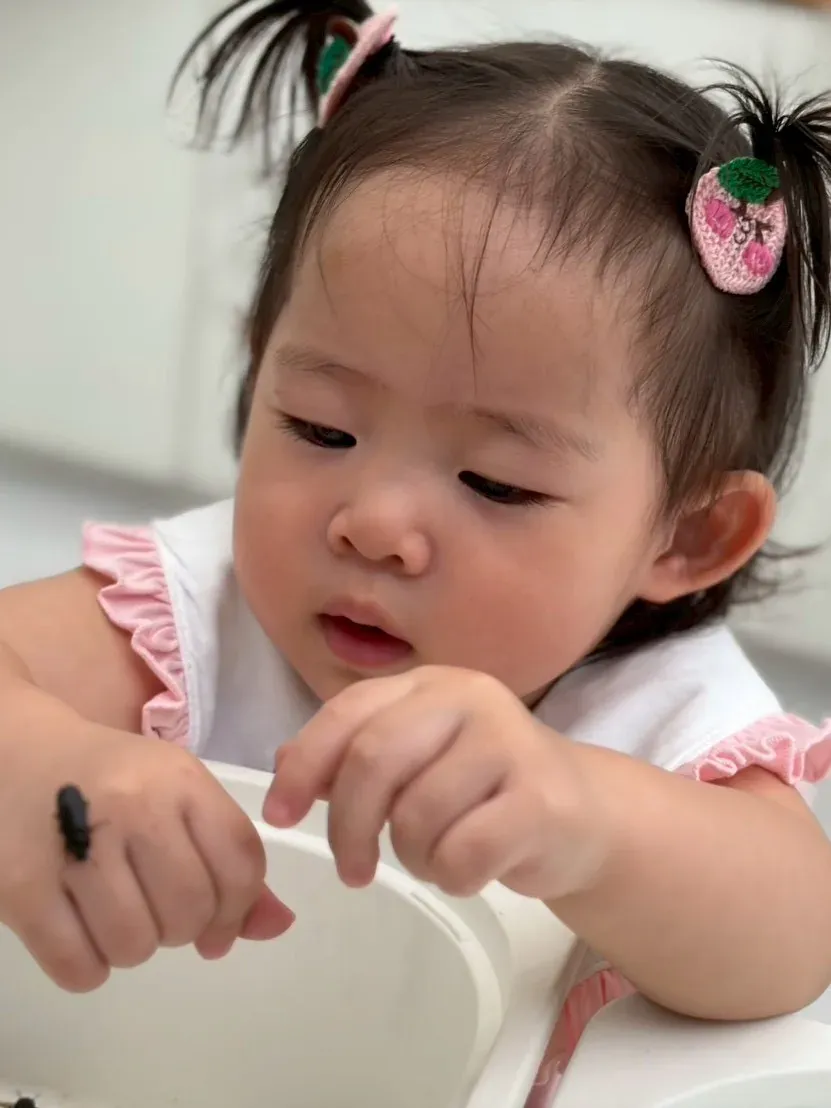
Mealworms. Children raise mealworms, sorting the larvae from the pupae and beetles as each one changes.
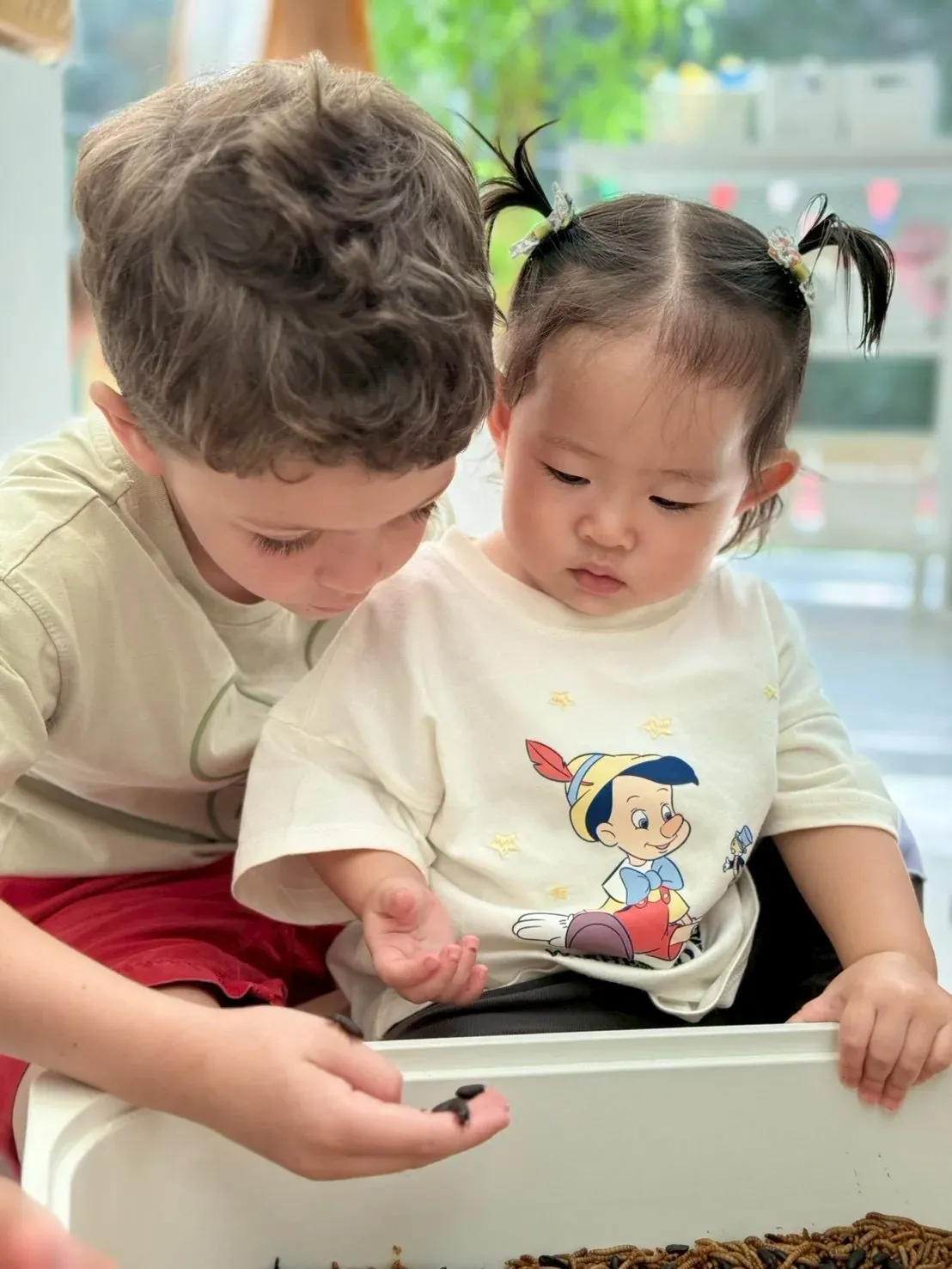
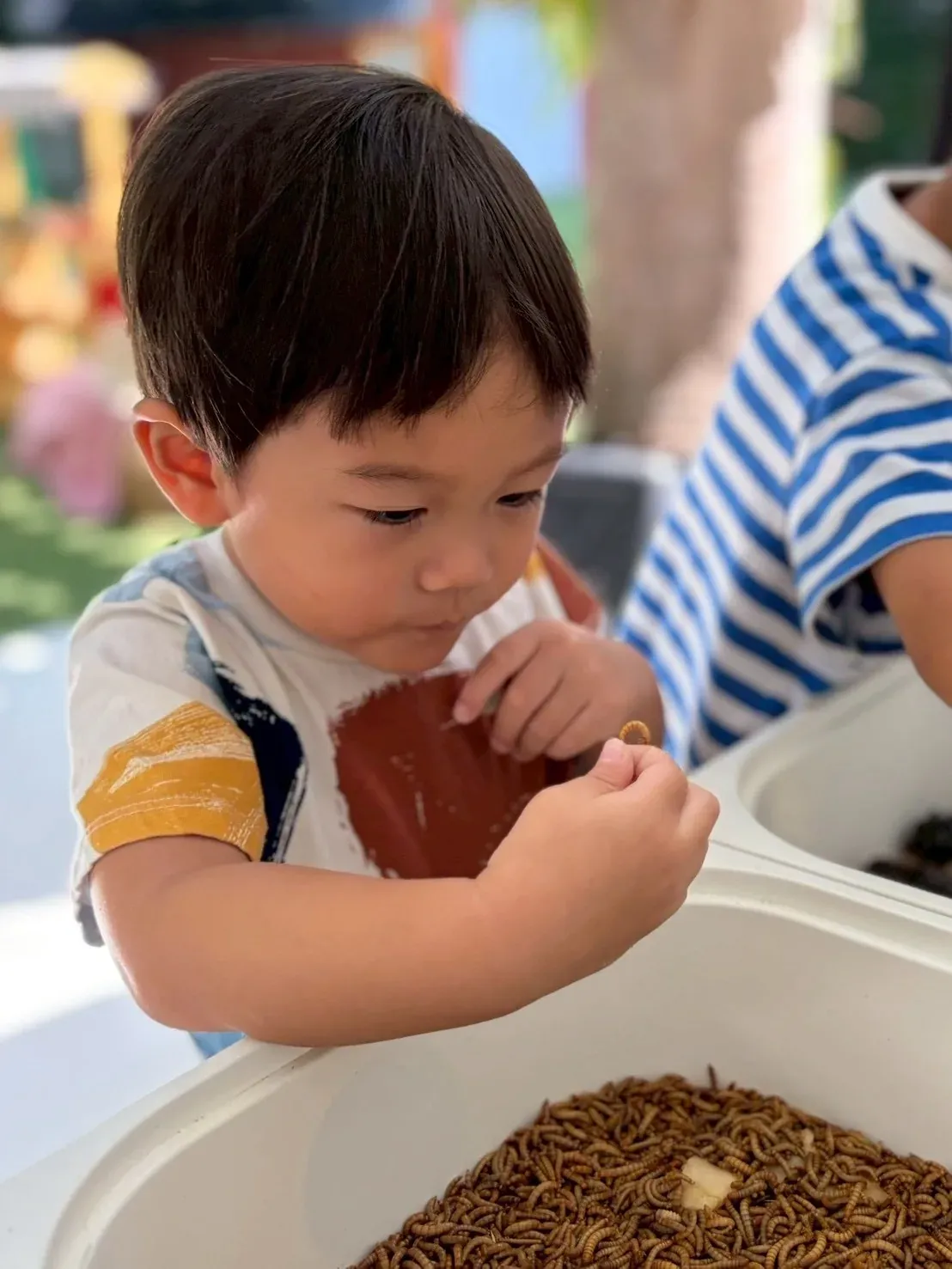
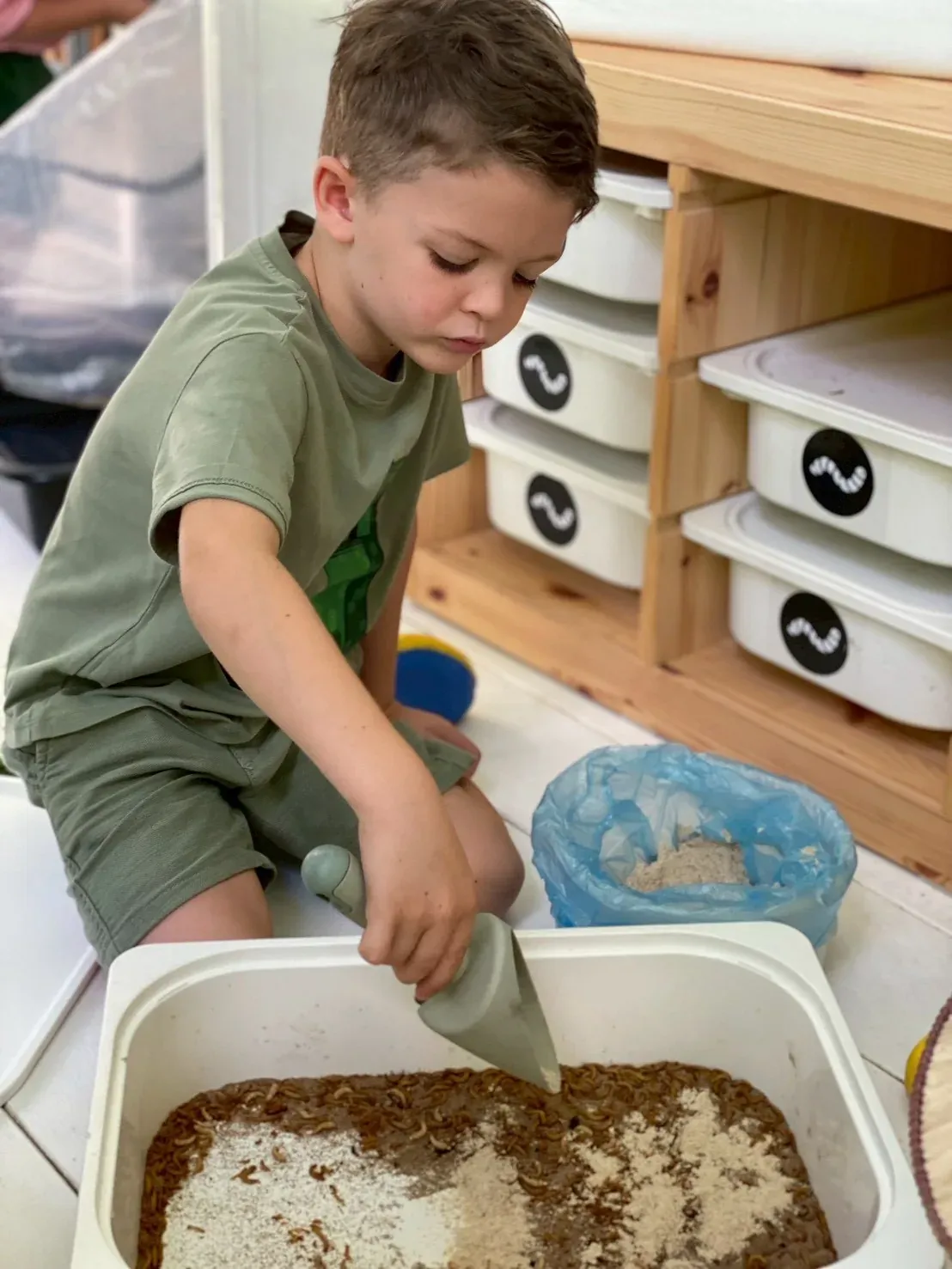
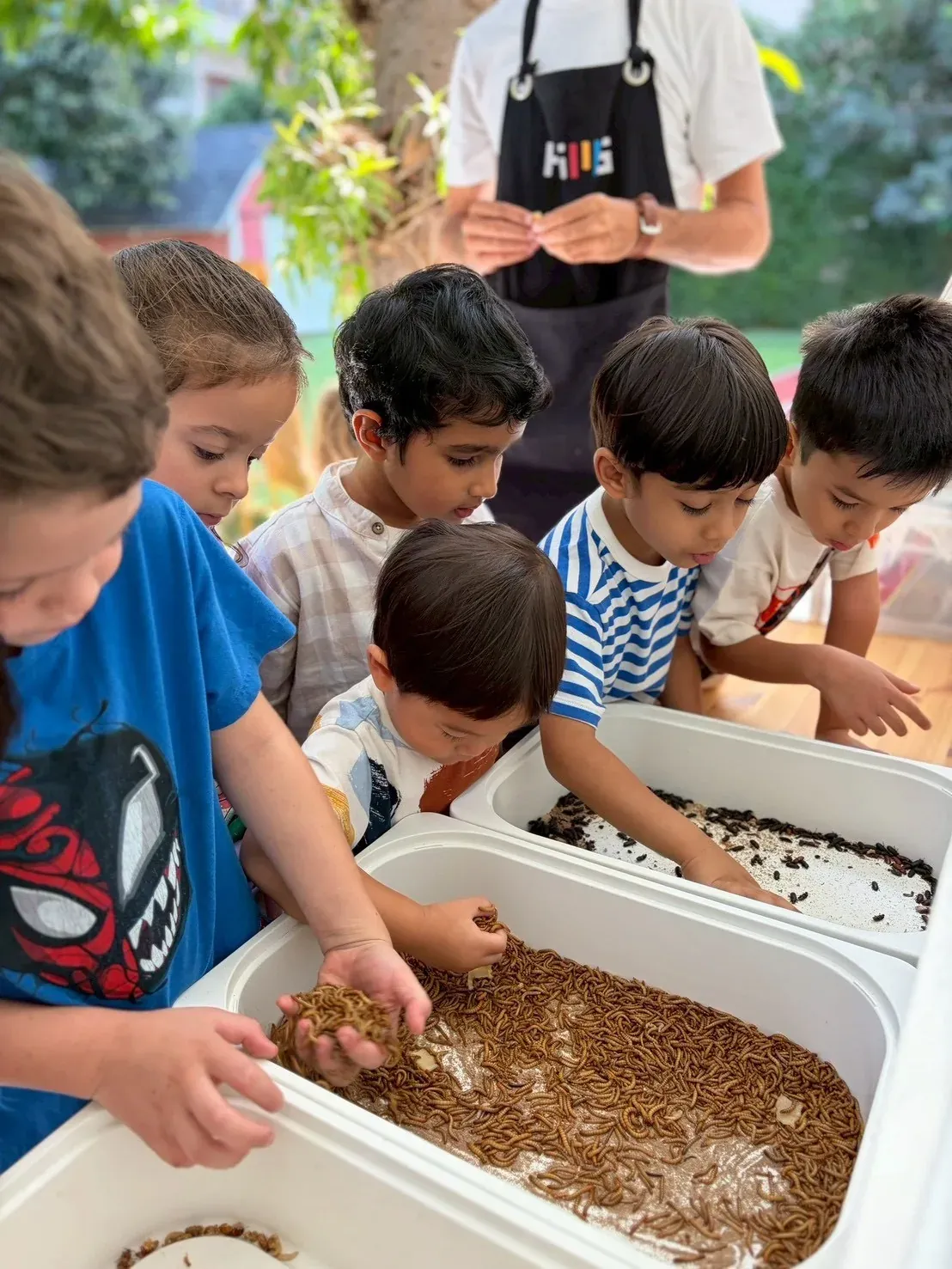
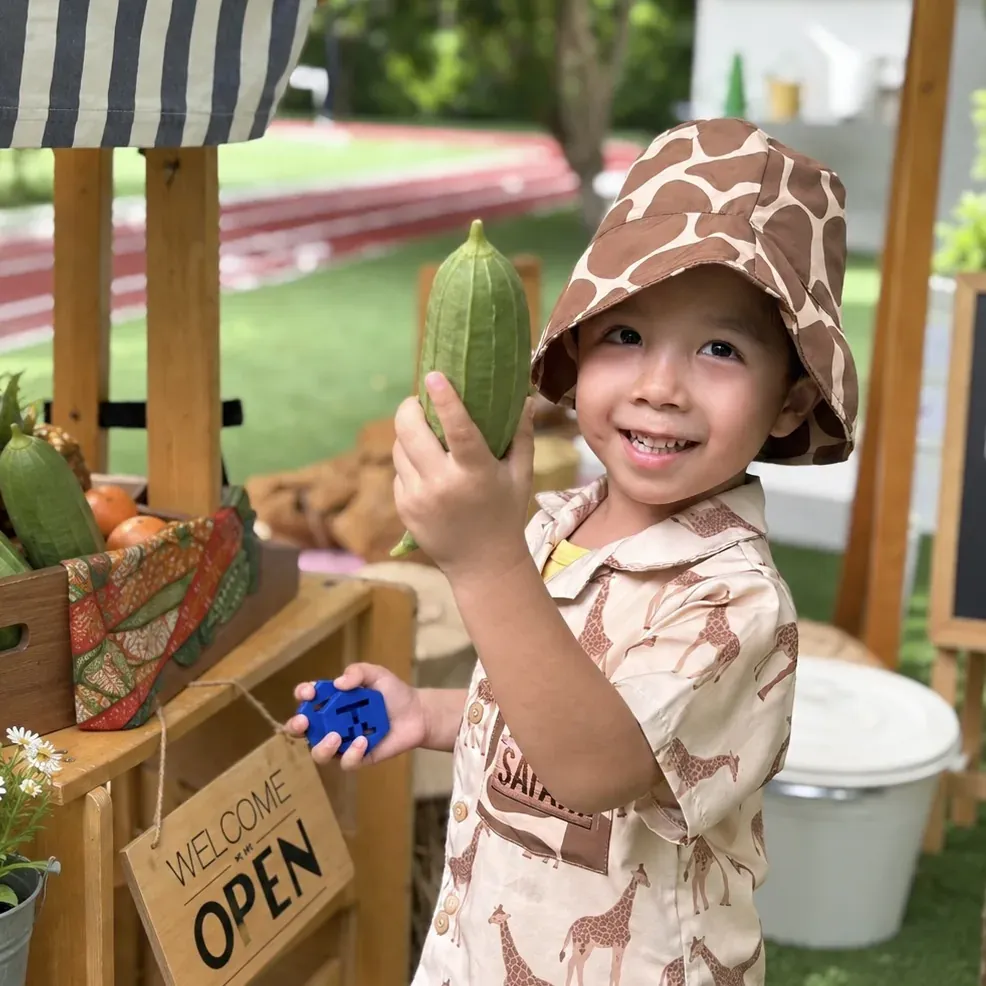
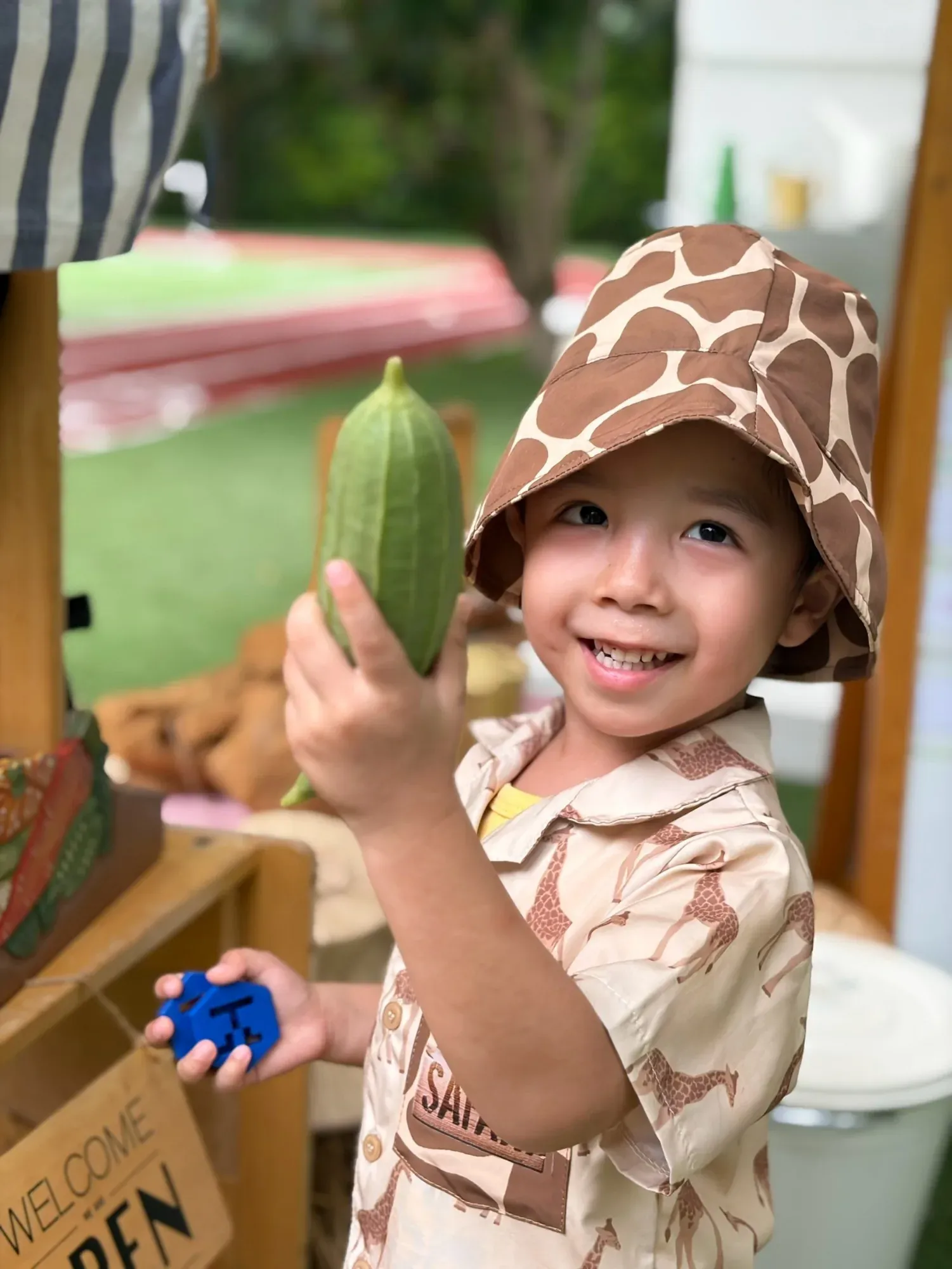
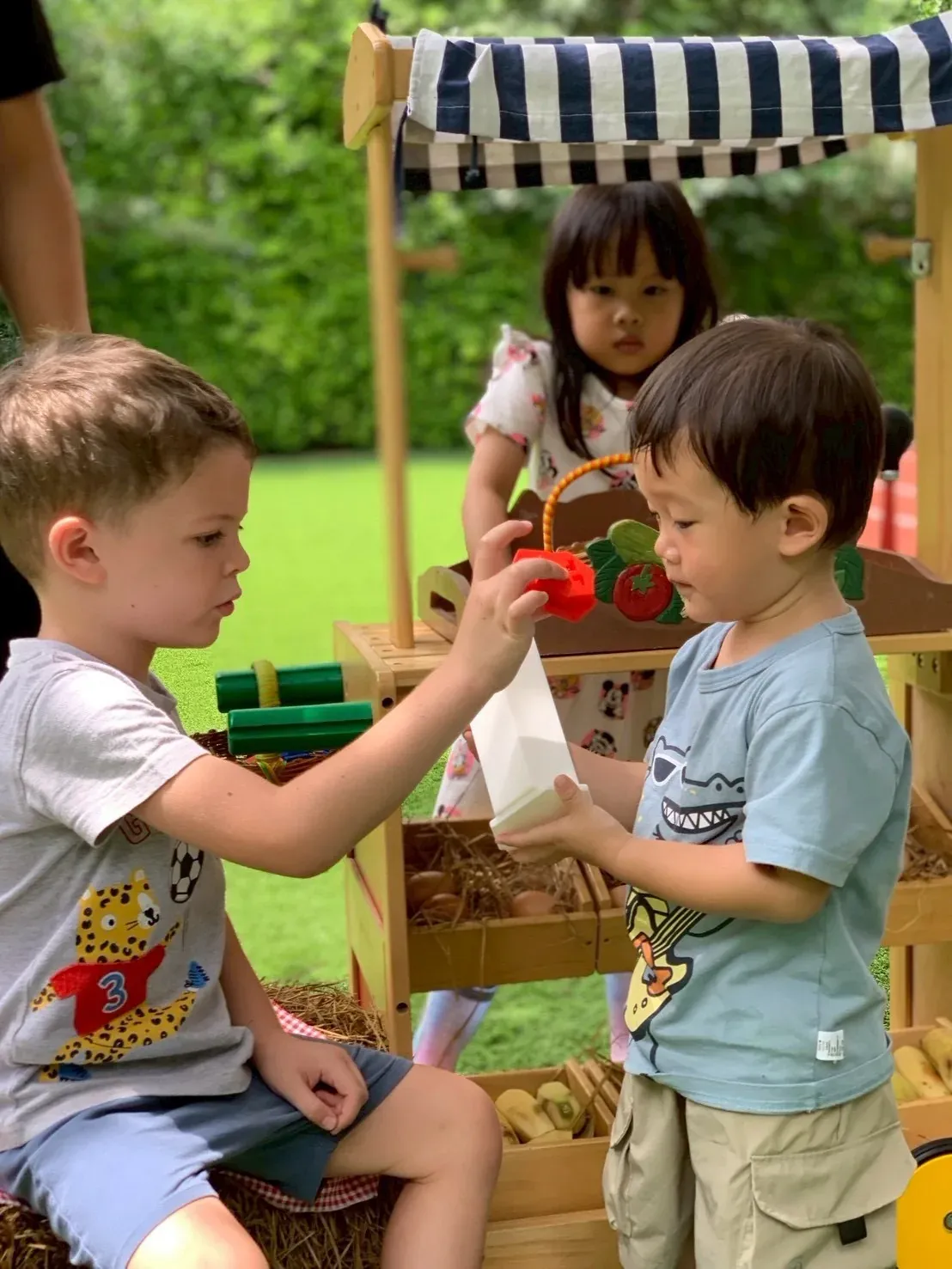
The market. Farming ends each day at the KIMS Market, where children buy and sell what the farm has produced with the coins they have earned. How the money works.
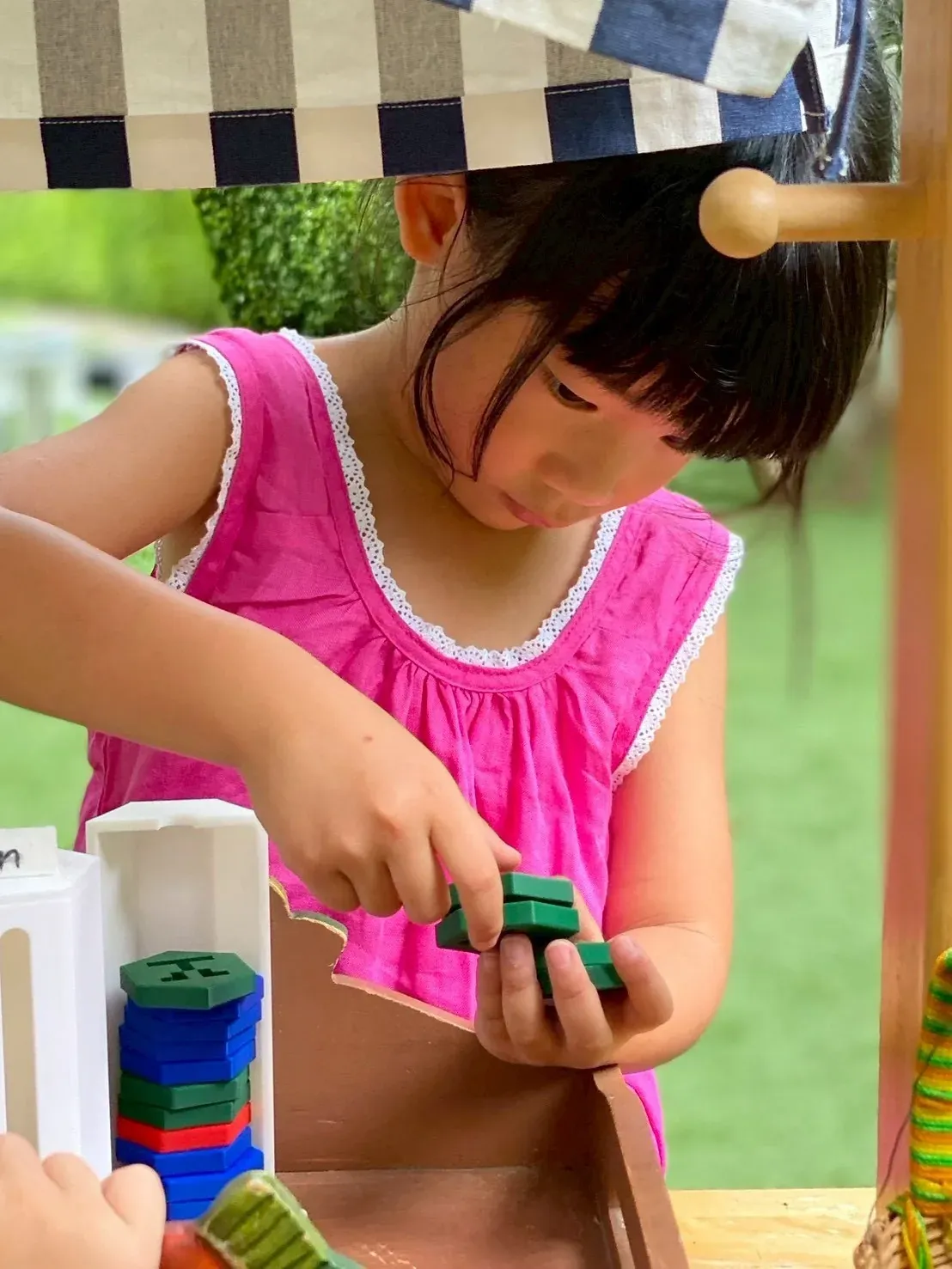
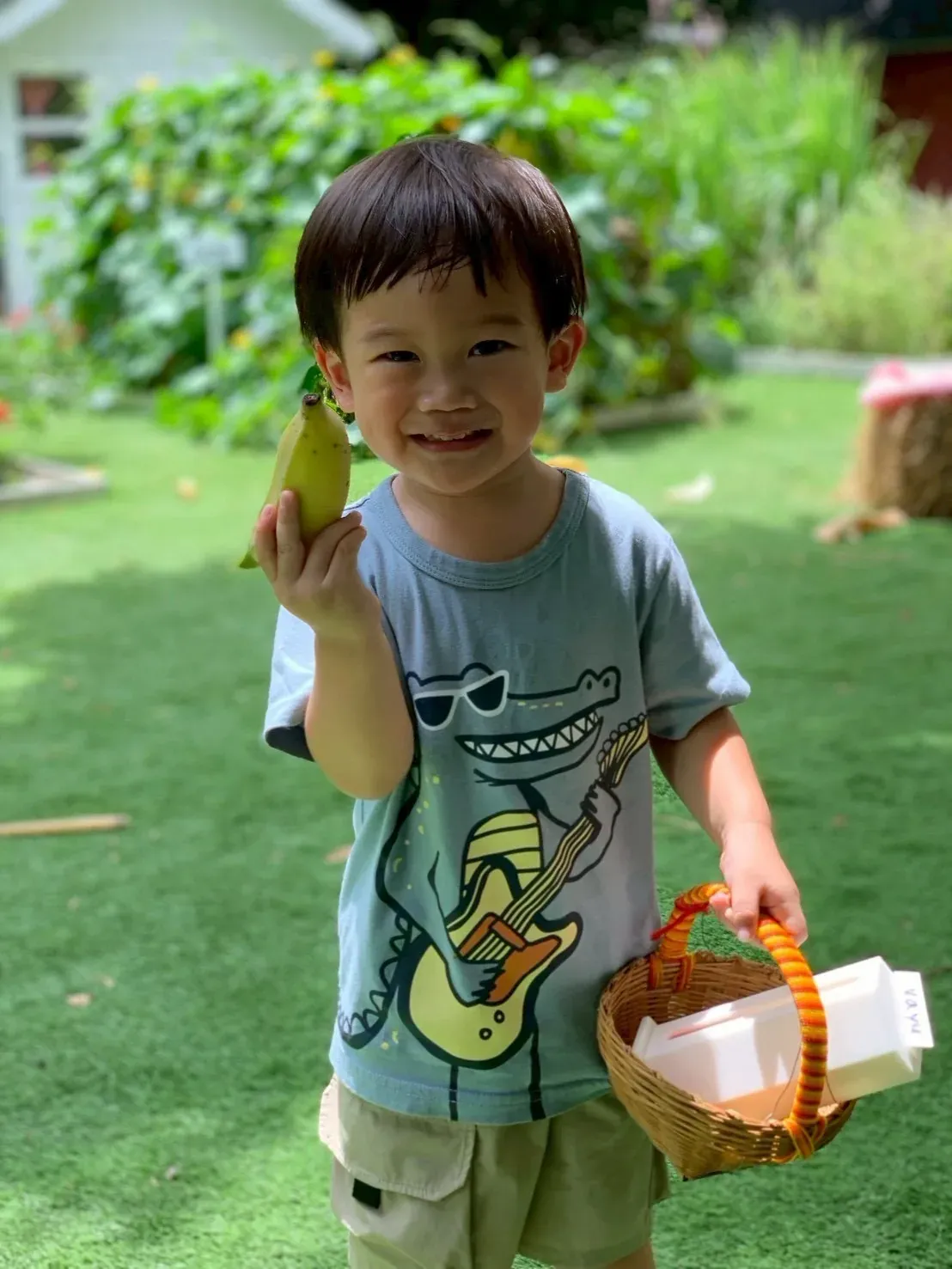
Everyone eats together, with fresh fruit to finish. Lunch is cooked fresh every day in our own kitchen at the Dusit campus, which cooks for both schools.
After lunch comes a core activity, a different subject each day. Two things reach into the afternoon. Entrepreneurship, which runs through the whole day, has its own lesson here, when the KIMS Market opens again. And the farm comes in too, above all in Food science, where children cook what they have grown.
A closer look at some of them:
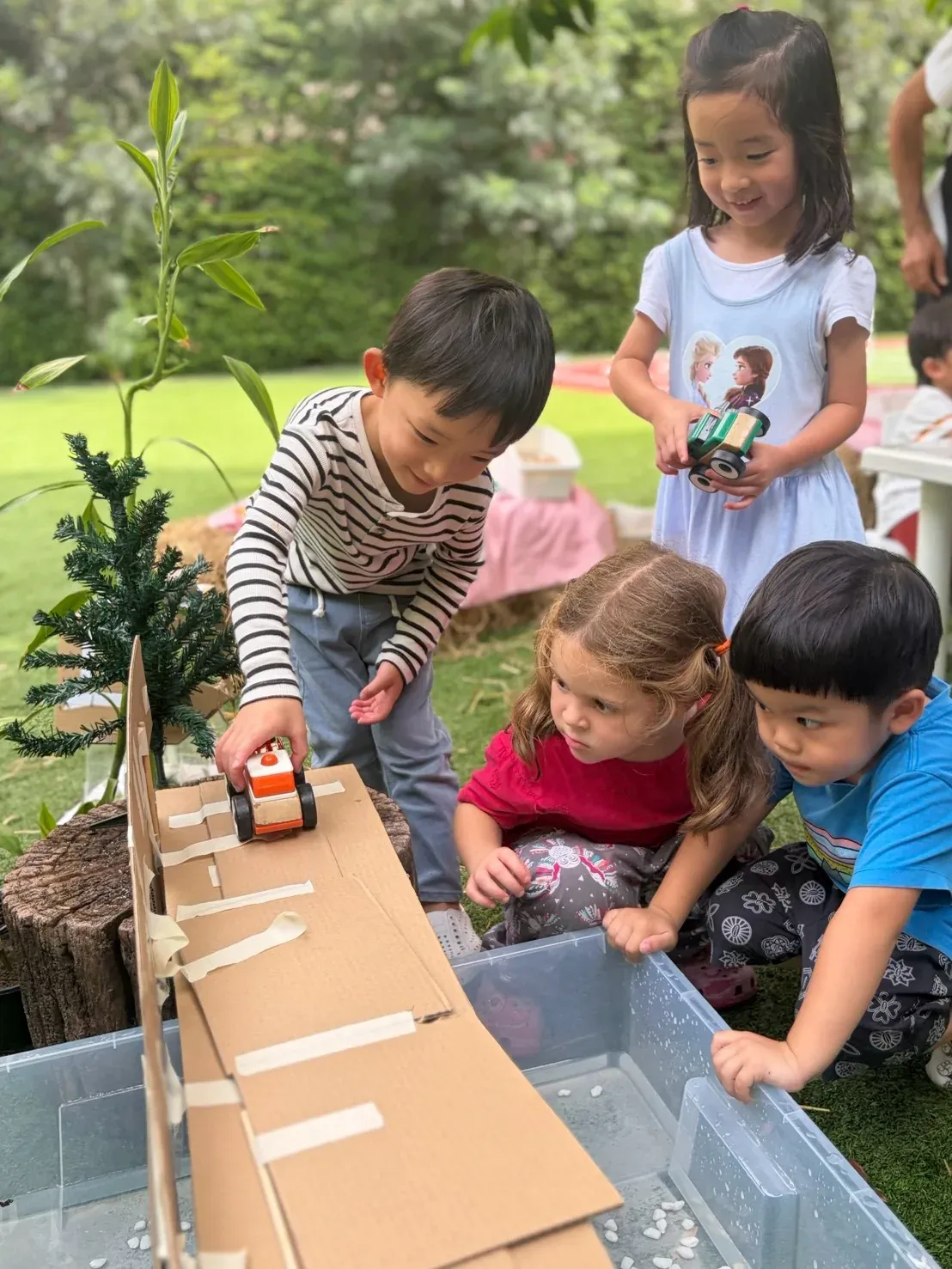
Product design from the beginning: a problem worth solving, a drawing, and then the building of it, with whatever tools and materials the job calls for. What does not work gets changed and made again.
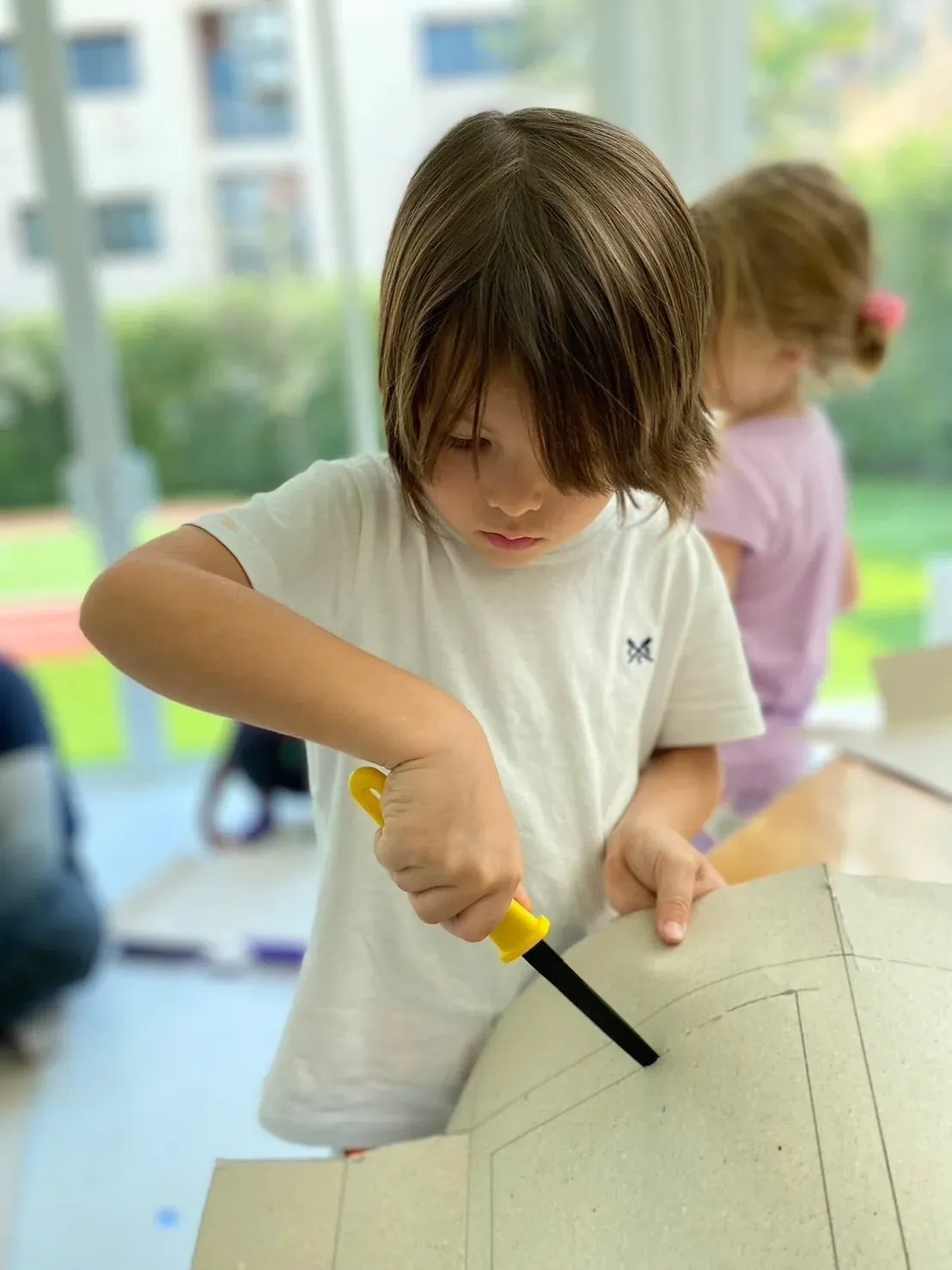
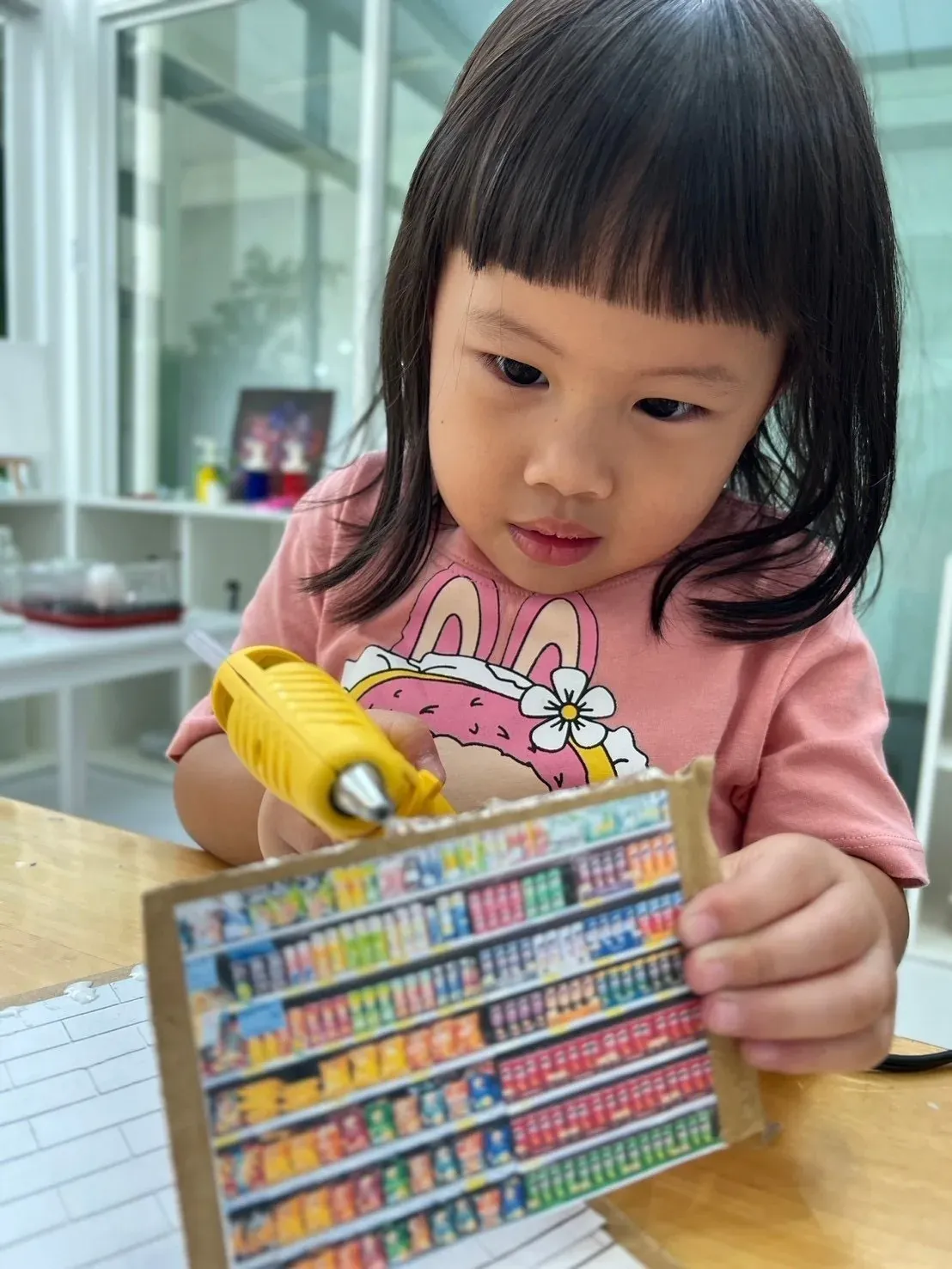
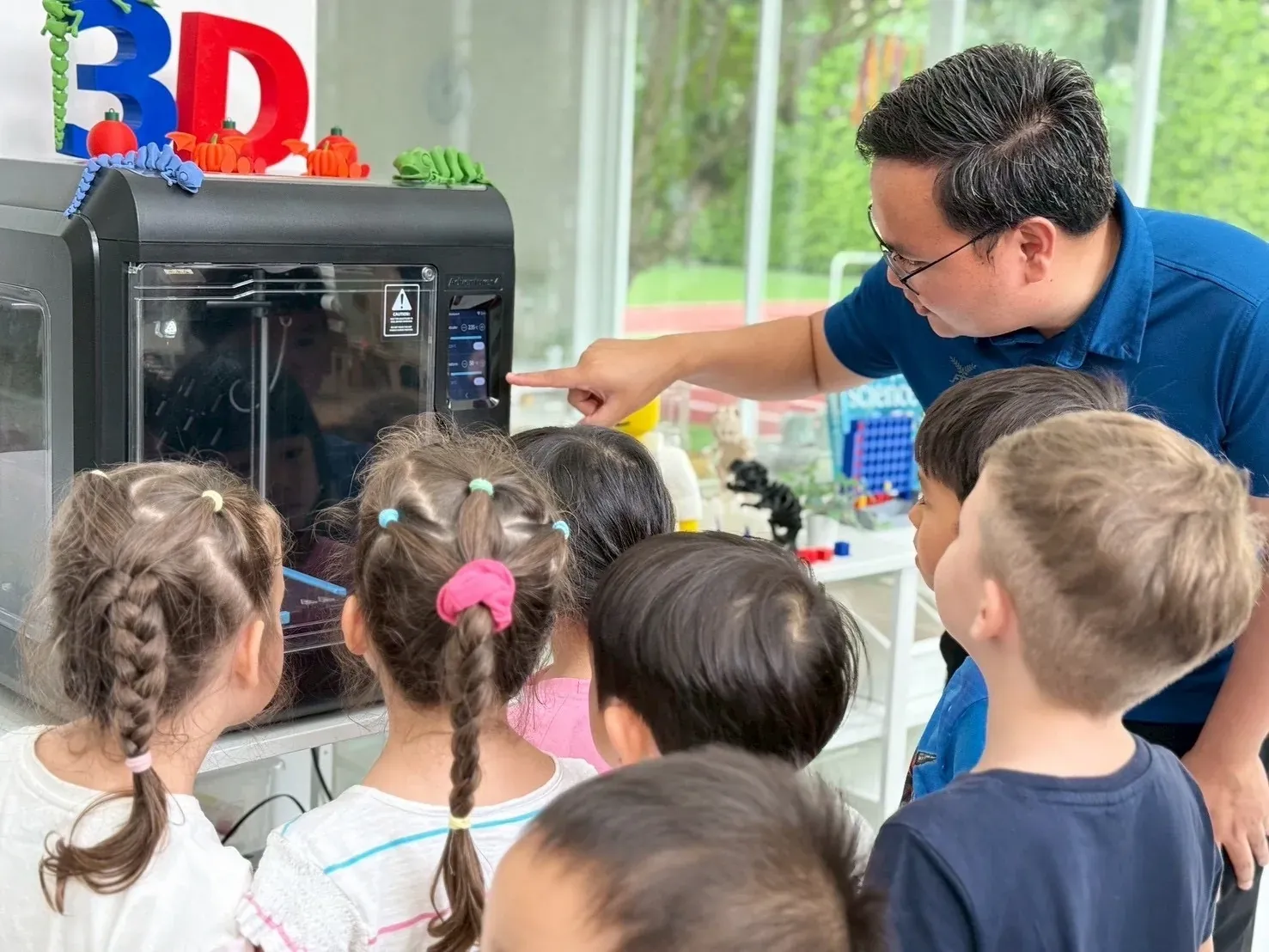
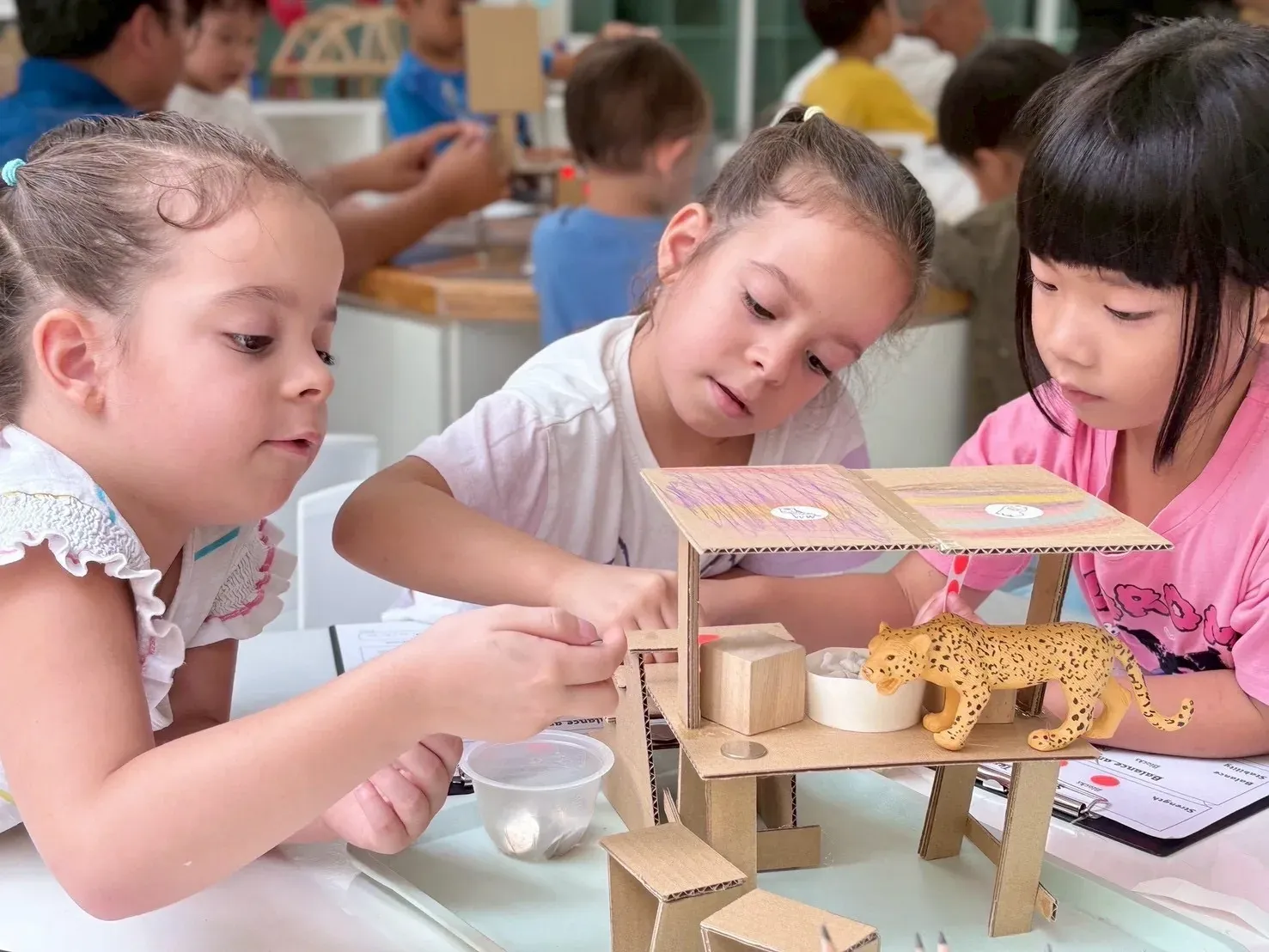
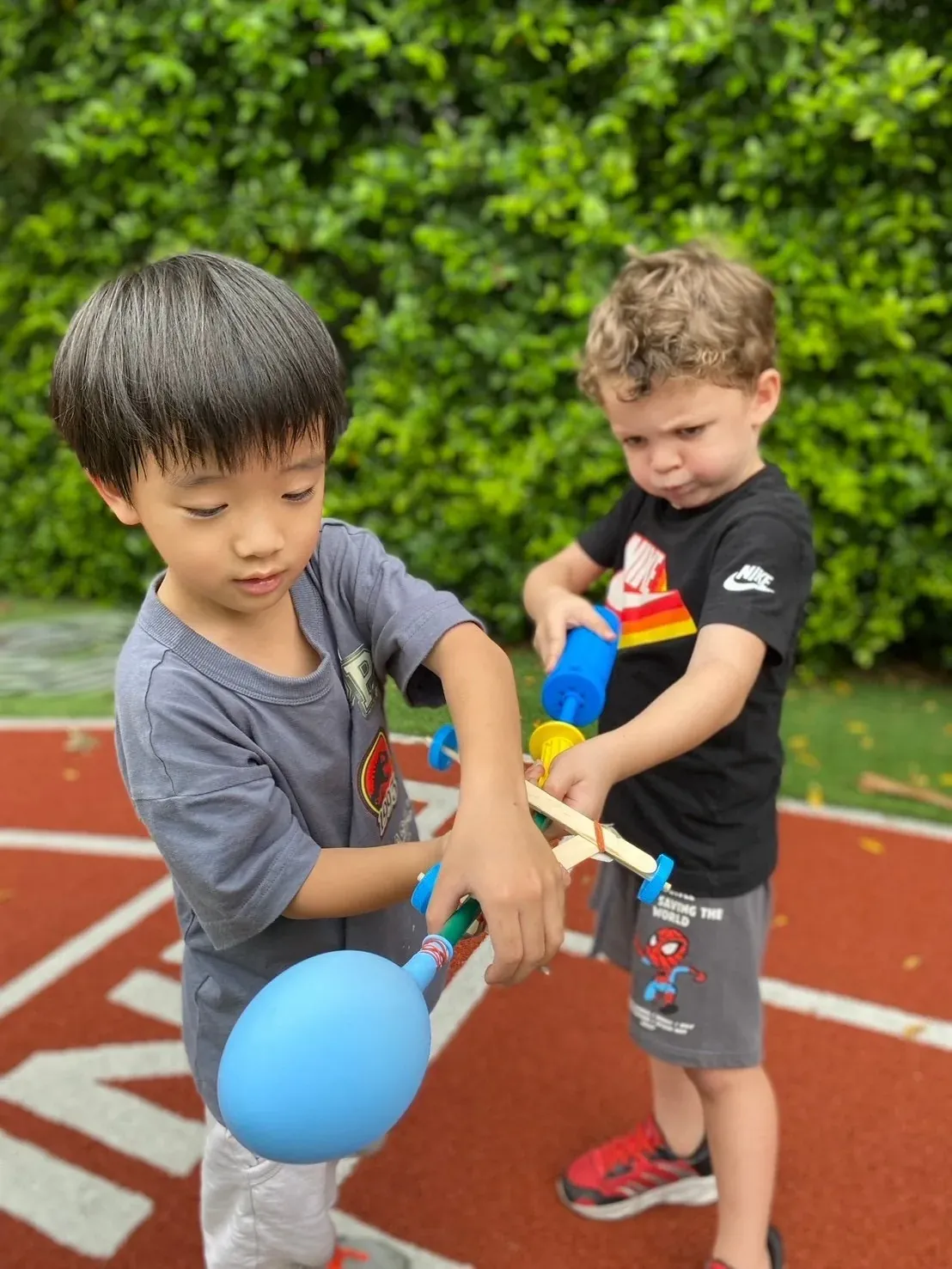
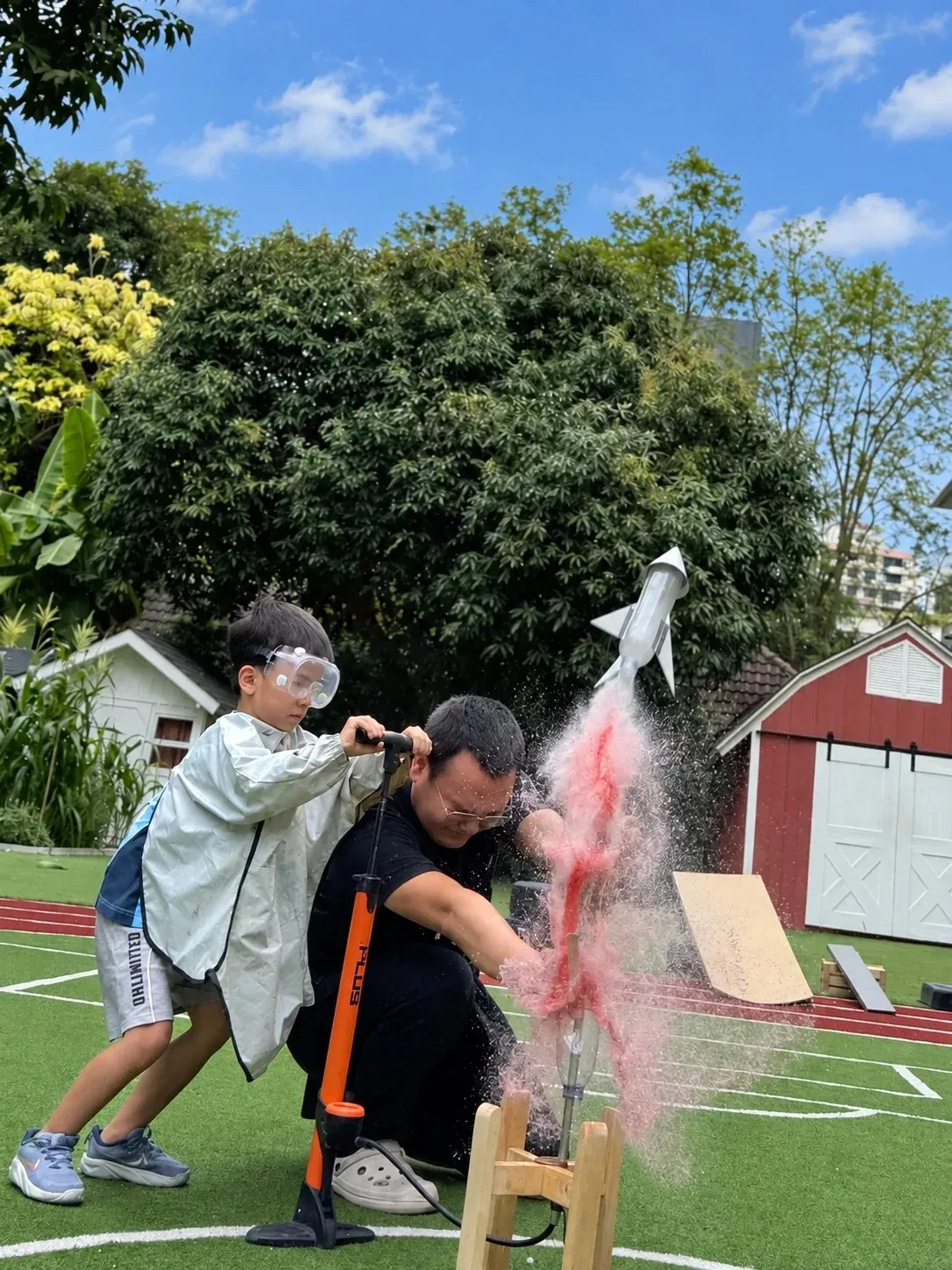
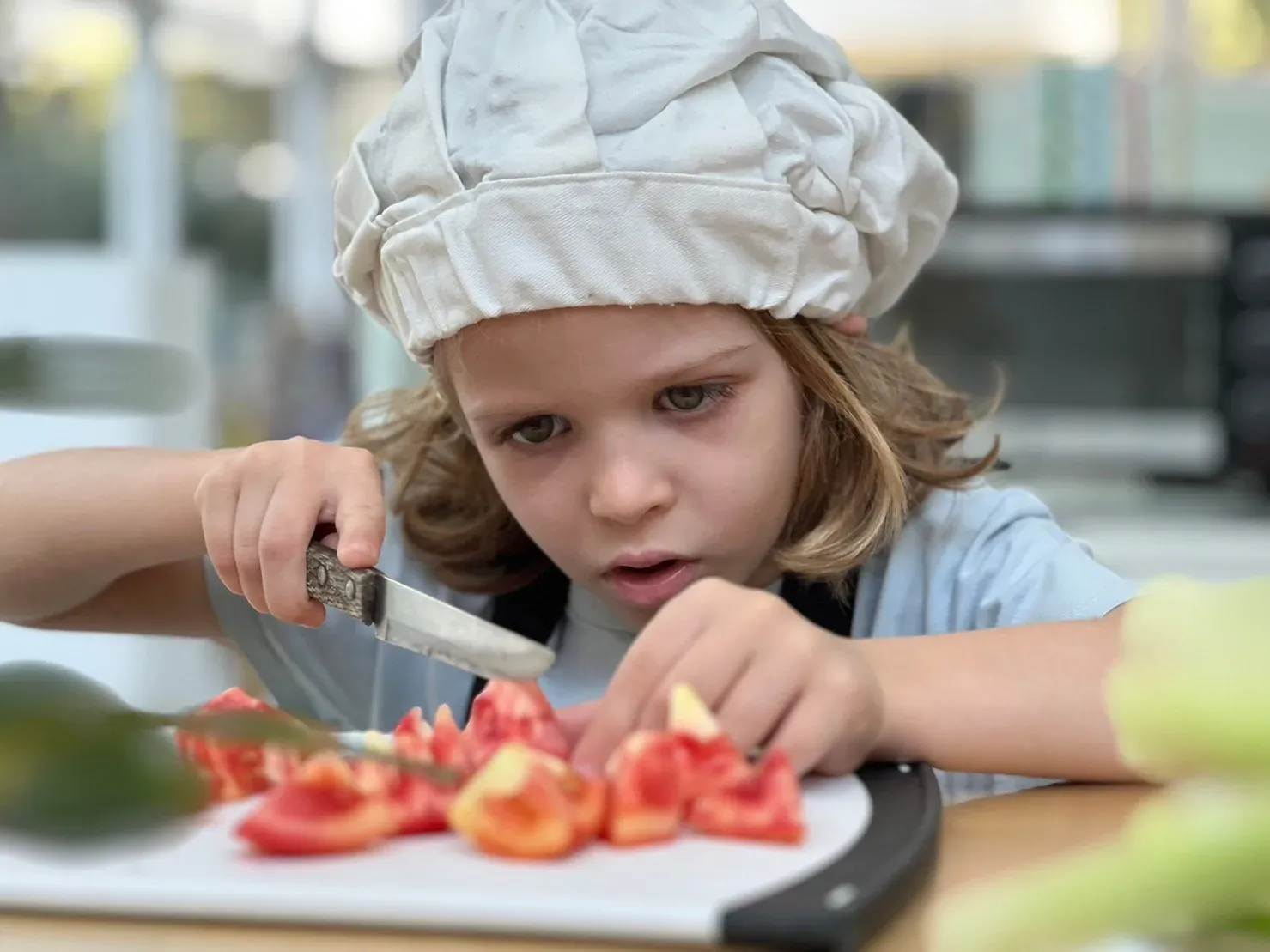
Measuring, mixing, heating and tasting, often with what the garden has just given: maths and science children can eat.
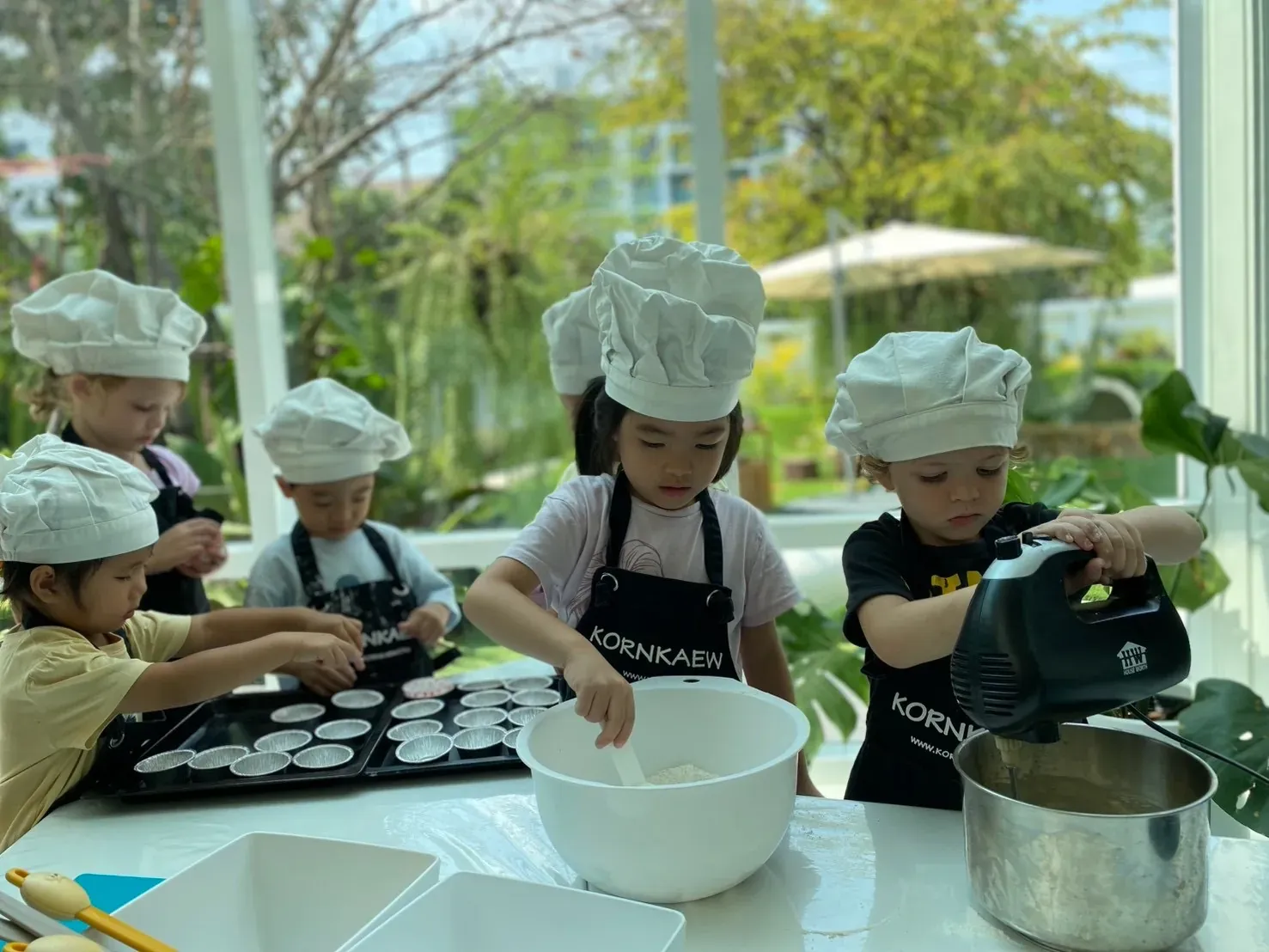
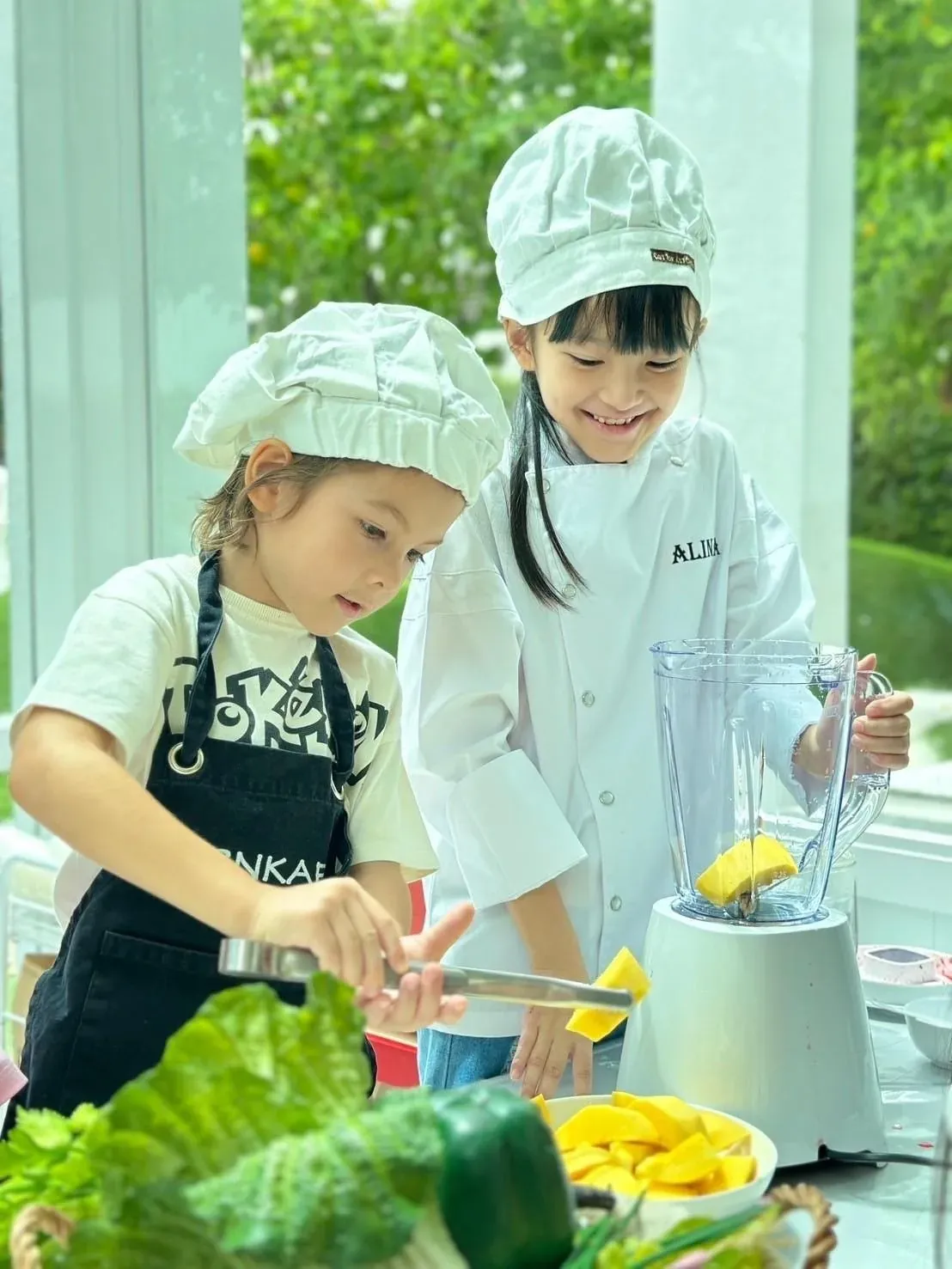
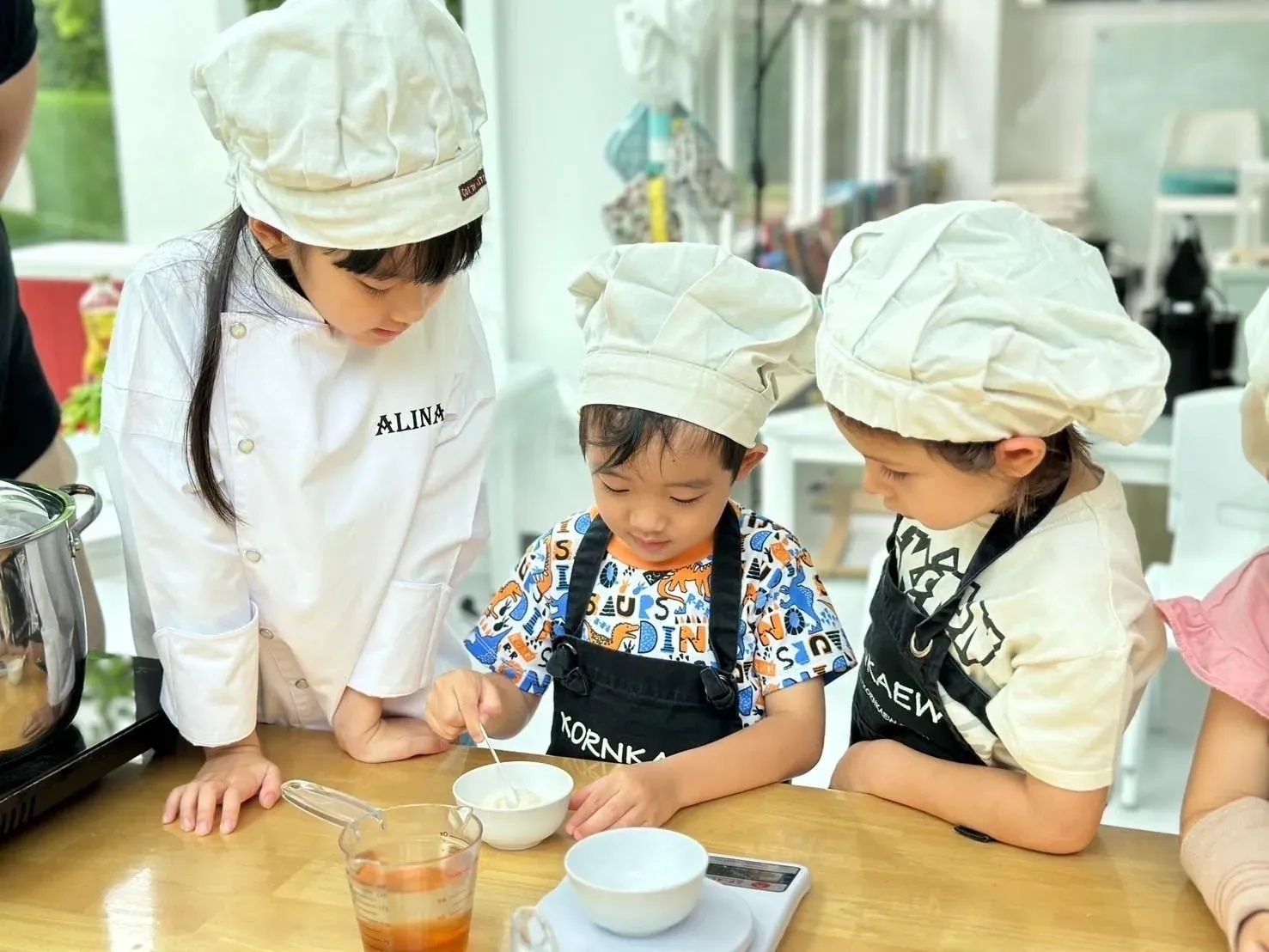
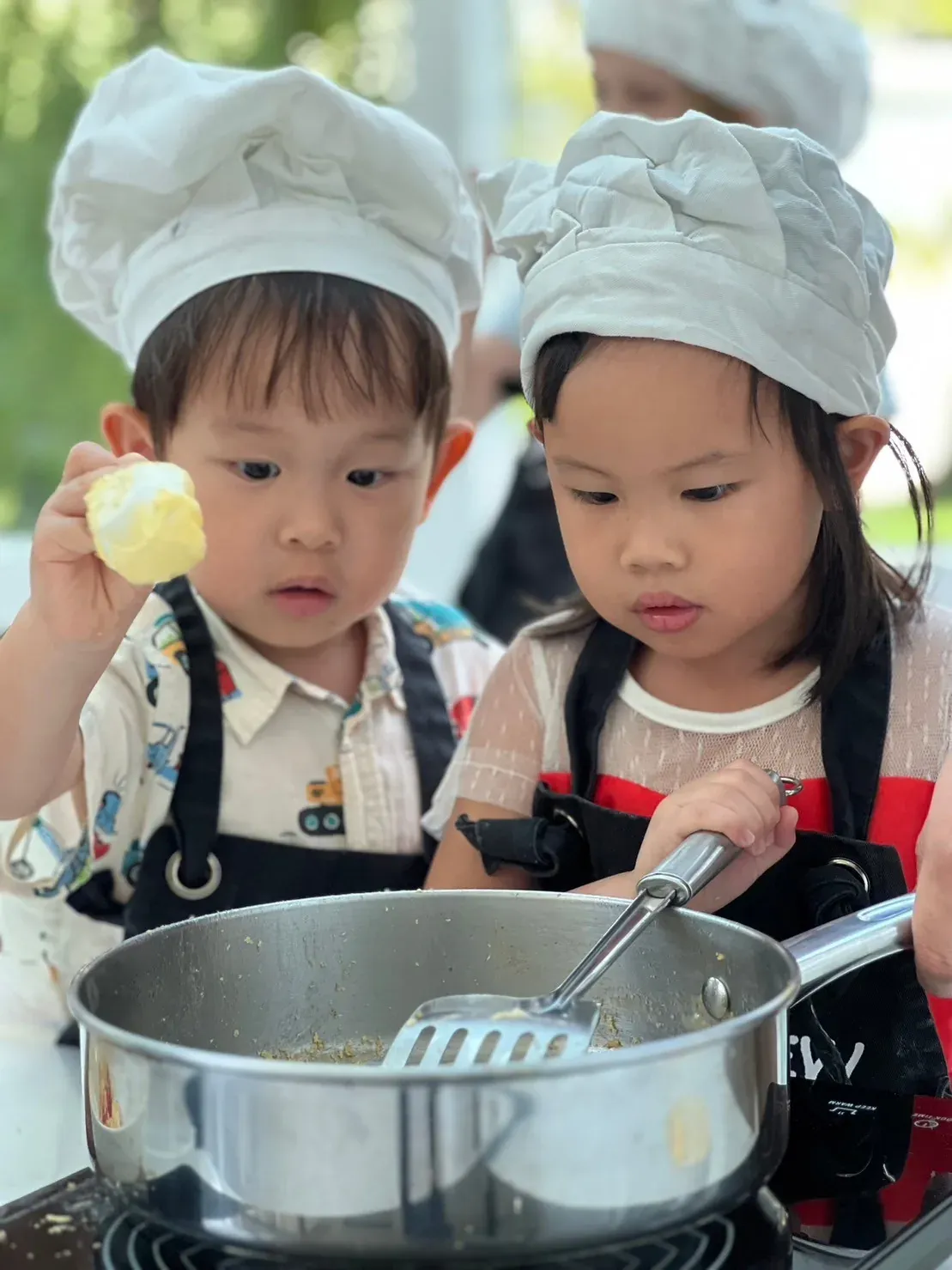
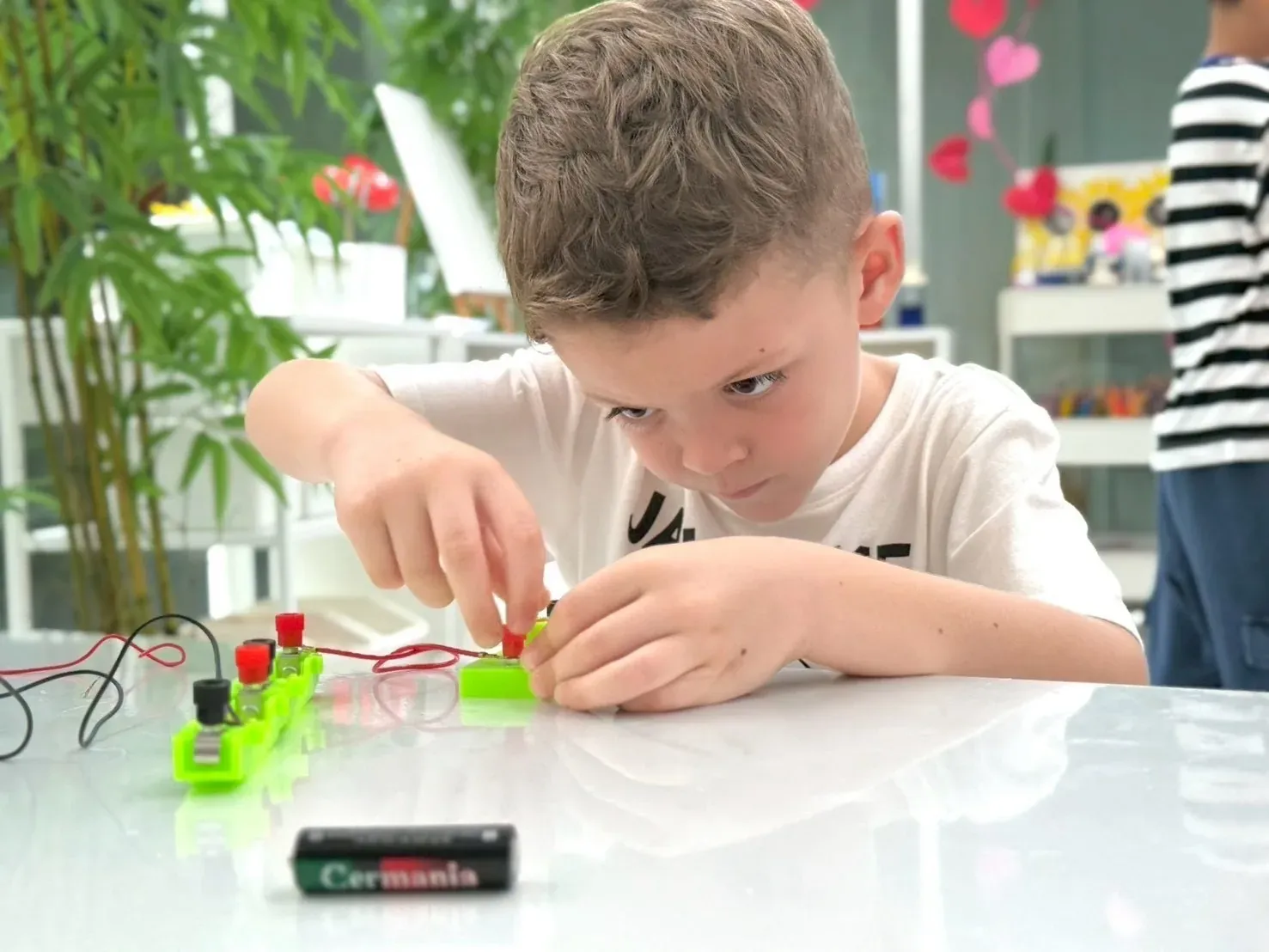
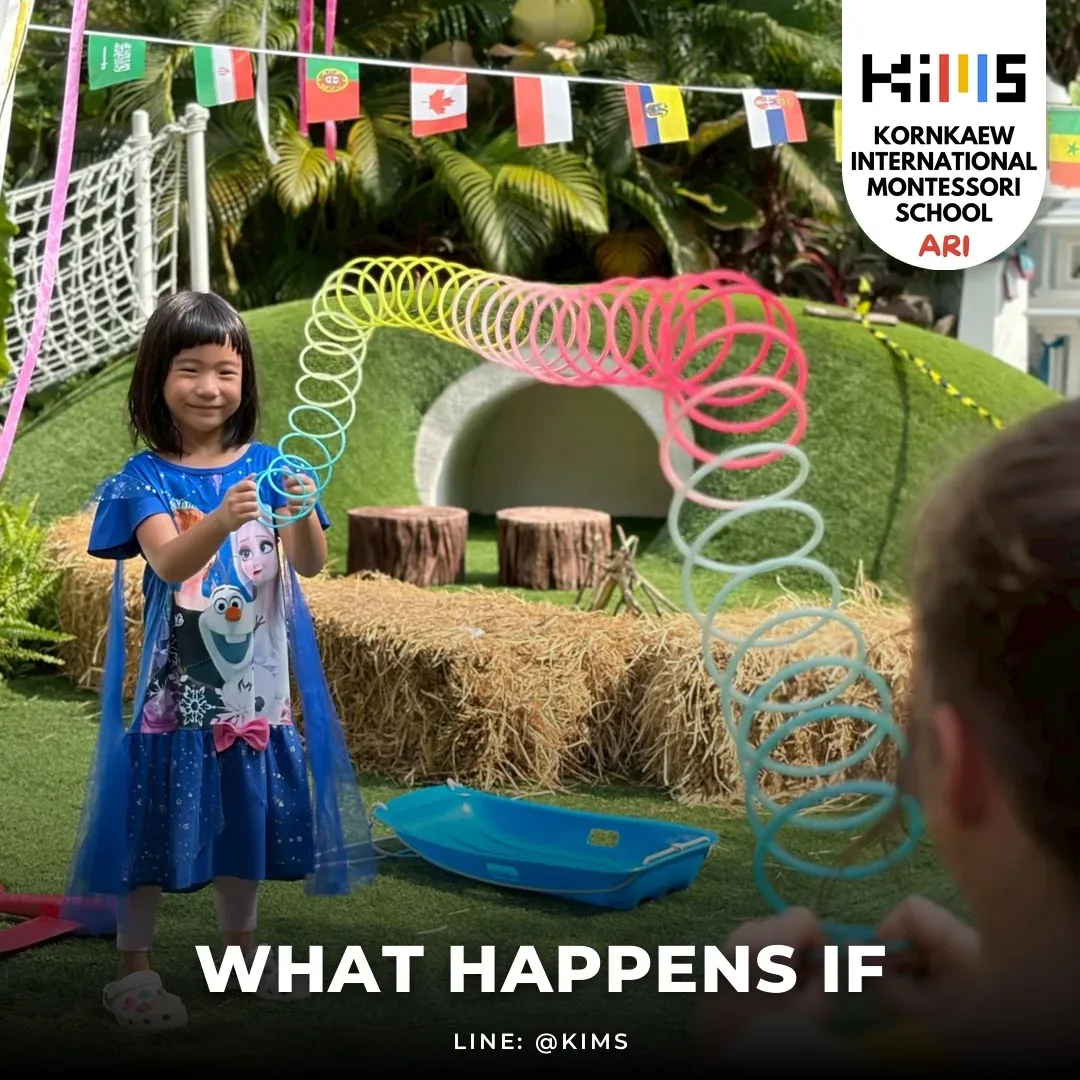
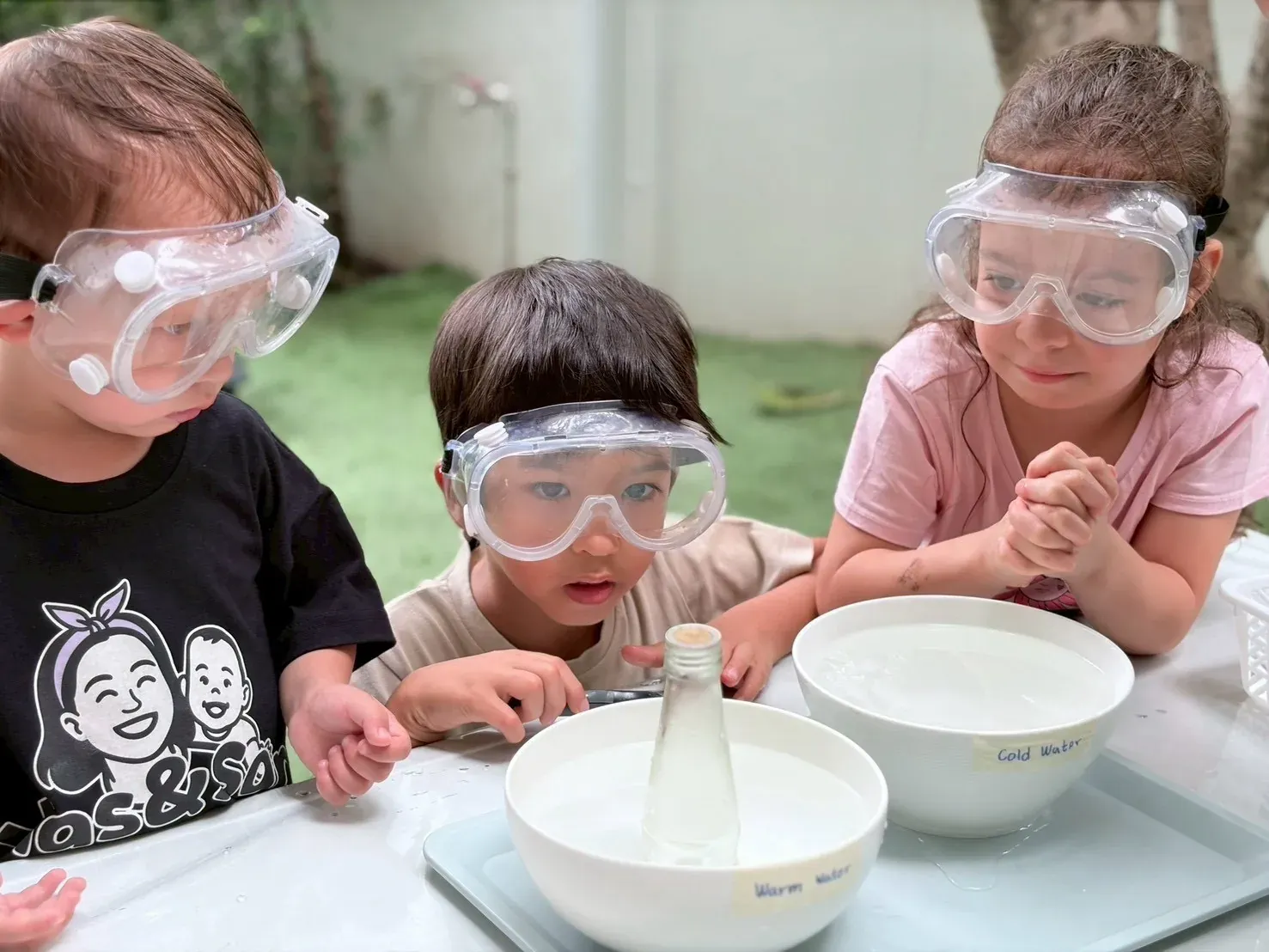
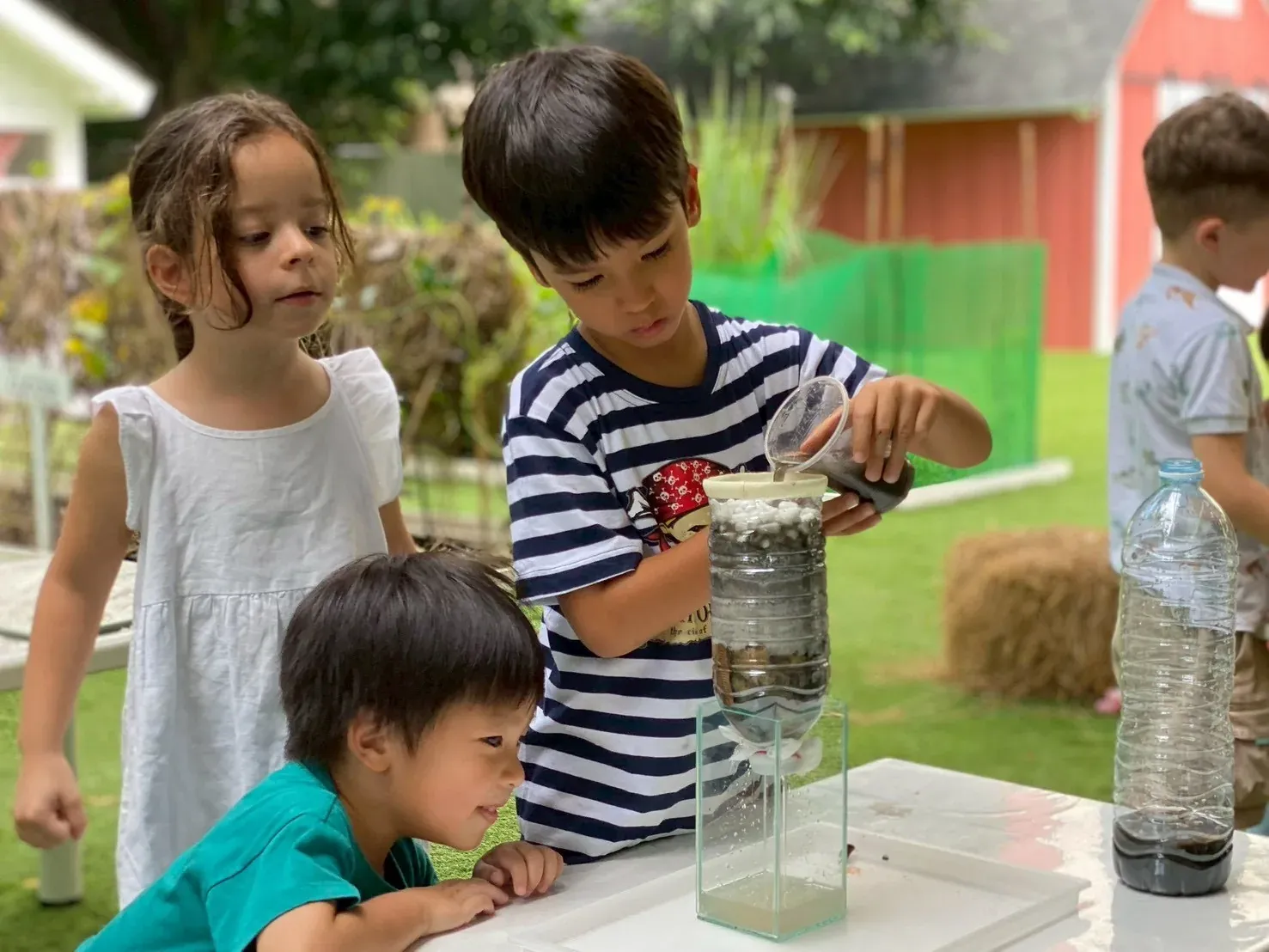
Questions tested with real experiments: warm and cold water, filters, circuits and colours, and what happens if we try it again.
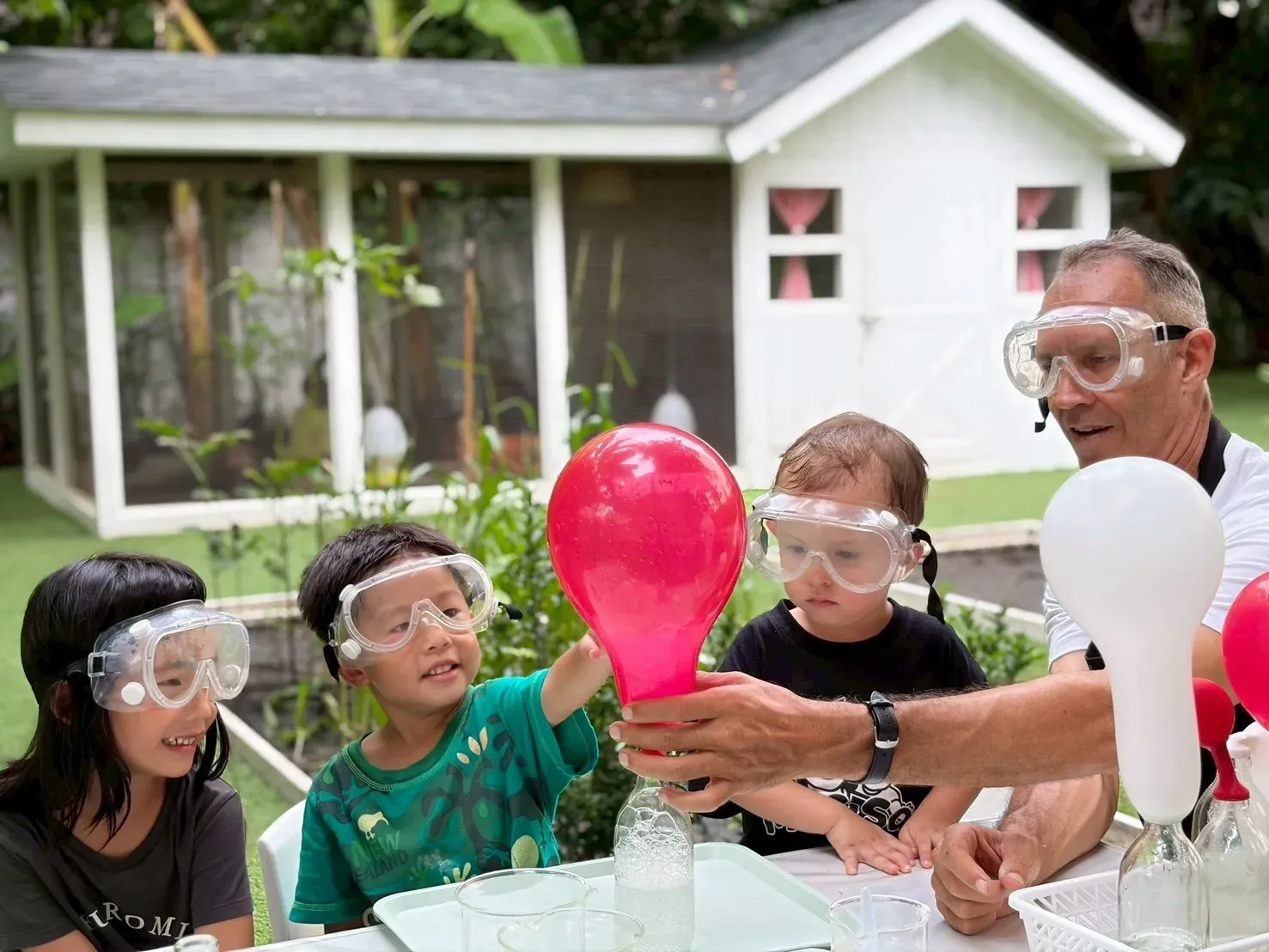
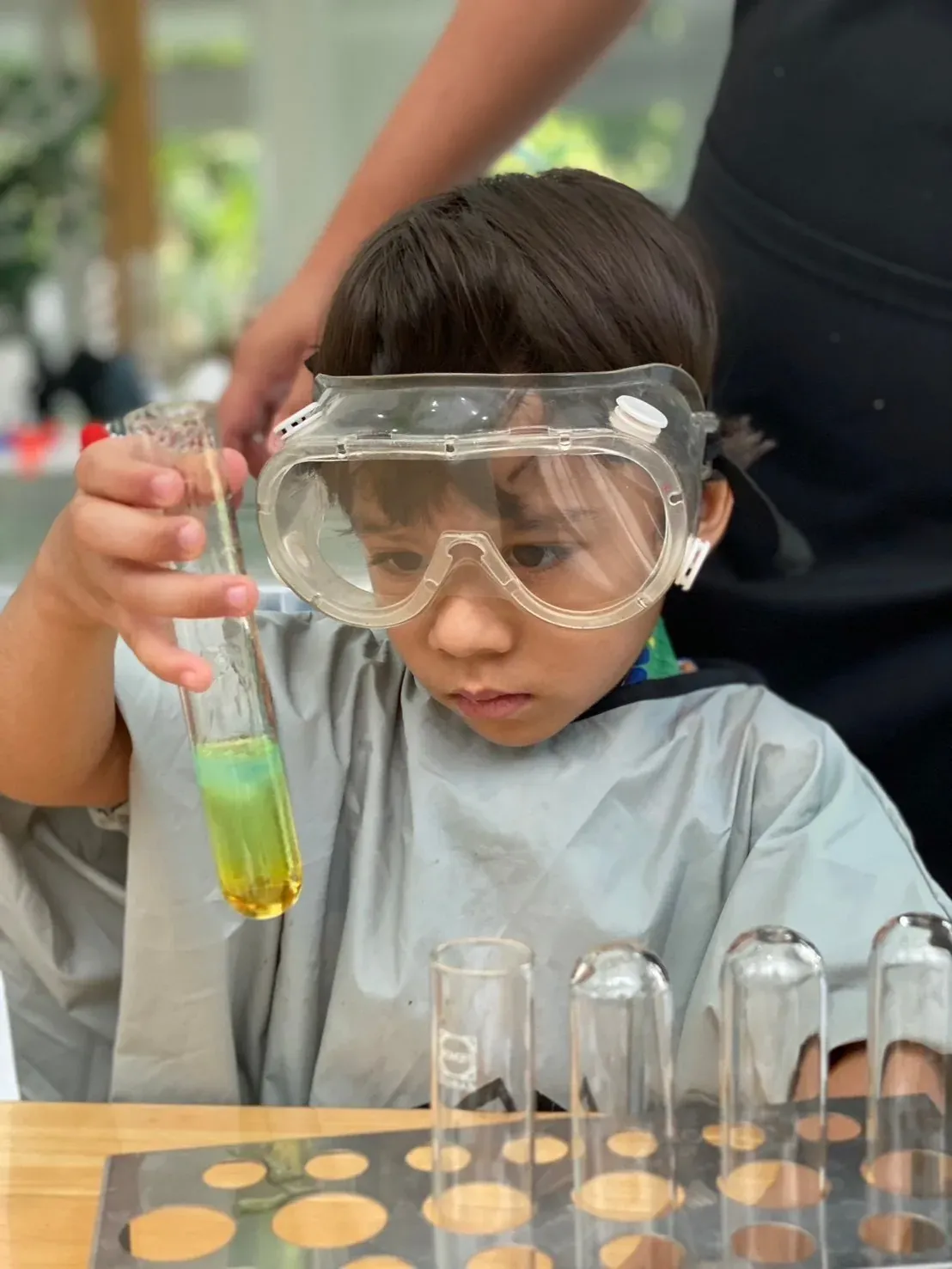
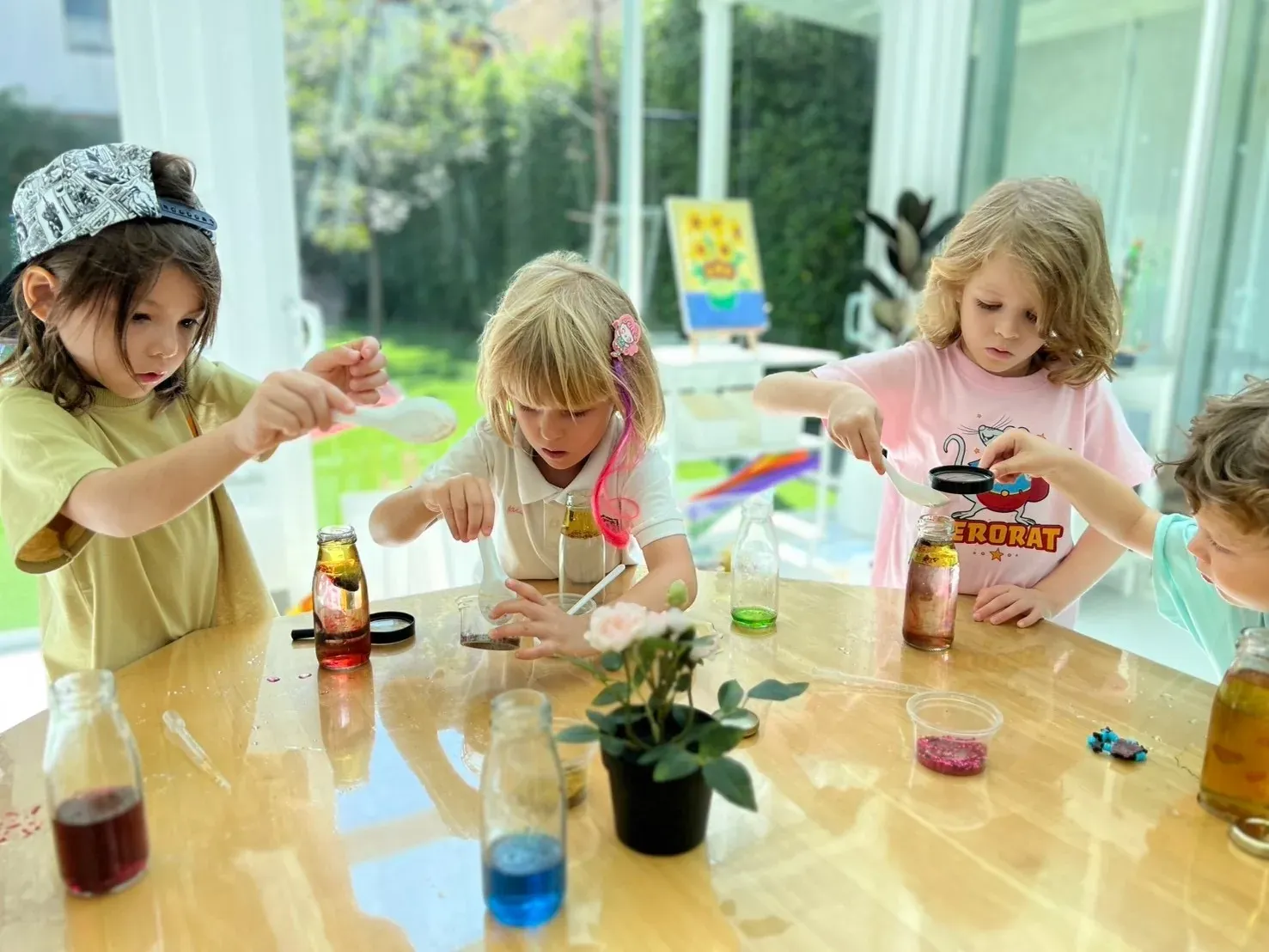
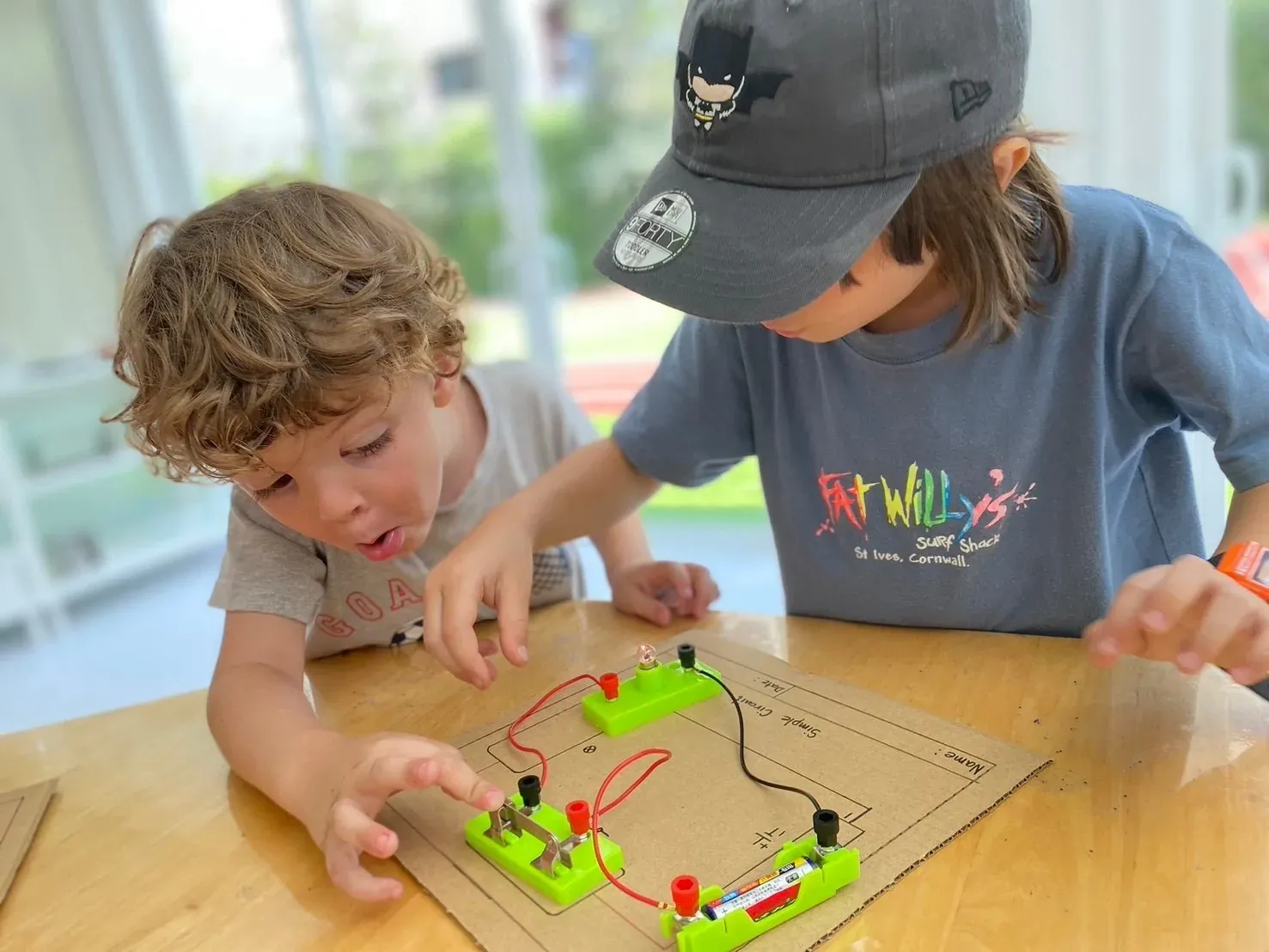
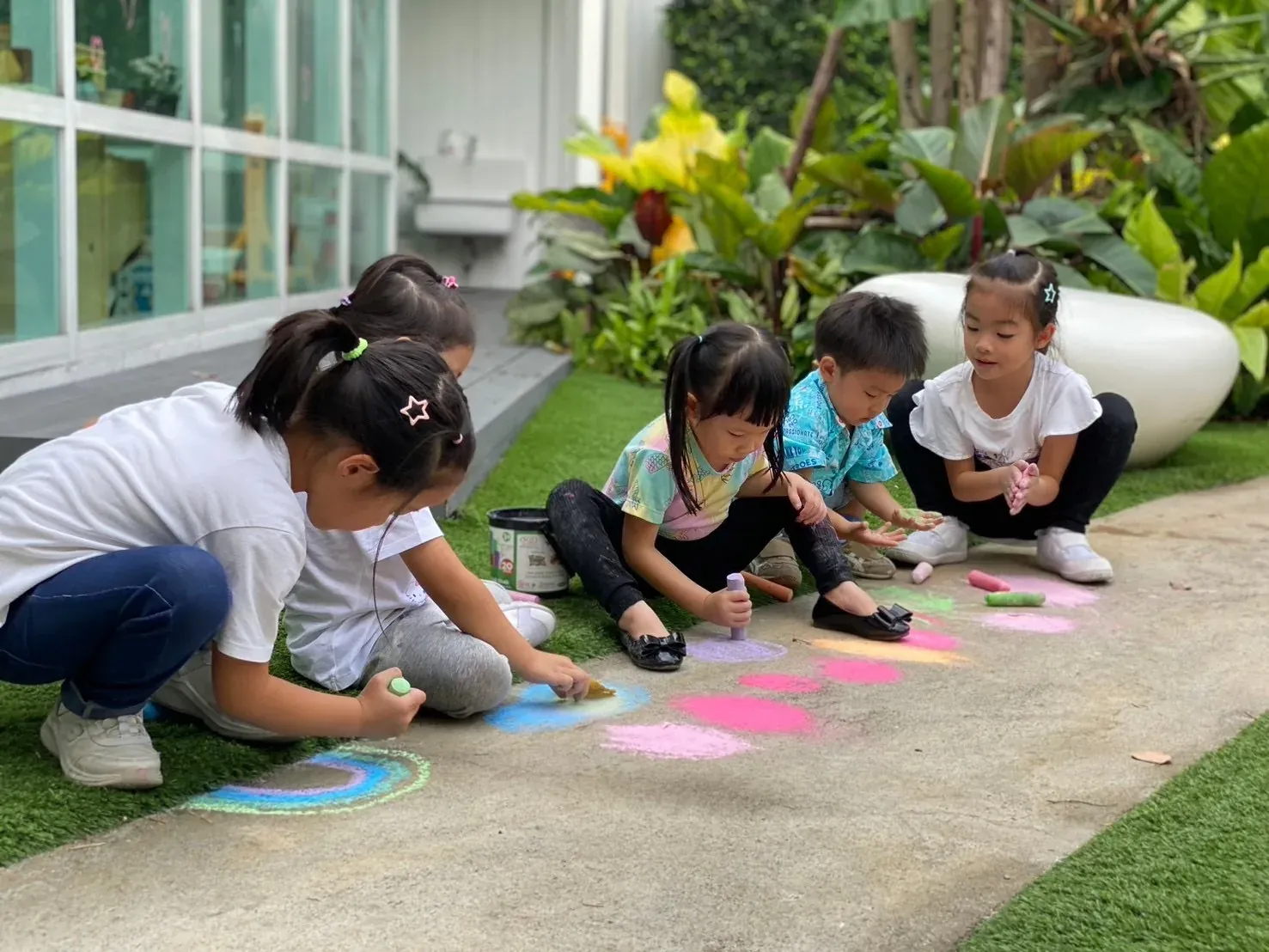
Paint, chalk and prints made with whatever the garden offers, with room to make a mess and something of their own.
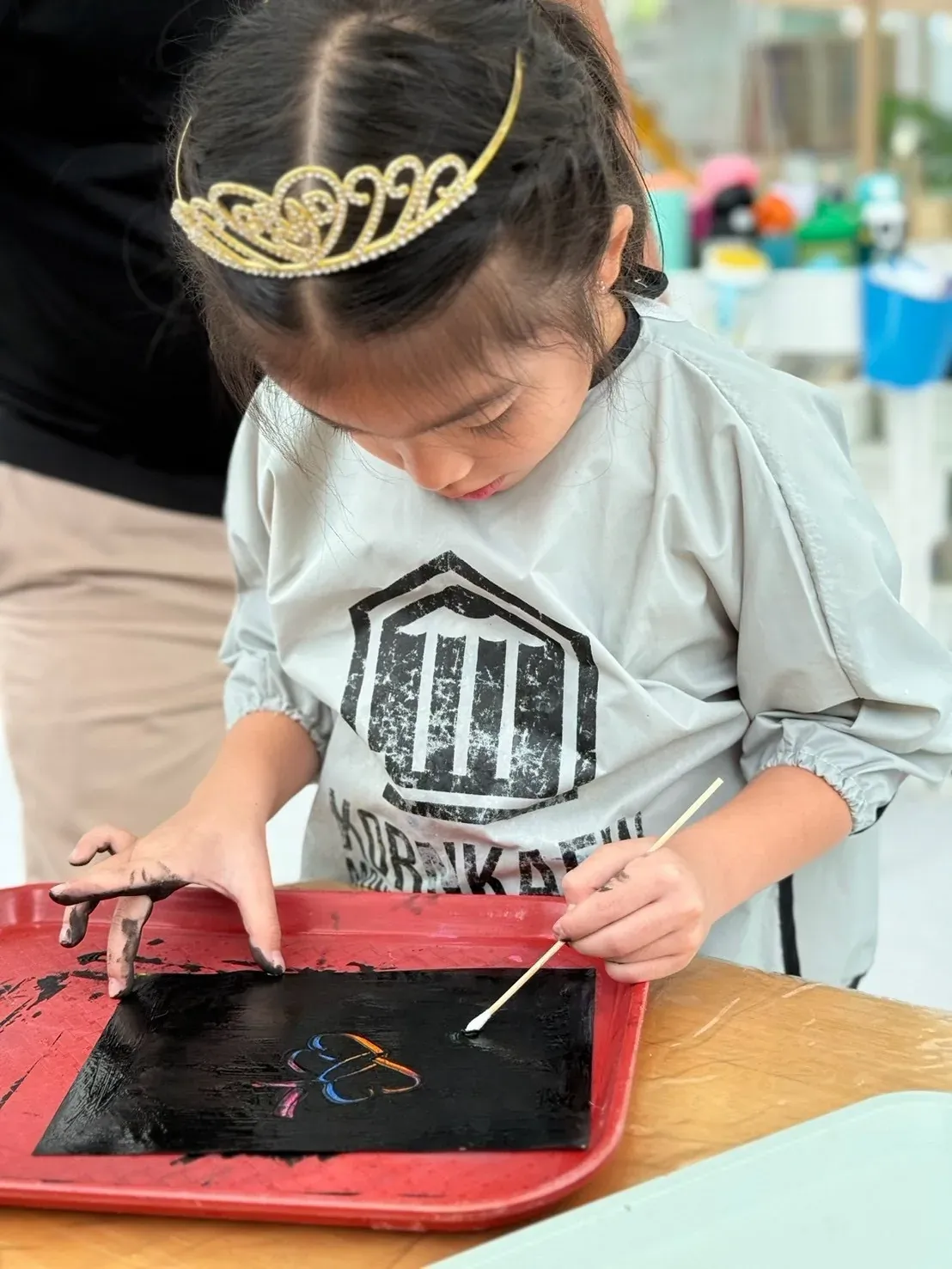
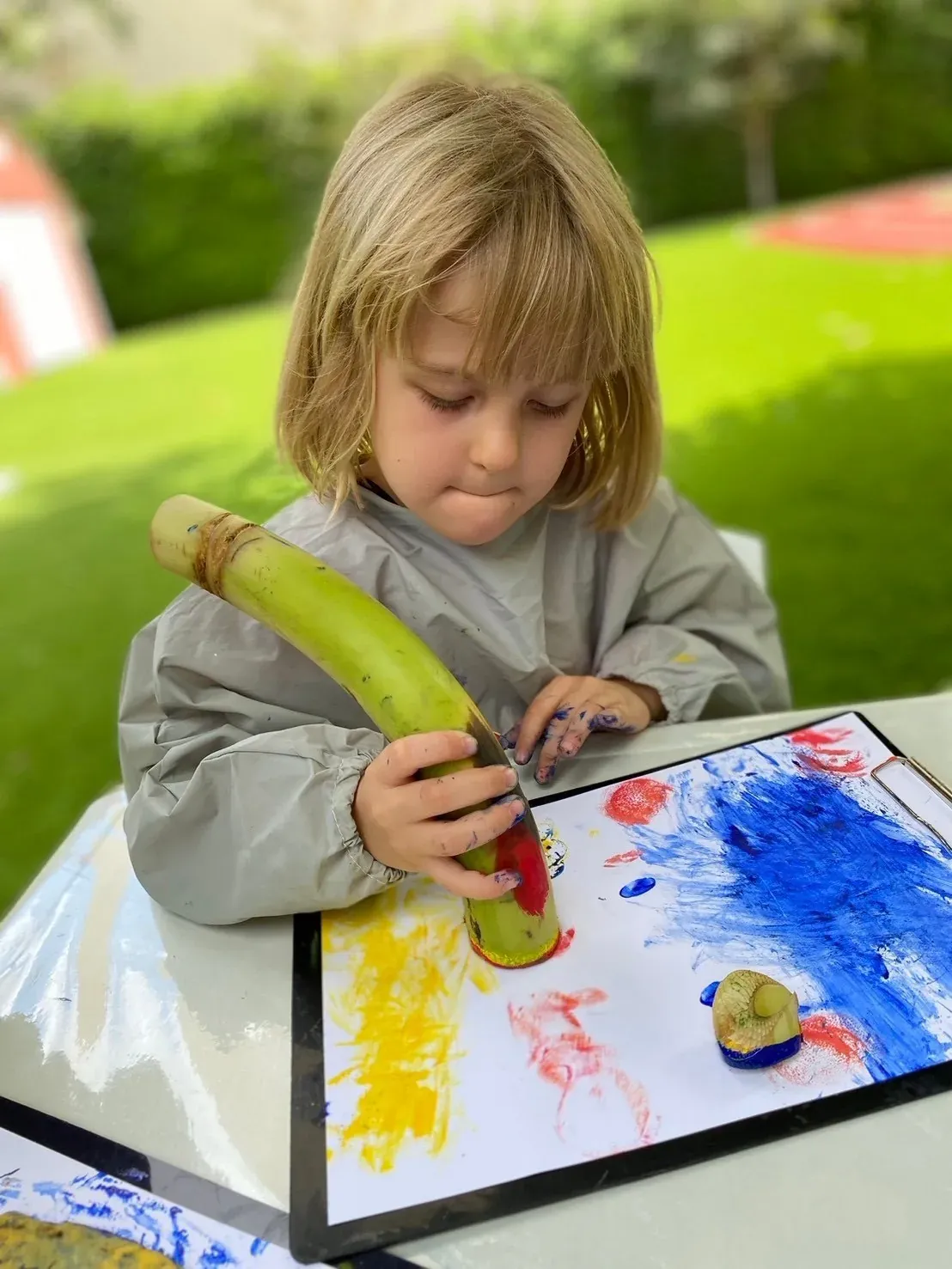
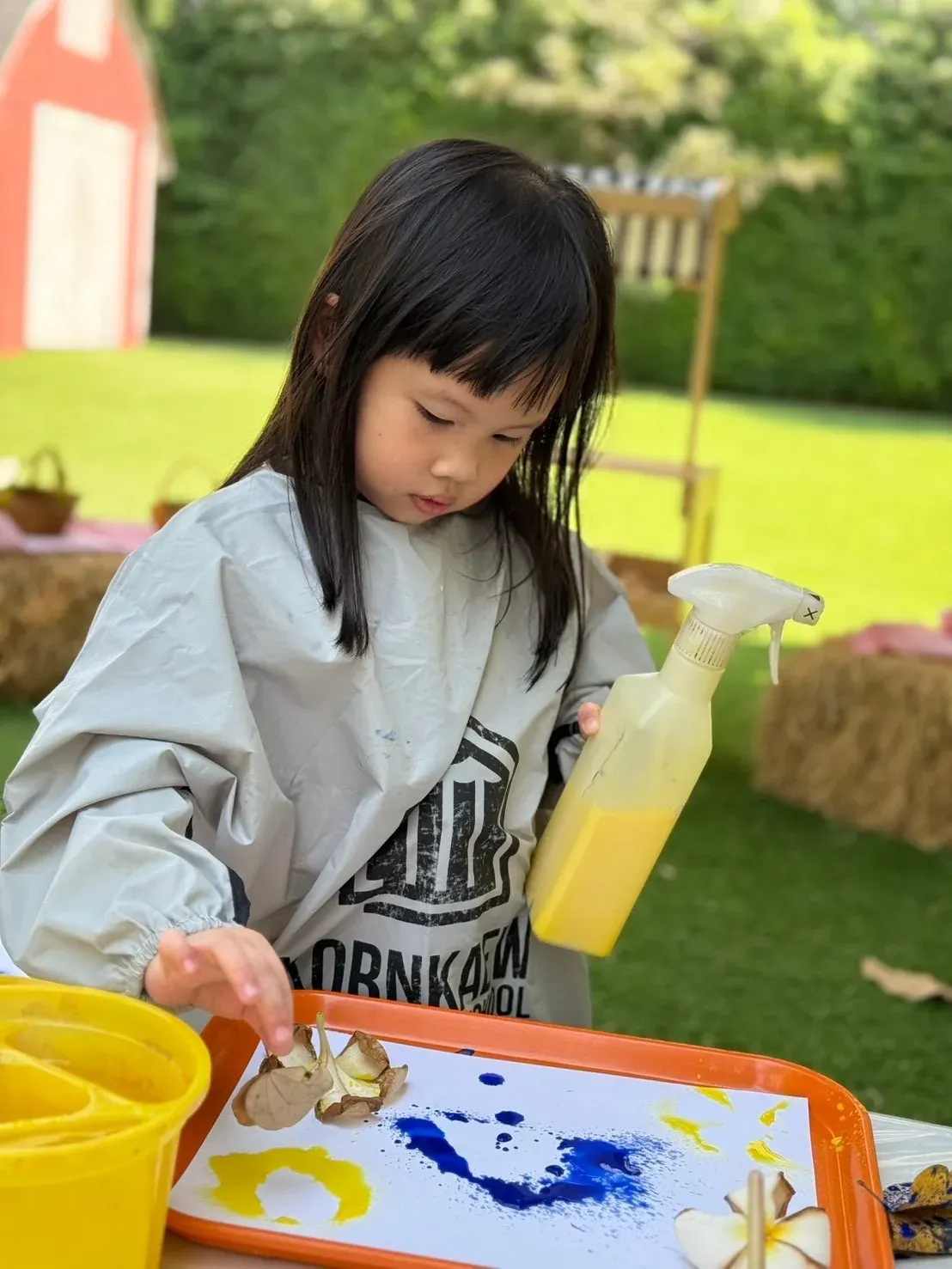
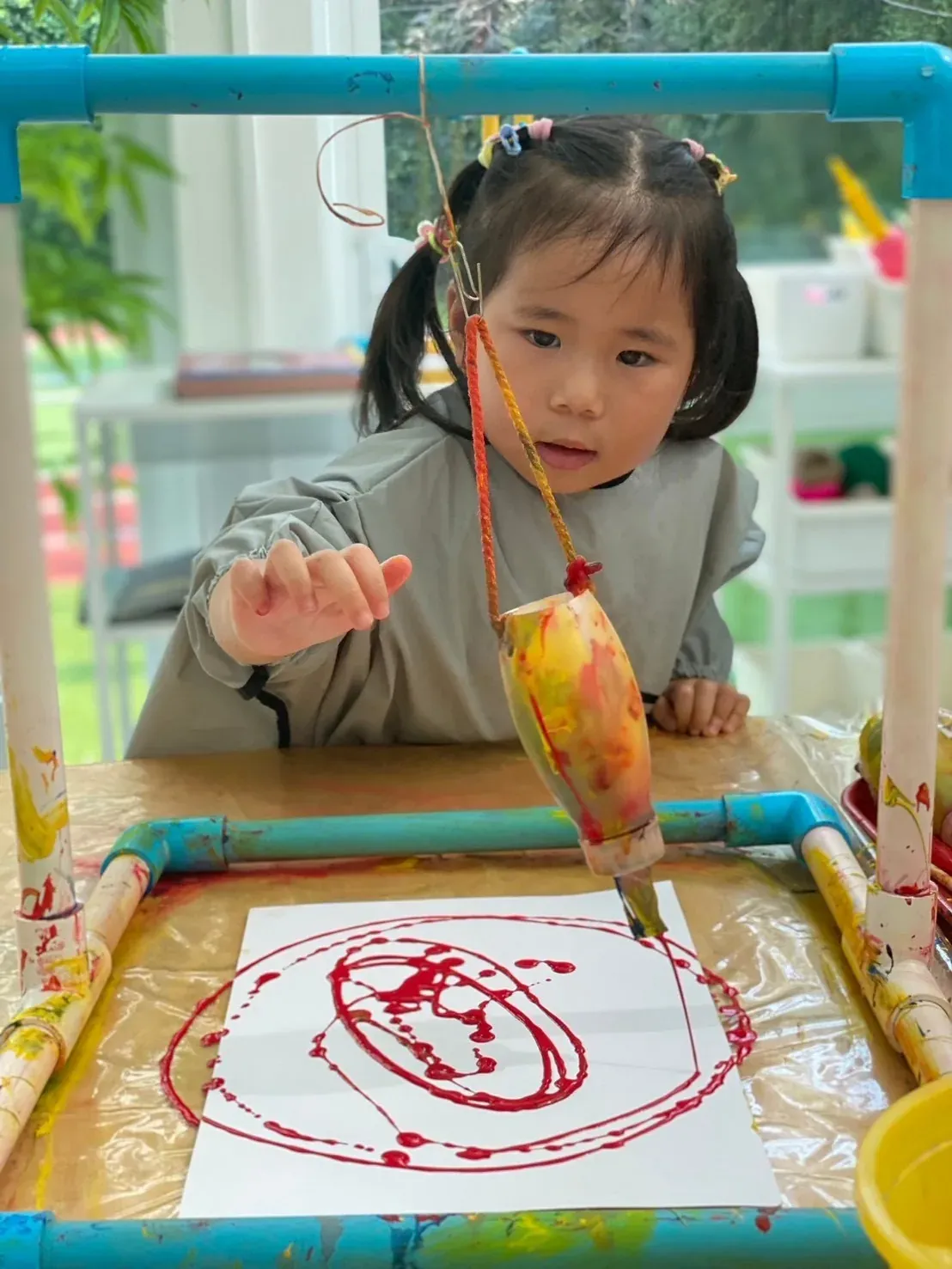
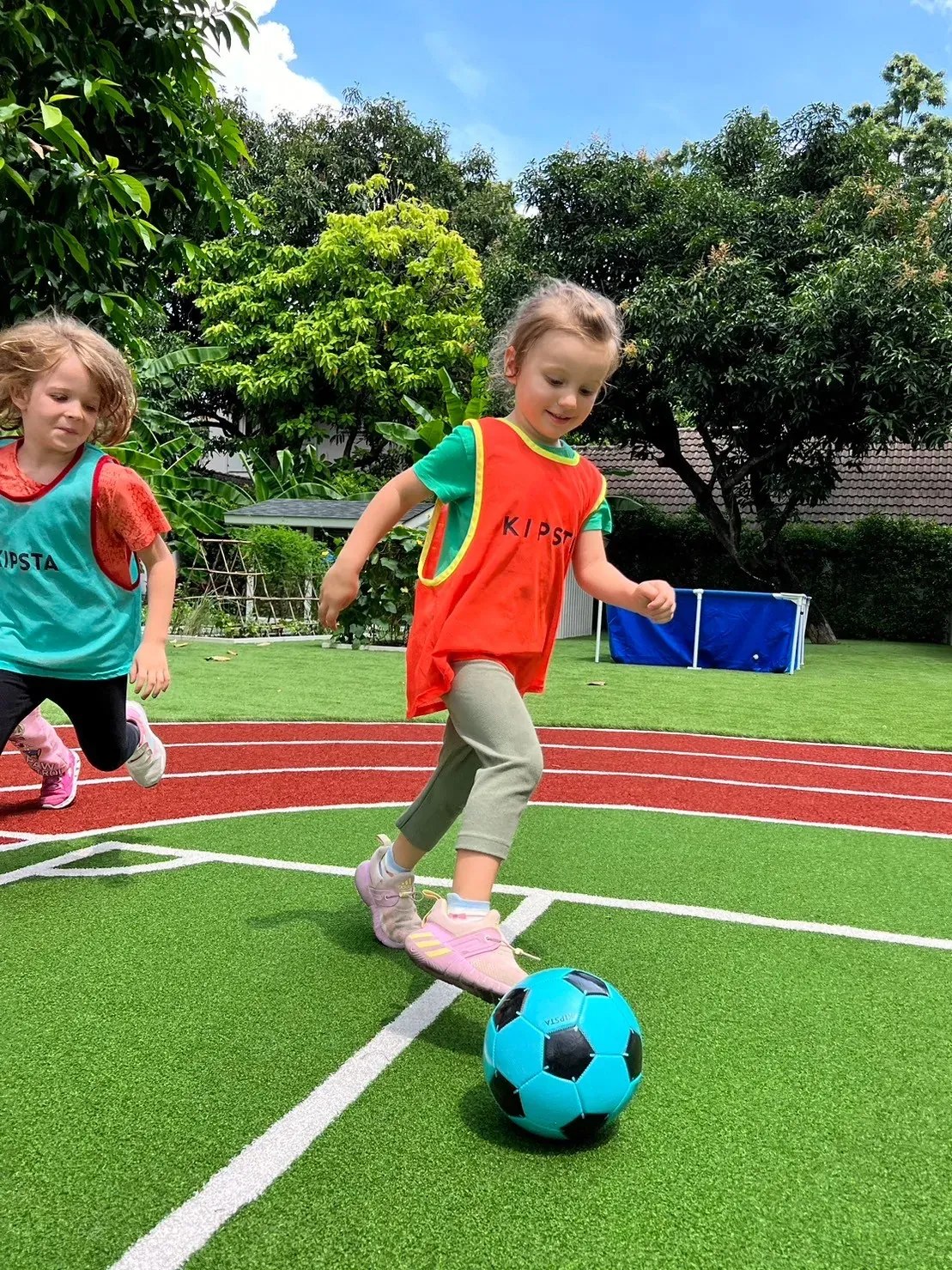
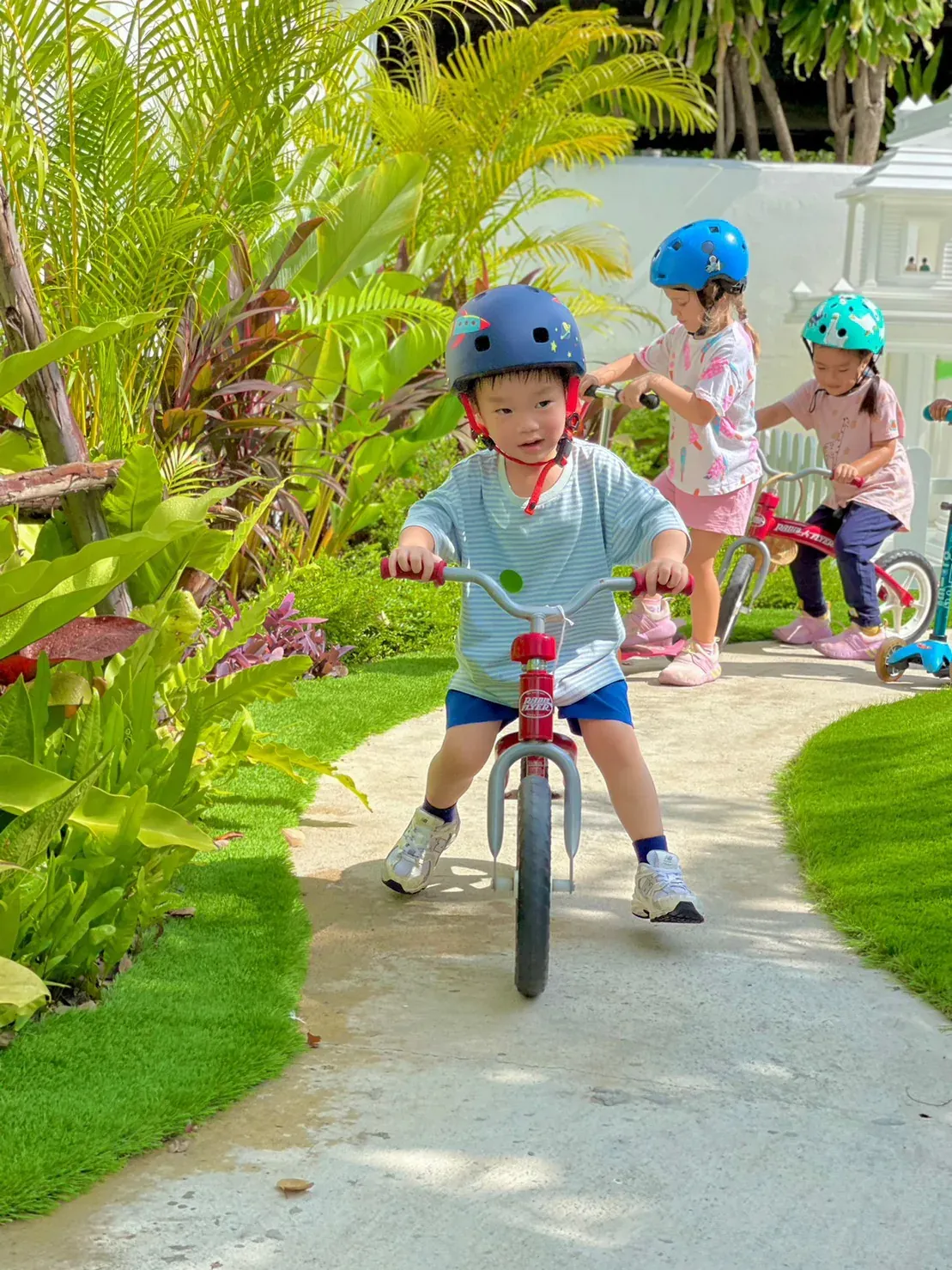
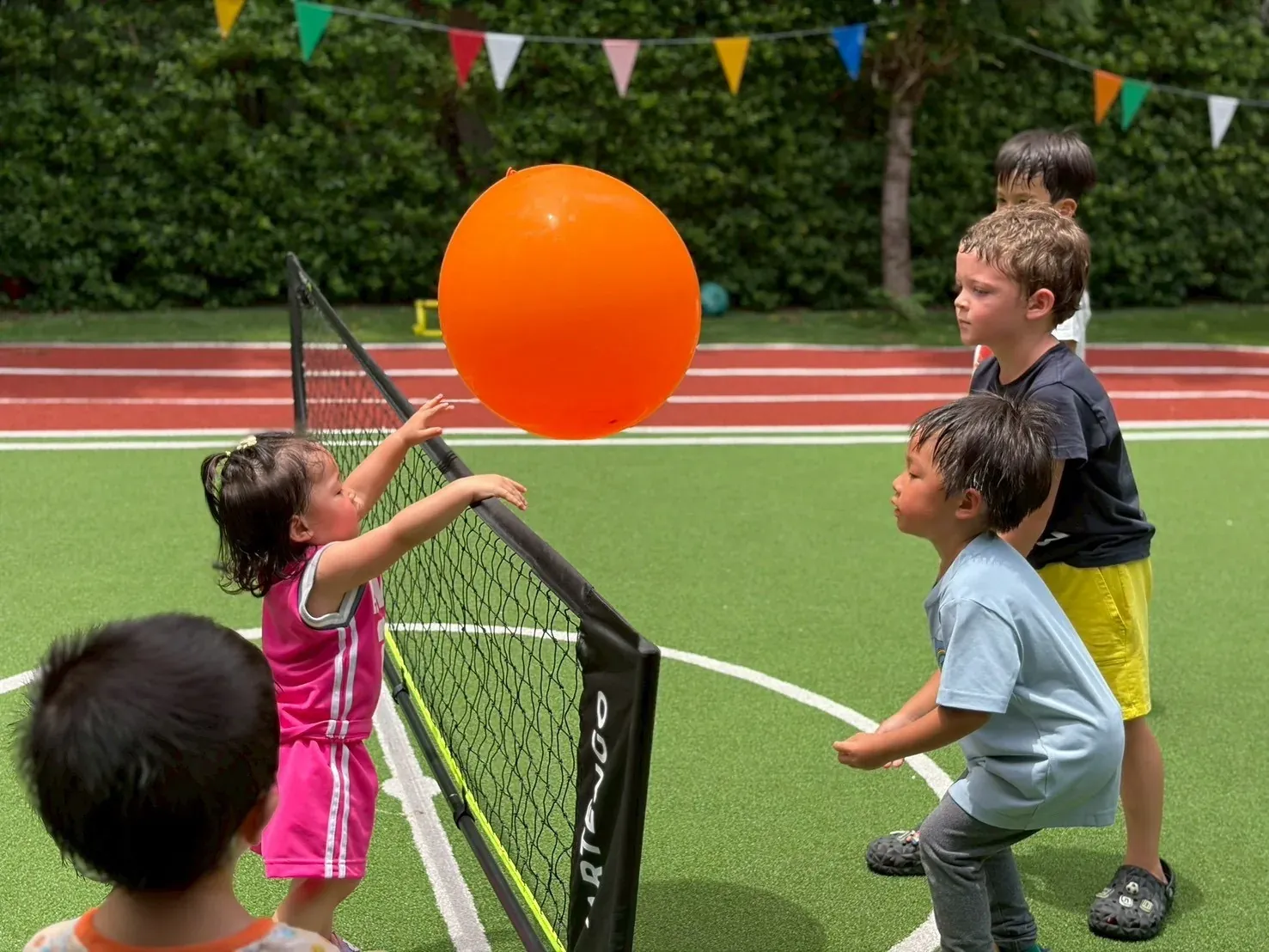
Running, climbing, balancing and team games on the sports field.
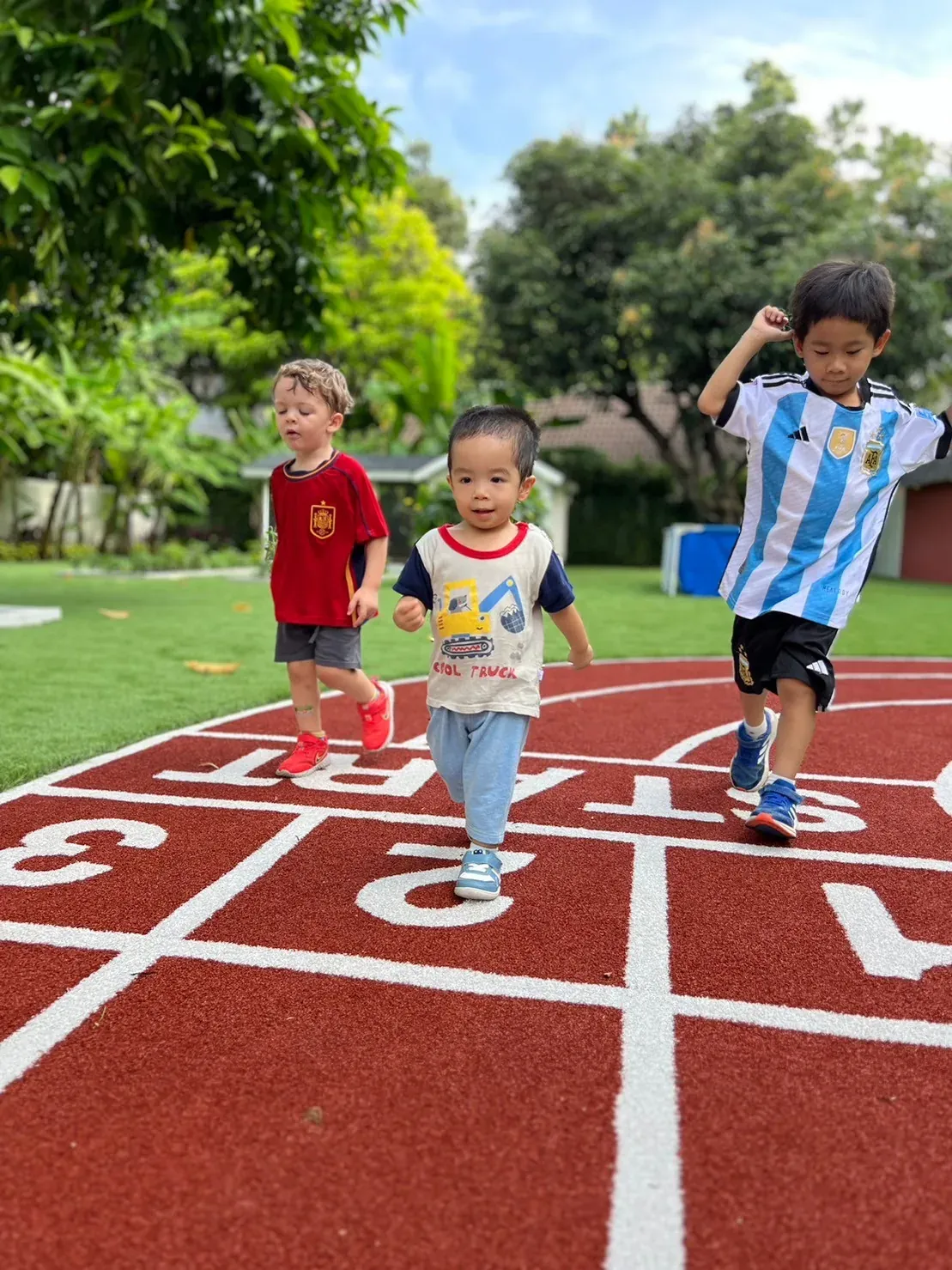
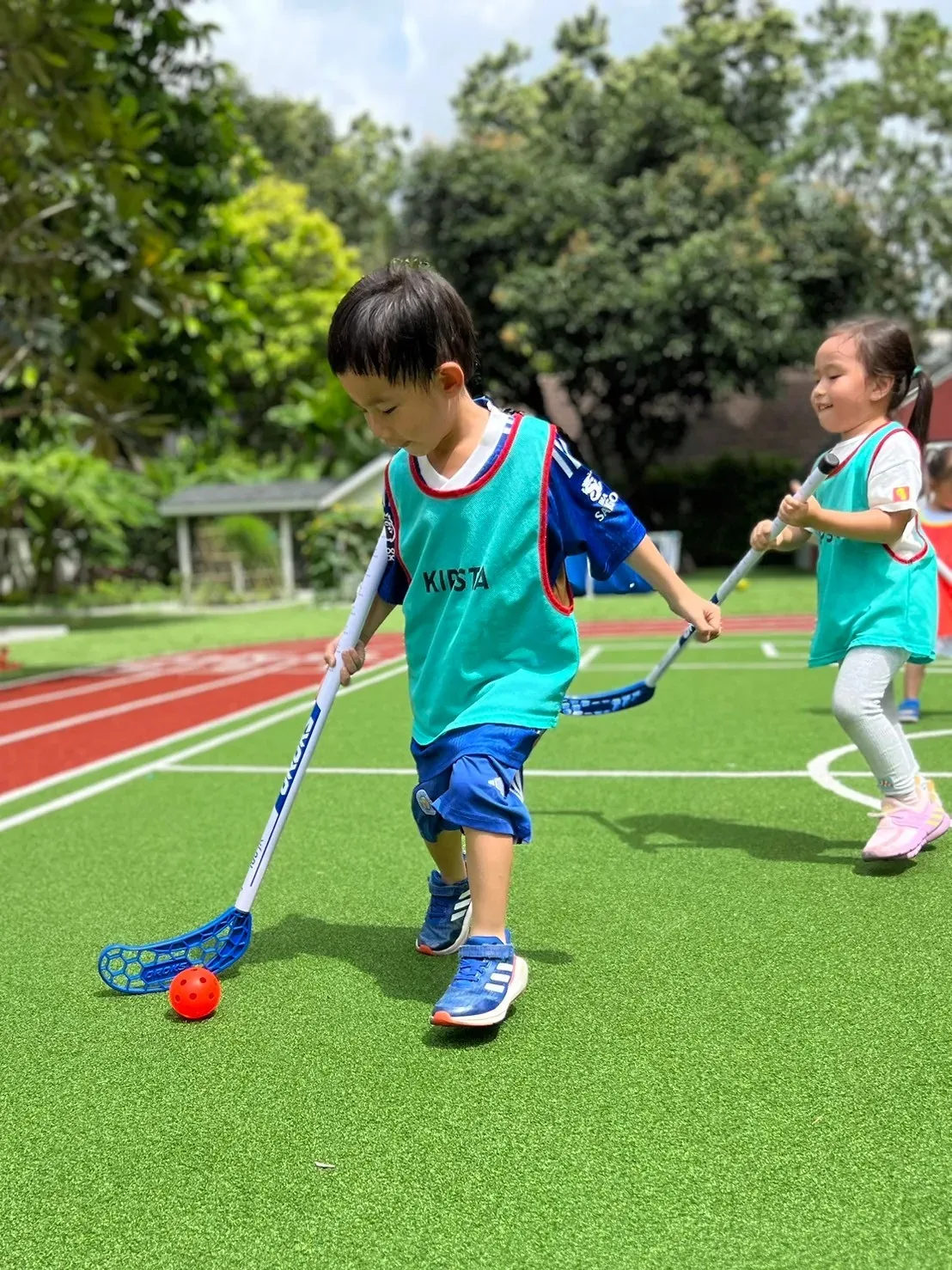
Half-day children go home after lunch, at 12:15. Full-day children finish at 14:30, and those staying on for extra-curricular activities carry on until 15:30, with pick-up by 16:00.
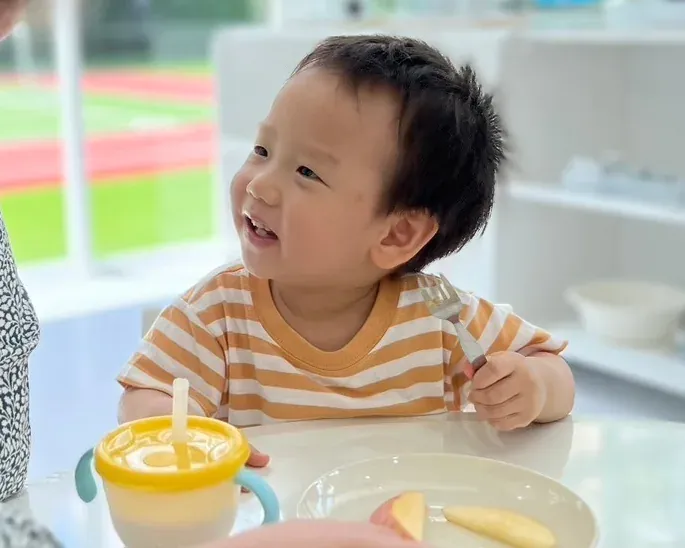
Every child known, safe and well looked after.
The latest moments from school, shared with our families every week.
Both campuses share the same Montessori foundations, the same family and over forty years of the same care. Each leads with a different strength.
You are reading about
Applications are welcome up to a year ahead. See the steps, the fees and what to prepare.
See the enrolment processWe welcome children aged 1 to 6. They do not need to be toilet-trained or speaking fluently to join: our teachers work with each family on both. The one practical requirement is that a child can walk independently.
Most families apply about a year before they would like their child to start, so a two-year-old usually applies now for a place at three. Children take in different skills at different ages, and starting earlier gives teachers more of those stages to work with, but the best time is the one that feels right for your family.
Yes. Private visits are held by appointment on weekday afternoons at 16:00, after classes, so we can give you our full attention while protecting our children's privacy. You will see the classrooms, the garden and the farm. To book, message us on LINE: @kims.
English is the language of instruction and of the school day. Thai language and culture are taught in dedicated Thai lessons, so children build an international foundation while staying connected to their Thai roots.
Every day, and then in depth each term. You can speak to your child's teachers at drop-off and pick-up, so anything on your mind is dealt with the same day. Photographs of the day go into a private group for parents, so you can see how the day actually went and keep those years. At the end of every term there is a parent-teacher meeting, where the teaching team takes you through a personalised report: what your child has done, the milestones they have reached and what comes next.
Children are with us until six, and go on to both international and Thai primary schools in Bangkok. Neither door closes: children leave us reading, writing and working in English, with the Thai language and culture they have had throughout.
Yes. Half-day children are collected at 12:15 and full-day children at 14:30. Children can also stay on for extra-curricular activities until 15:30, with pick-up by 16:00.
Every meal is cooked fresh each day in our own kitchen at the Dusit campus, which cooks for both schools so the quality stays in our hands. Meals are made from wholesome, minimally processed ingredients, and the menu rotates over four weeks. Instead of sweet snacks and desserts we serve fresh fruit. Please tell us about any allergies or dietary needs and we will plan around them.
Every new child joins the Transition Programme: four weeks in the holidays before their first term, with parents taking part too. Children get to know their teachers, their classmates and the shape of the day, and families get to know the school. The full process is on the enrolment page.
Visit us
21 Ari 3, Phaholyothin Rd., Phaya Thai, Bangkok 10400
Tours run outside school hours, so you see the classrooms and the grounds without disturbing the children.
Book a private tour
Assessed and accredited by ONESQA, the Office for National Education Standards and Quality Assessment.
A member of the Thailand Association of Montessori Schools, established 1997.